Tag: breathing

  • Self-care Corner: Breathing techniques

    Self-care Corner: Breathing techniques

    We are all aware of the vital importance of our breath, but practicing certain breathing techniques can do more than keep us alive: They can relax our bodies, calm our minds, and improve focus and concentration.

    One such technique, Ujjayi Pranayama (or “Ocean Breath”), can stimulate the vagus nerve, promoting all of the above benefits. Ocean Breath is commonly performed during yoga practice, but can be done anytime and anywhere.

    How to do it:

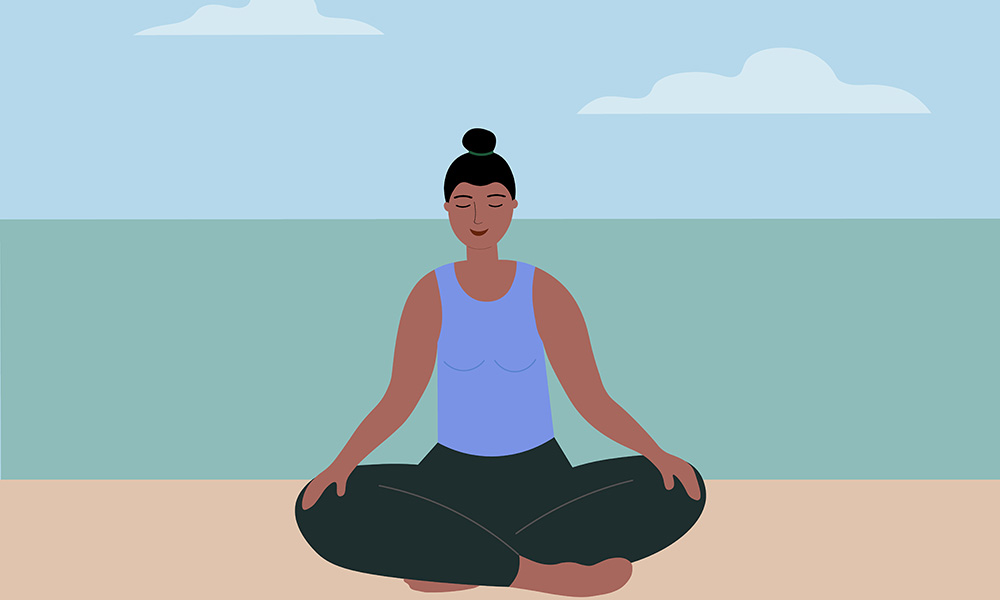
    Begin in a comfortable seated position. Allow your breathing to become gentle and relaxed as you breathe in and out through your nostrils.

    Start to slightly contract the back of your throat, creating a sound akin to breaking ocean waves (fans of Star Wars may notice an uncanny similarity to Darth Vader’s ominous respiration) as you breathe in and out. Lengthen the inhalation and exhalation, but be sure to keep the breath continuous and smooth, avoiding the creation of any tension in the body.

    A helpful tip for beginners is to hold a mirror up to your mouth and exhale to fog it up. Inhale the same way. Once you grasp the concept with an open mouth, close and continue breathing.

  • Self-care Corner: What is “Bee Breathing”?

    Self-care Corner: What is “Bee Breathing”?

    The act of breathing is so basic that most of us rarely ever think about it in our day to day life. We know that each inhale provides our body with the oxygen needed to survive and each exhale rids us of carbon dioxide. In addition to keeping us alive, breathing can also affect our state of mind, making us excited, calm, tense or relaxed.

    Using specific breathing techniques can allow us to regulate our emotions, especially in times of stress. “Bee Breathing,” named for the humming sound that is produced akin to our friend the bumble bee, is one of the best exercises to help rid the mind of agitation, frustration, and anxiety.

    Other benefits include:

    • Relief if you’re feeling hot or have a slight headache
    • Improves concentration
    • Reduces throat ailments
    • Helps mitigate migraines

    In addition to the mental and physical benefits, a major advantage of this, and any other breathing technique, is that it can be practiced anywhere.

    How to practice:

    • Sit in a comfortable, tall seat, making sure your spine is straight and your heart is lifted
    • Place your thumbs over the cartilage between the cheek and ear, gently closing the canal
    • Cover your eyes with remaining fingers
    • Have the mouth closed, jaws relaxed, and teeth slightly apart
    • Press the tongue lightly to the roof of your mouth
    • Inhale fully, then exhale while making a humming sound like a bee
    • Repeat the same pattern for two to five minutes