Tag: Dalhousie

  • Dalhousie DentDays: A time to reconnect and celebrate

    Dalhousie DentDays: A time to reconnect and celebrate

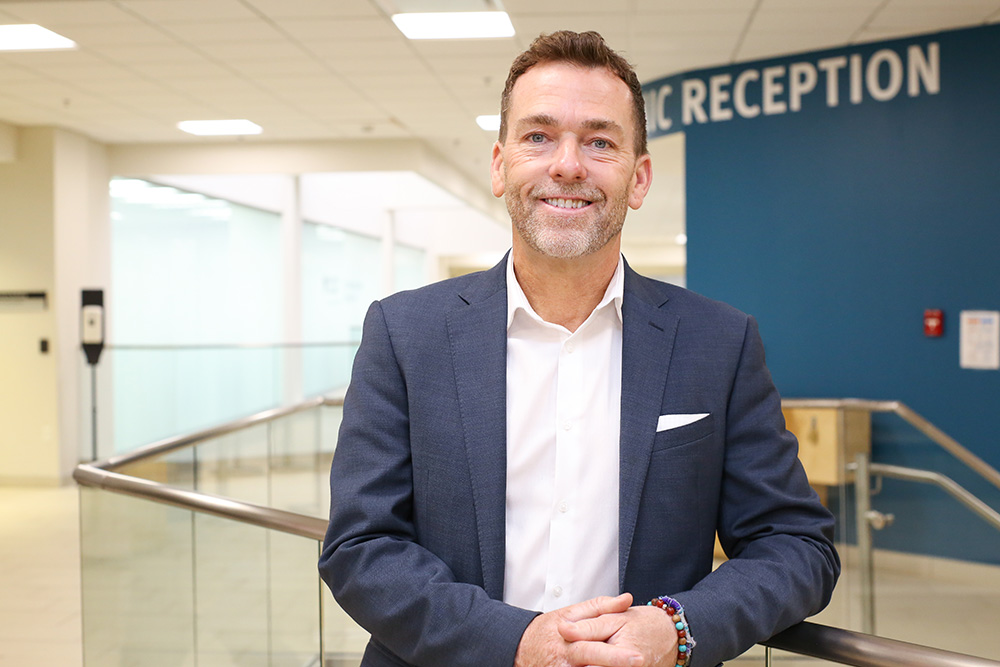
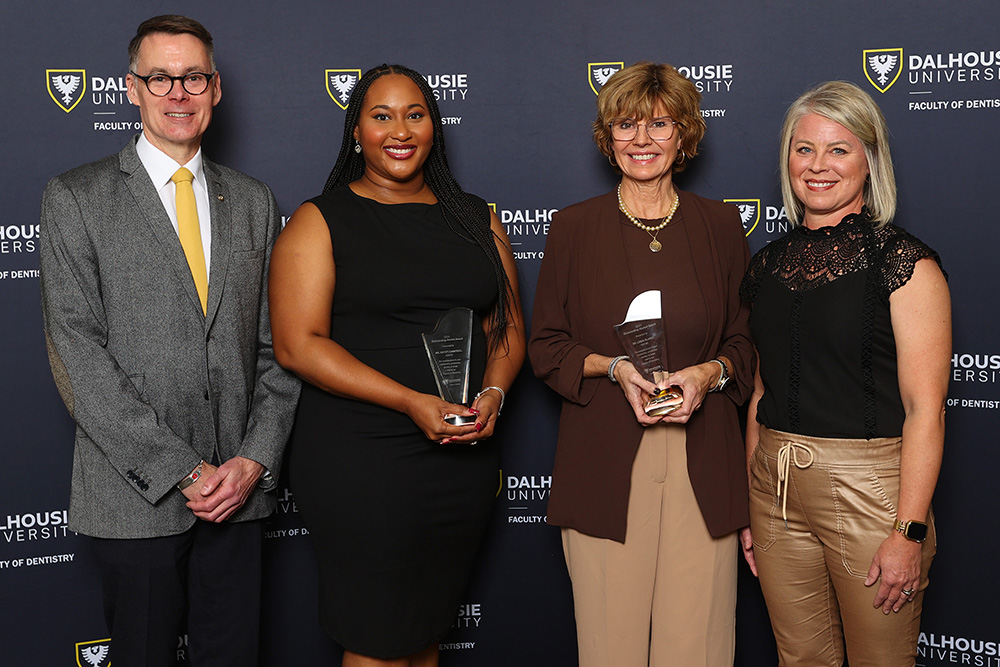
    Above (L-R): Dean Dr. Ben Davis; OAA winners Krysti Campbell and Dr. Linda Blakey; and Denise Zwicker, Chair of the Dentistry Alumni Committee. Photos by Nick Pearce

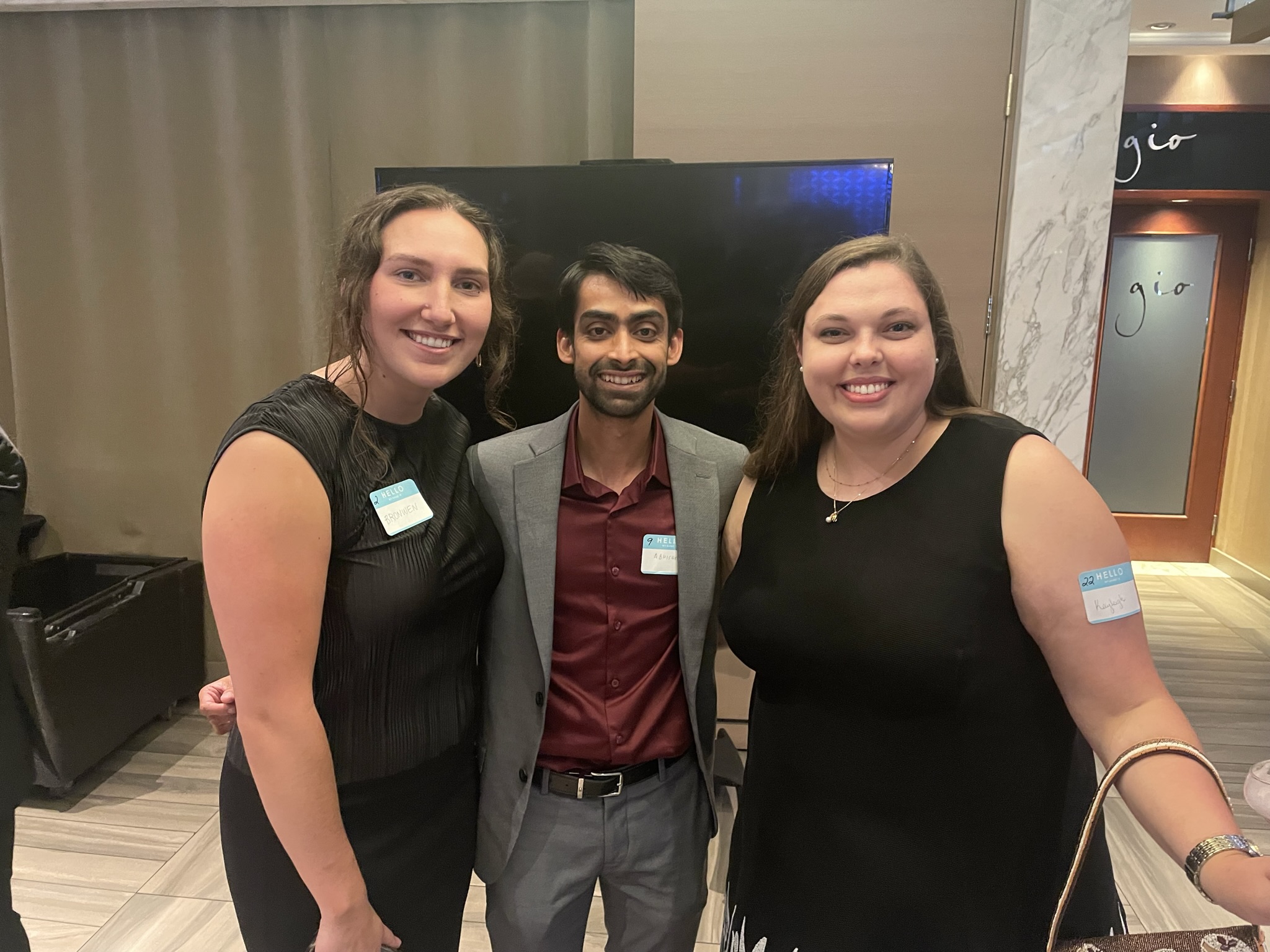
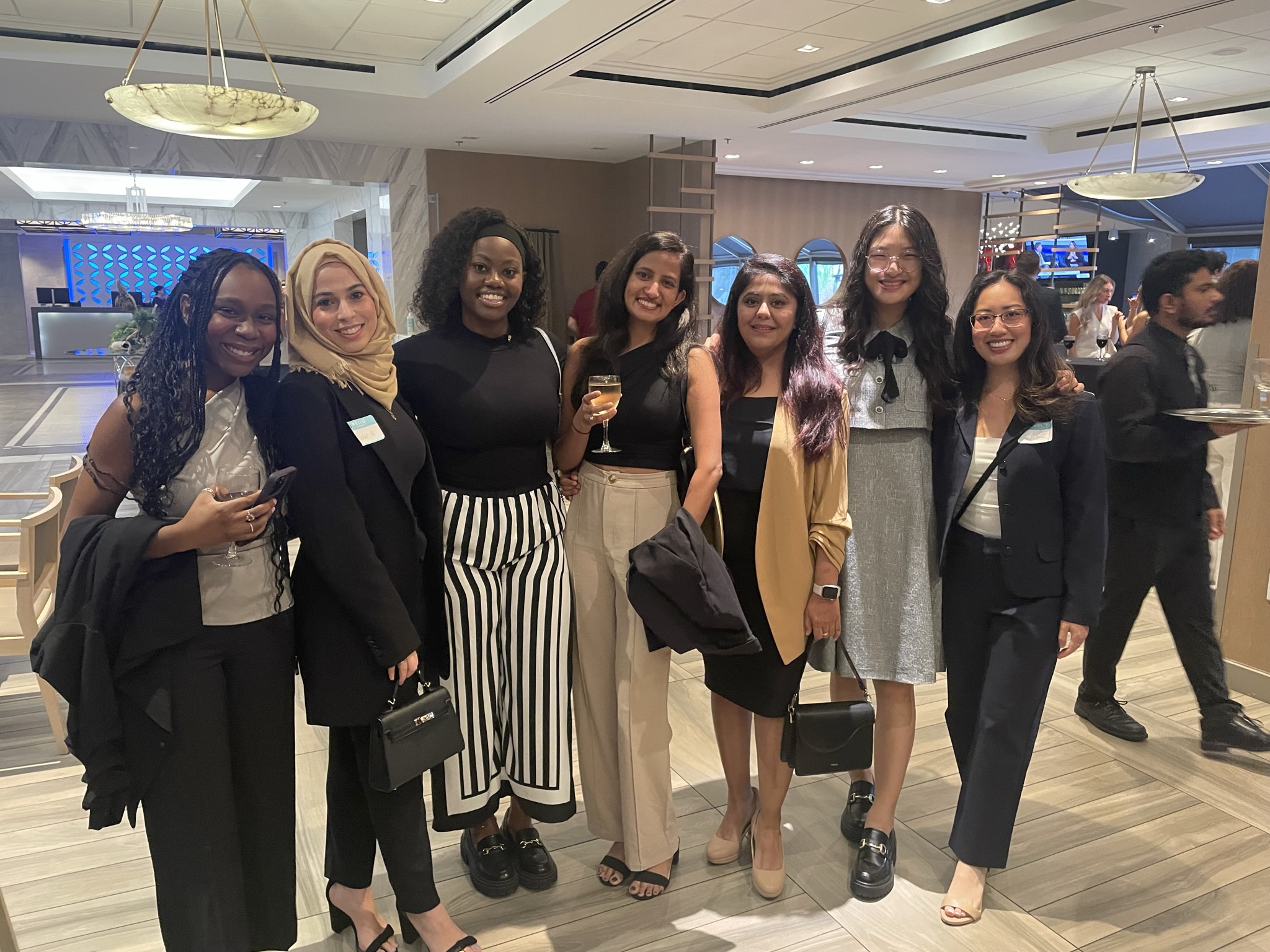
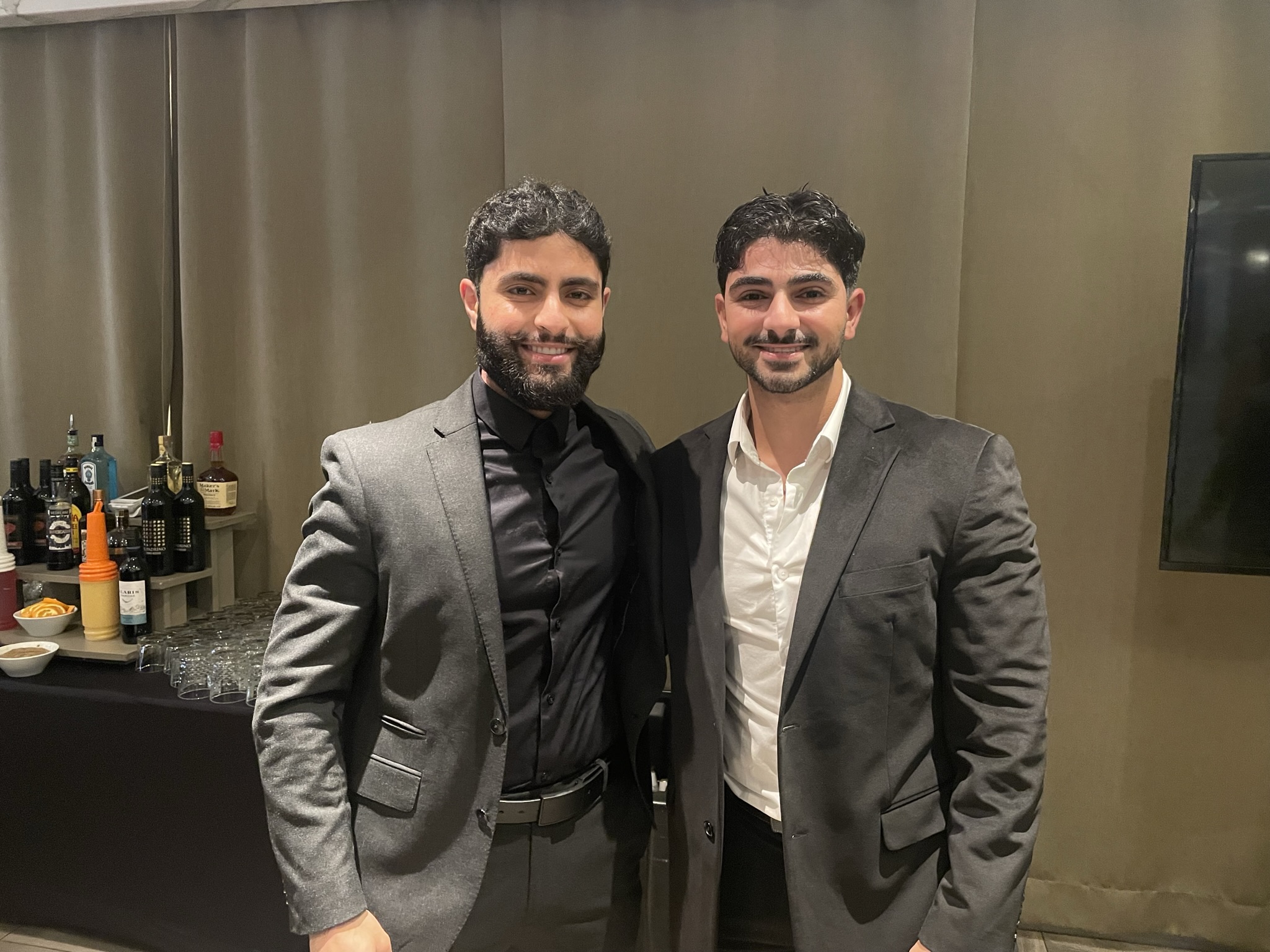
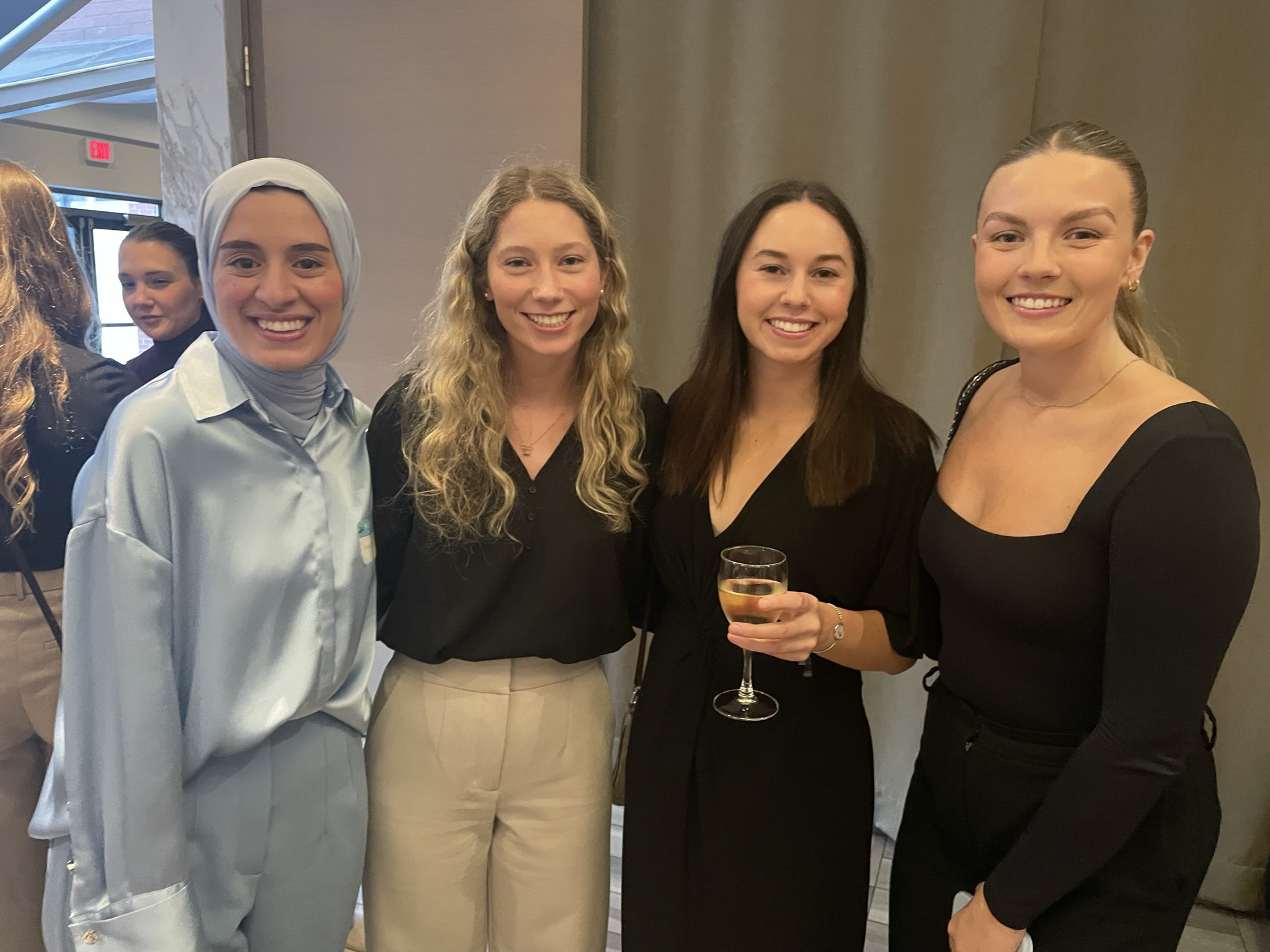
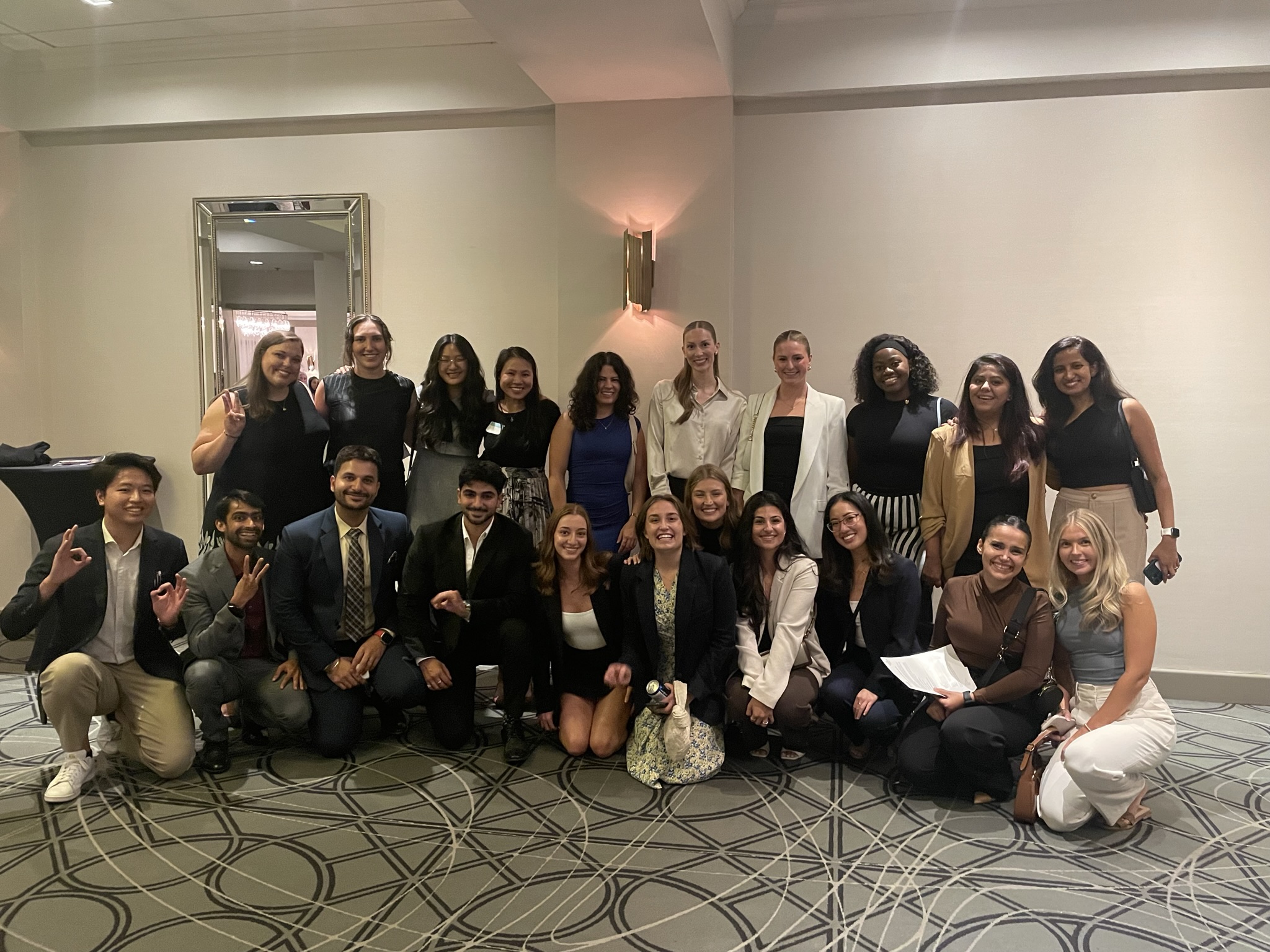
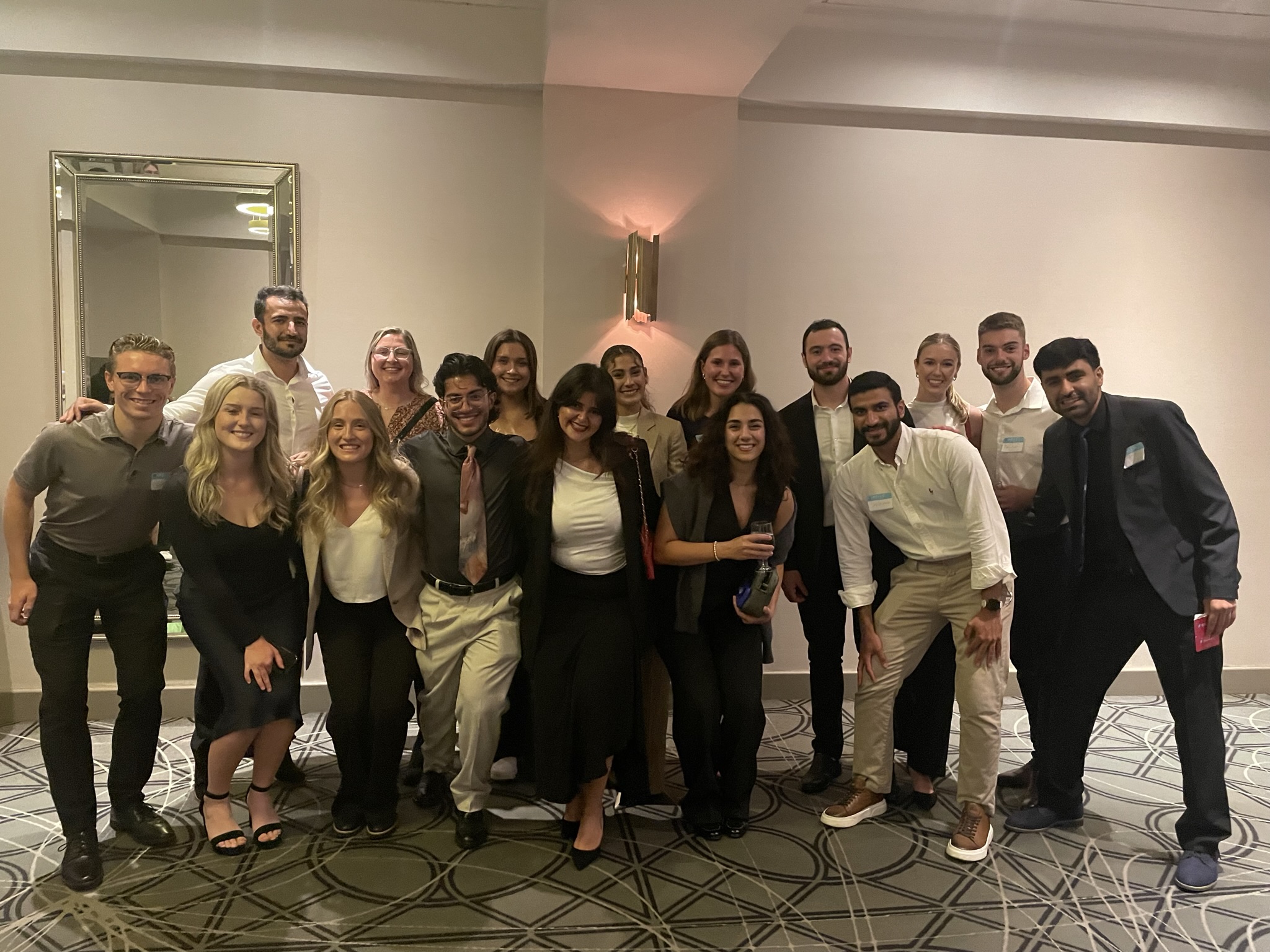
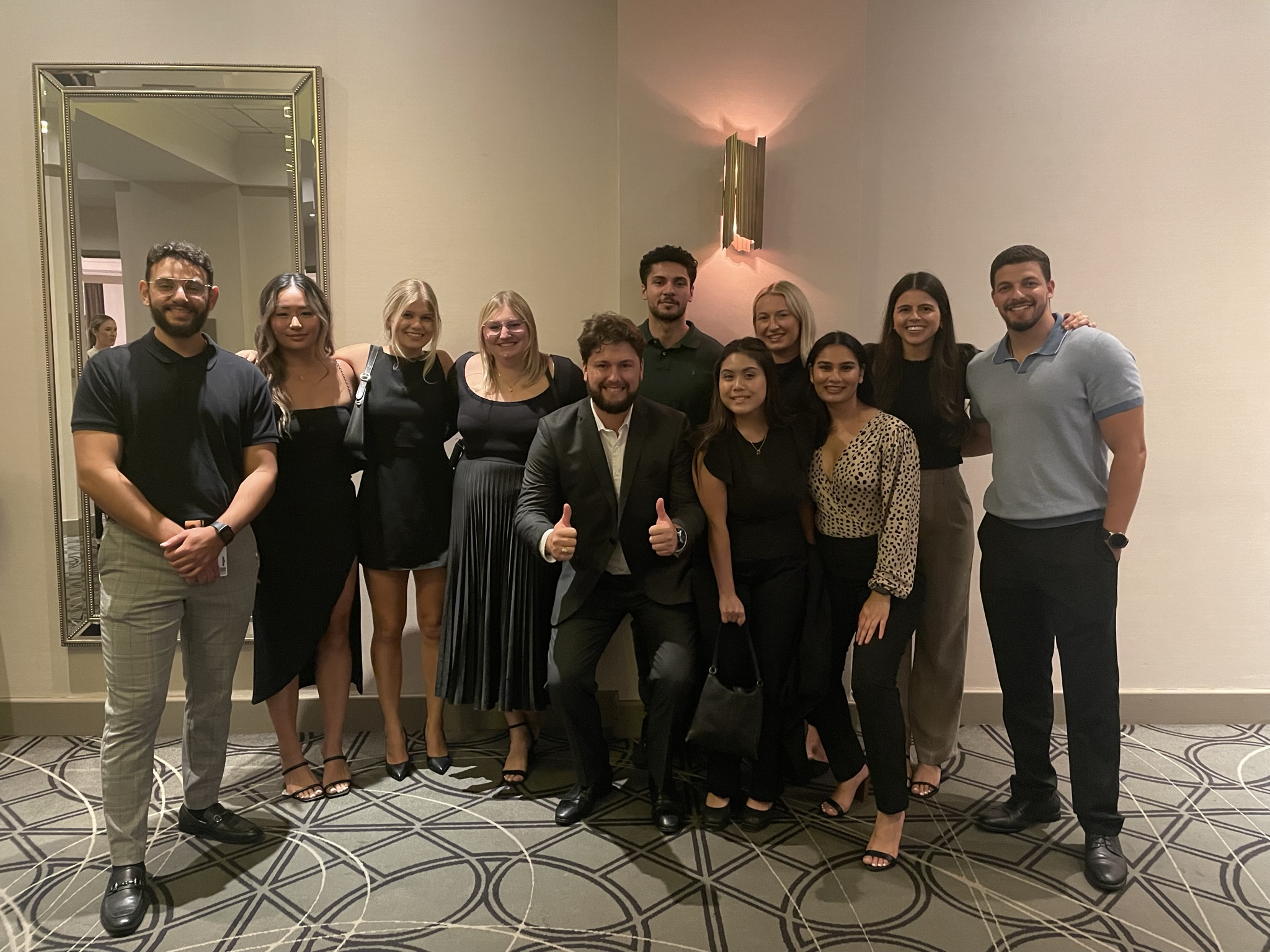
    Reconnecting with old classmates and faculty members is what DentDays is all about! This is exactly what happened in the Dalhousie Dentistry Building on October 25 and 26 as classmates met up, shared stories and memories, and celebrated.

    This year’s event contained many of the hallmark activities from last year’s inaugural DentDays: special lunches for our Golden Grads (the 50th anniversary classes) with the Dean or Director of the School of Dental Hygiene, a CE Day, Outstanding Alumni Award presentations, and a Maritime kitchen party.

    Something old, something new

    Of course, there were new events, too. This year, for the first time, the 25th anniversary classes — the Silver Grads — also enjoyed special lunches with the Dean or Director of the School of Dental Hygiene, and the Friday night Live@5 event, hosted by the Faculty of Dentistry Student Society, attracted a crowd of more than 140 people eager to relive their student days. Also popular was the Reunion Hub, where alumni could look through archival photos and books.

    A celebration event for Dr. Frank Lovely (DDS‘59), this year’s recipient of the Dalhousie Golden Eagle Lifetime Achievement Award, presented on October 24, also attracted alumni back to campus this year.

    Impressive OAA recipients

    At the Outstanding Alumni Award ceremony, classmates and supporters were on hand to celebrate with Dr. Linda Blakey (DDS’89) and Krysti Campbell (DDH’13), this year’s recipients. This recognition was important to them both.

    “It means a lot to me,” says Dr. Blakey, who was also celebrating the 35th anniversary of her class.

    “Thirty-five years ago, I thought I would work as dentist only,” she says, “but then I joined a NLDA Committee with colleagues in St. John’s and found it was a good way to give back.”

    This would be the first of many committees and leadership roles Dr. Blakey would take on during her career. Volunteering as a dentist in Honduras and helping to set up and manage a dental clinic at The Gathering Place, a community health centre in St. John’s, soon followed. These activities, Dr. Blakey says, have been “an important piece” of her dental career.

    Krysti Campbell lives and works in The Bahamas and enjoys an extraordinary career that blends clinical practice with teaching and an extensive range of volunteering activities.

    “This award means more to me than words can say,” she says. “I am deeply humbled.”

    Campbell says her time at Dalhousie played a “pivotal role” in her undergraduate and professional journey, and she gives a lot of credit to the calibre of the training she received.

    “I gained a sense of purpose and responsibility,” she says of her time at the school, adding that, working on a small island, it was deeply significant to her that her “work was meaningful for this award.”

    A Kitchen Party in The Grawood after the OAA ceremony brought the official events of the evening — and the DentDays weekend — to a close.

    Looking ahead to 2025

    Please mark your calendars for DentDays 2025, which will take place on October 17 to 18! The Dental School encourages all milestone classes (every five years) to celebrate and has other changes to the agenda planned.
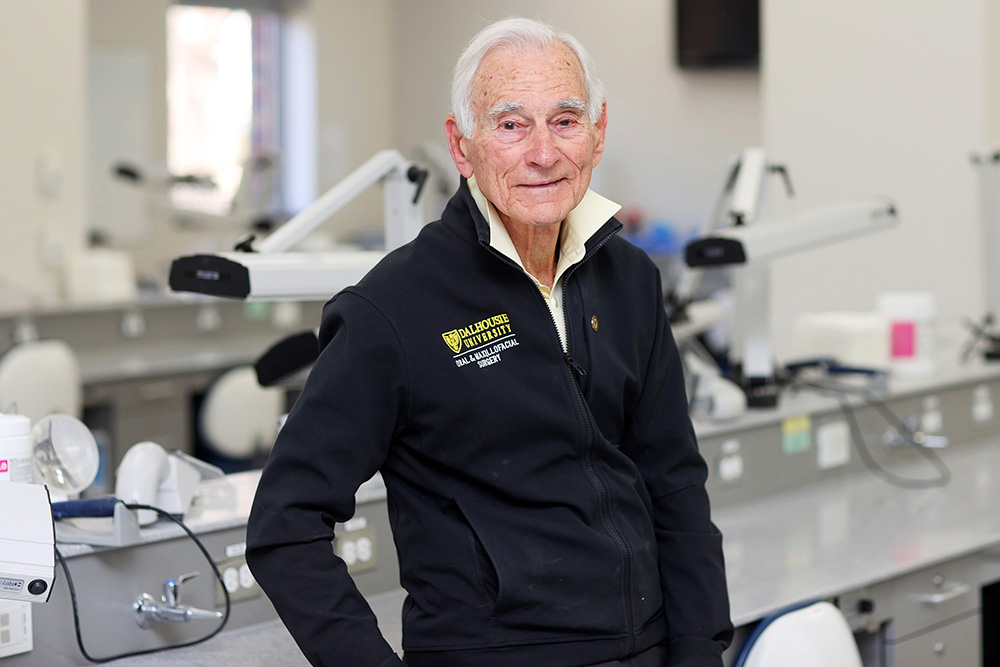
    Dr. Frank Lovely (DDS’59), the 2024 recipient of the Dalhousie Golden Eagle Award for Lifetime Achievement.

  • 2024 Academic Awards Celebration: ‘We did it together’

    2024 Academic Awards Celebration: ‘We did it together’

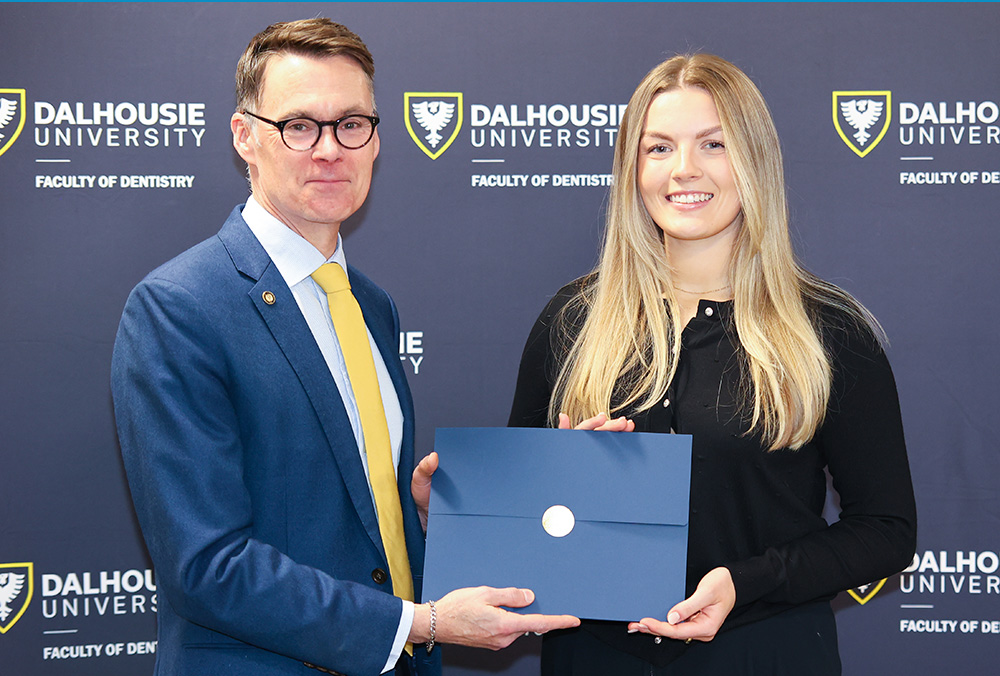
    Above: Dean Dr. Ben Davis presents the NSDA Prize for the greatest proficiency in anatomy to Annika Nobbe (DDS2). Photos by Bruce Bottomley

    On November 19, more than 60 student awards were presented at Dalhousie’s 2024 Academic Awards Celebration, with faculty, staff, and several donors or their representatives in attendance.

    The awards are presented each year to students in both dental hygiene and dentistry for academic achievement, proficiency in specific subjects, professionalism, compassionate patient care, leadership, volunteering, and community involvement.

    The annual ceremony is special for the Faculty of Dentistry, says Dean Dr. Ben Davis, because it’s an “opportunity to celebrate exceptional student achievement and thank donors for their support.”

    Several new awards were given out this year, says Dr. Fran Tompkins, Associate Dean of Students.

    “This means we can recognize and support more students,” she explains. “Equally important, more donors are interested in working with us to support our students.”

    Among those in attendance were Marc and Nick Thoms, who travelled from Newfoundland to present the Dr. Maureen Lawton and Class of ’82 Memorial Scholarship, and Isabel and Lynn Fergusson, who presented the Dr. Bruce N. Fergusson Memorial Award.

    From within the Dalhousie Faculty, Dr. Cynthia Andrews presented the Dr. Noel H. Andrews Memorial Scholarship, Dr. Rick Raftus presented the Dr. Eric Hatfield Memorial Award, and Dr. Leigha Rock presented the Highest Academic Achievement in Dental Hygiene Award and the Lisa Van Alphen Memorial Award.

    Grateful students

    Two of this year’s recipients shared what the awards mean to them. Grace Heukshorst (DDS3) says, “Receiving these awards is a humbling experience because it reminds me of the hard work, support, and dedication that surround us all in this field.” She is also moved by the encouragement provided by professors, colleagues, and mentors “who believe in us even when we struggle to believe in ourselves”.

    David Okunola (DDH2) is grateful to the donors, professors, and loved ones who have “always supported and guided us on our journey to becoming professionals in the dental field.”

    Both students spoke of the bond between classmates and the support they give each other.

    “I know the experiences and memories we’ve created will stay with us forever,” Okunola says. “We didn’t just achieve this milestone — we did it together.”

    Left to right: Rylan d’Entremont (DDS3), Hayden Black (DDS3), Taylor Chaput (DDS4), Annika Nobbe (DDS2), Jade Ley (DDS3), Joshua Hayden (DDS2), Nir El (DDS2), Christy-Bel Moussa (DDH2), Vidhi Shetty (DDS4), and Kendra Cleary (DDS3).
  • 2024 graduate creates scholarship to help future students

    2024 graduate creates scholarship to help future students

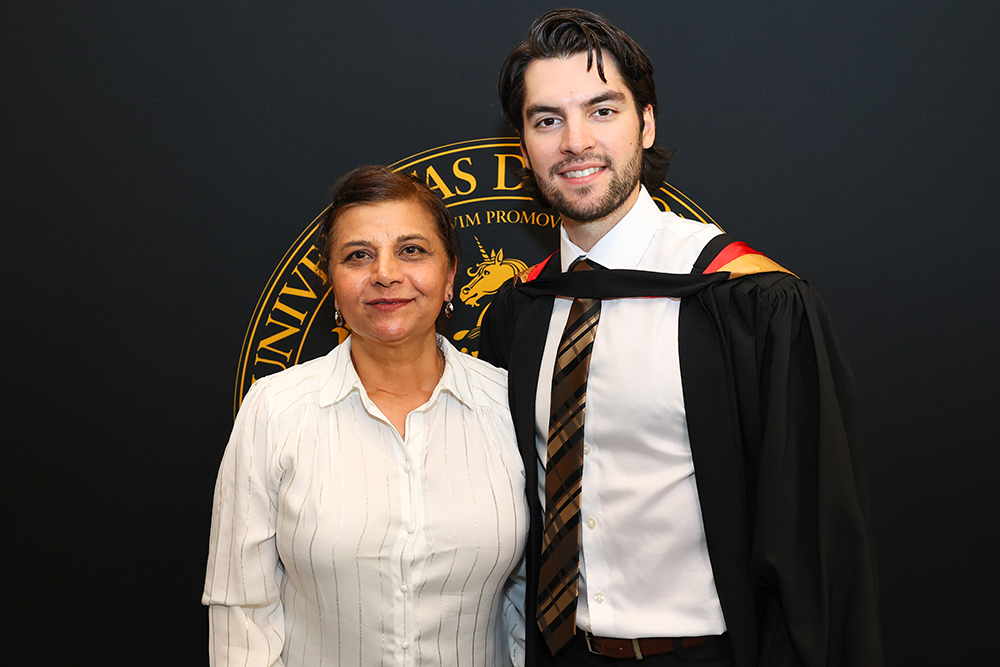
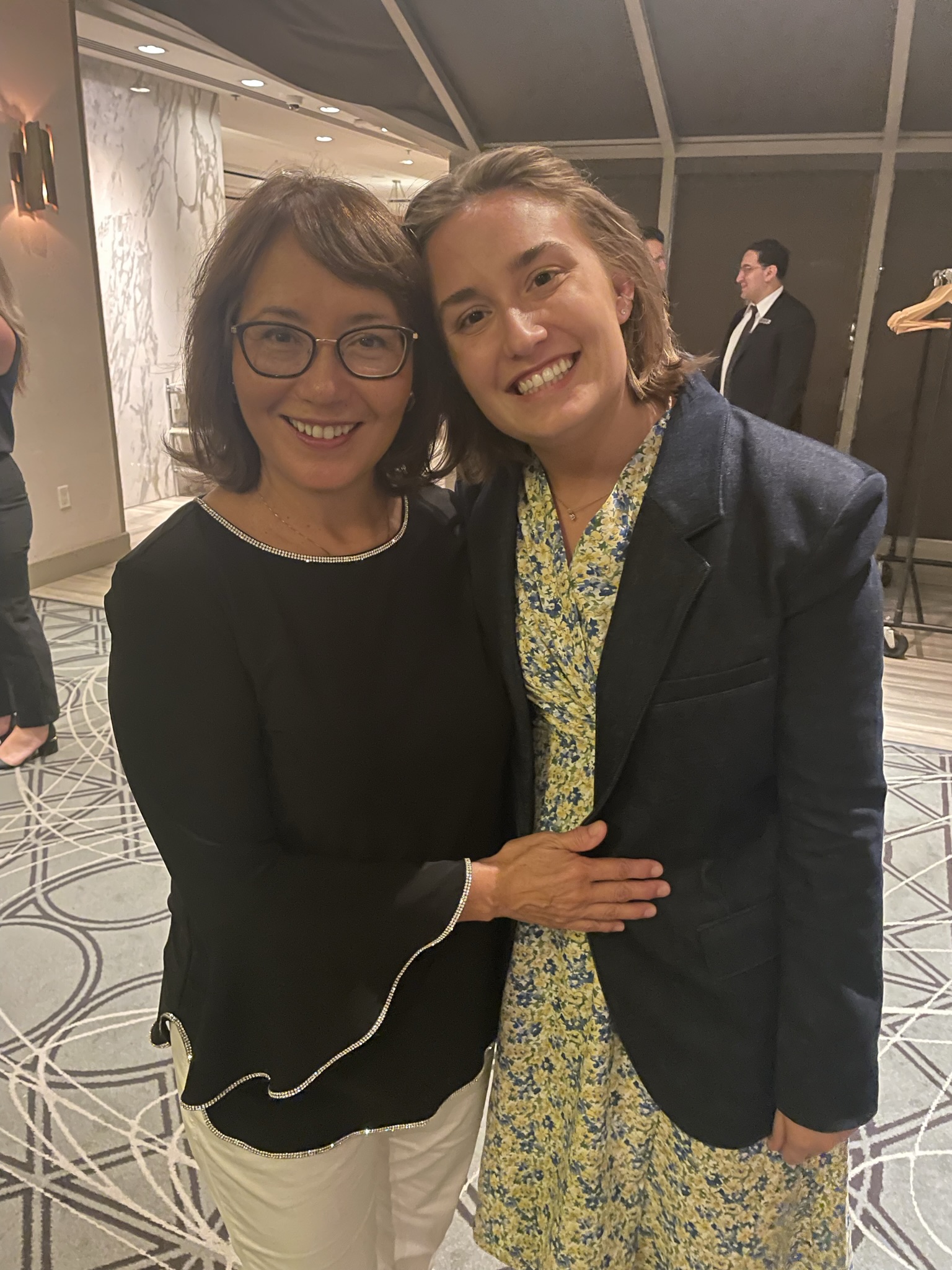
    Jared Lush (DDS’24) and Zohreh Erfanian (DDH’01). Photo by Bruce Bottomley

    Scholarships are a sought-after currency among students. Not only do they recognize achievements, but they also help cover the high costs of education. It’s not often that a graduating student decides to create a scholarship even before their first day at work, but that’s just what Jared Lush (DDS’24) decided to do.

    Compassion, selflessness, and determination are the “greatest traits a dentist can possess,” Lush said in his valedictory speech at the DDS class of 2024 graduation dinner in May 2024. These are traits he himself possesses in abundance.

    It turns out that he had a good role model and mentor in Zohreh Erfanian (DDH’01), an independent dental hygienist and Iranian immigrant in Gander, NL, whom Lush worked for when he was in high school. He assisted with the “administrative side of running her business” and worked as a receptionist. Lush loved interacting with patients and the experience helped confirm oral health was the field for him.

    “It reassured me that it was a career where I could help people and be a social person,” he says.

    A gift from the heart

    Erfanian always supported his aspirations, Lush says, and that support grew over time. While Lush was completing his undergraduate degree in biochemistry-nutrition at Memorial University, Erfanian’s brother Ashkan — the only one of her immediate family also to live in Canada — died as the result of a chemical leak at the office in Alberta where he worked as a security guard.

    “I saw Zohreh during that time,” Lush says, “and you could see the grief and hurt she was going through.”

    When Lush began his dentistry studies in 2020, Efranian continued to encourage him. She also deposited a significant sum of money in his bank account to support his studies, something she continued to do each year of his dentistry degree.

    “Zohreh said she wanted to help support me through dental school,” Lush says. “She said I had helped her a lot and looked out for others. She said she wanted to do it in honour of her brother — to keep his memory alive.”

    Upon finishing his dentistry degree, Lush knew he wanted to repay Efranian in some way.  “I was very grateful to her,” he says, “but it didn’t feel right to accept the money and not do something in return.”

    Lush considered various ways to thank Efranian for her gift, but it was his fiancée, Sierra, who suggested creating a scholarship in Ashkan Efranian’s honour. Lush took the idea to Efranian, who was both moved and in favour of it.

    The next step was to talk to the Faculty’s development officer, Melanie Bremner, about the details of the scholarship.

    Working out the details

    It was agreed that the total gift would be $7,500, pledged over five years at $1,500 per year. Each $1,500 award will be split evenly and awarded annually, with $750 for a recipient in the Diploma of Dental Hygiene program and $750 for the recipient in the Doctor of Dental Surgery program.

    To be considered for the award, recipients must be in good academic standing and enrolled in the final year of either the DDH or DDS program. Further, recipients “will have made an effort to cultivate a sense of community within the Faculty and are friendly, considerate, and generous to fellow students, faculty, and staff.”

    “I didn’t want it to be based just on academic performance,” Lush says.

    Preference will be given to recipients who are “compassionate healthcare providers, exceptional communicators, and show kindness and patience to those in their care,” and who “show perseverance, determination, and courage throughout their education.”

    Lush says Efranian’s perseverance and determination as an immigrant to Canada inspired the final criterion for the scholarship.

    In the future, he hopes to create an endowed fund for the scholarship. Right now, however, he is happy that his vision is taking shape quickly and that Efranian is pleased.

    “I think that by creating this scholarship and naming it after her brother, Zohreh and I are part of it together,” Lush says. “And it gives me the opportunity to pay forward what she did for me.”

    Efranian says she is grateful to Lush and Dalhousie for creating the scholarship to honour her brother who, even though he worked as a security guard, was a teacher who believed that, as a people, we are here to share knowledge and help others to reach their full potential.

    “To overcome the most difficult part of my life — losing my beloved brother — I had to follow his kindness and wishes,” Efranian says.

    The first Mr. Ashkan Erfanian Scholarships will be awarded at the 2025 graduation banquets.

  • Welcome to the Profession 2024: Community, support, and collaboration

    Welcome to the Profession 2024: Community, support, and collaboration

    By Samantha Ashenhurst
    NSDA Communications Manager

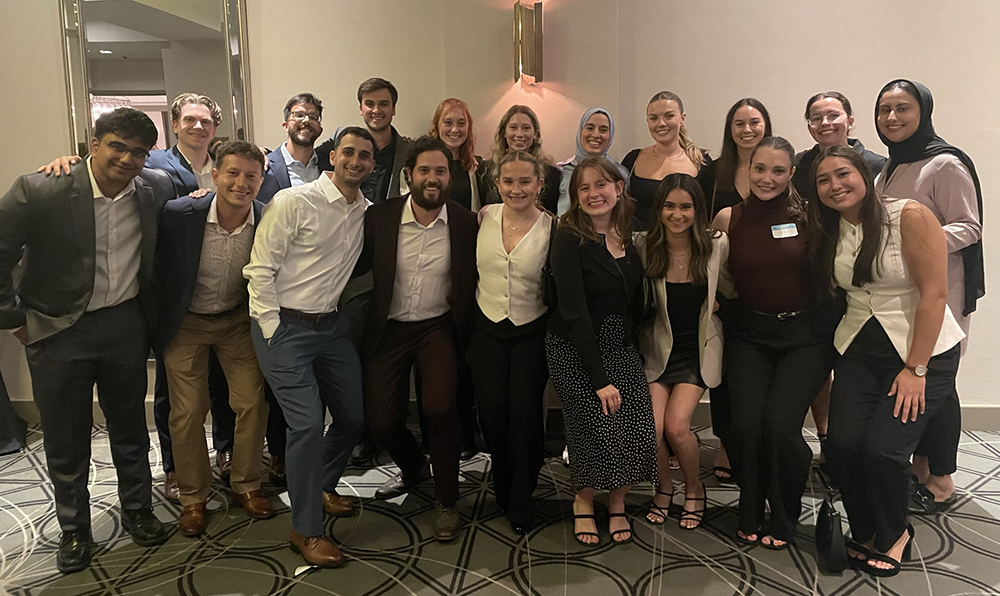
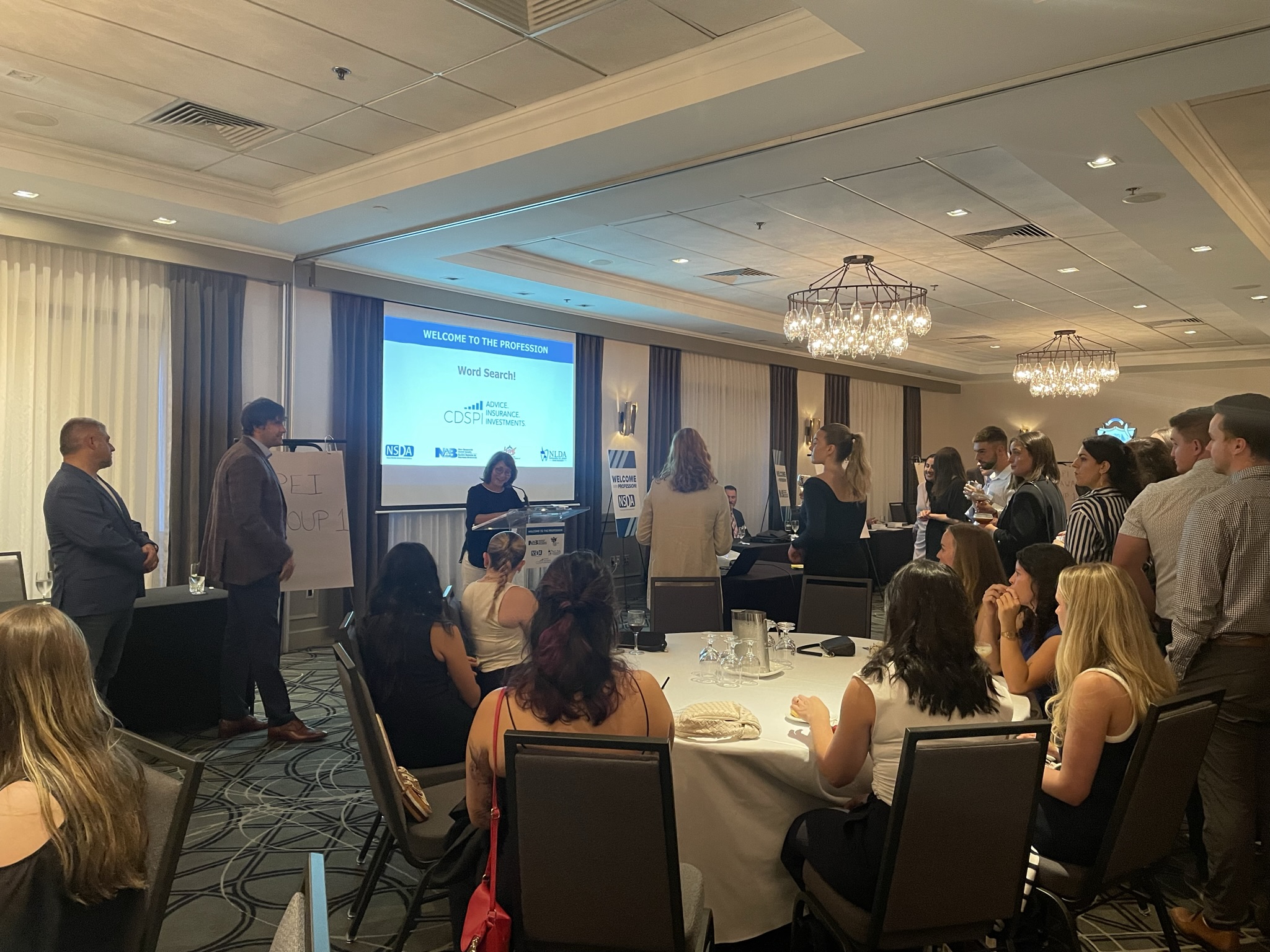
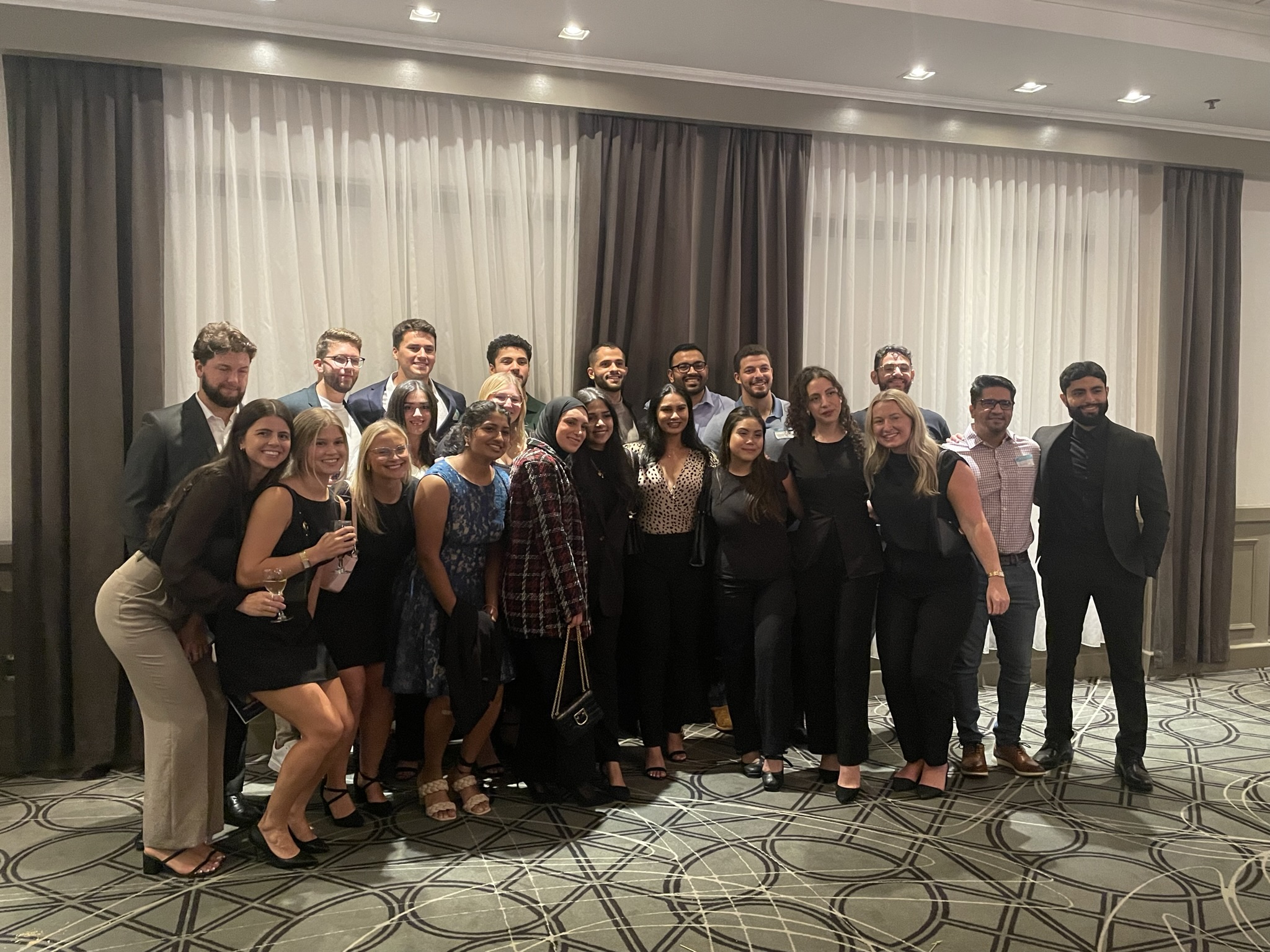
    Atlantic Canada’s next generation of dentists gathered at The Prince George Hotel in downtown Halifax on September 12 to celebrate the Nova Scotia Dentist Association’s annual Welcome to the Profession night. Sponsored by CDSPI, the much-anticipated event hosted dozens of first- to fourth-year Dalhousie Dentistry students for an evening of good food, refreshments, and, of course, networking.

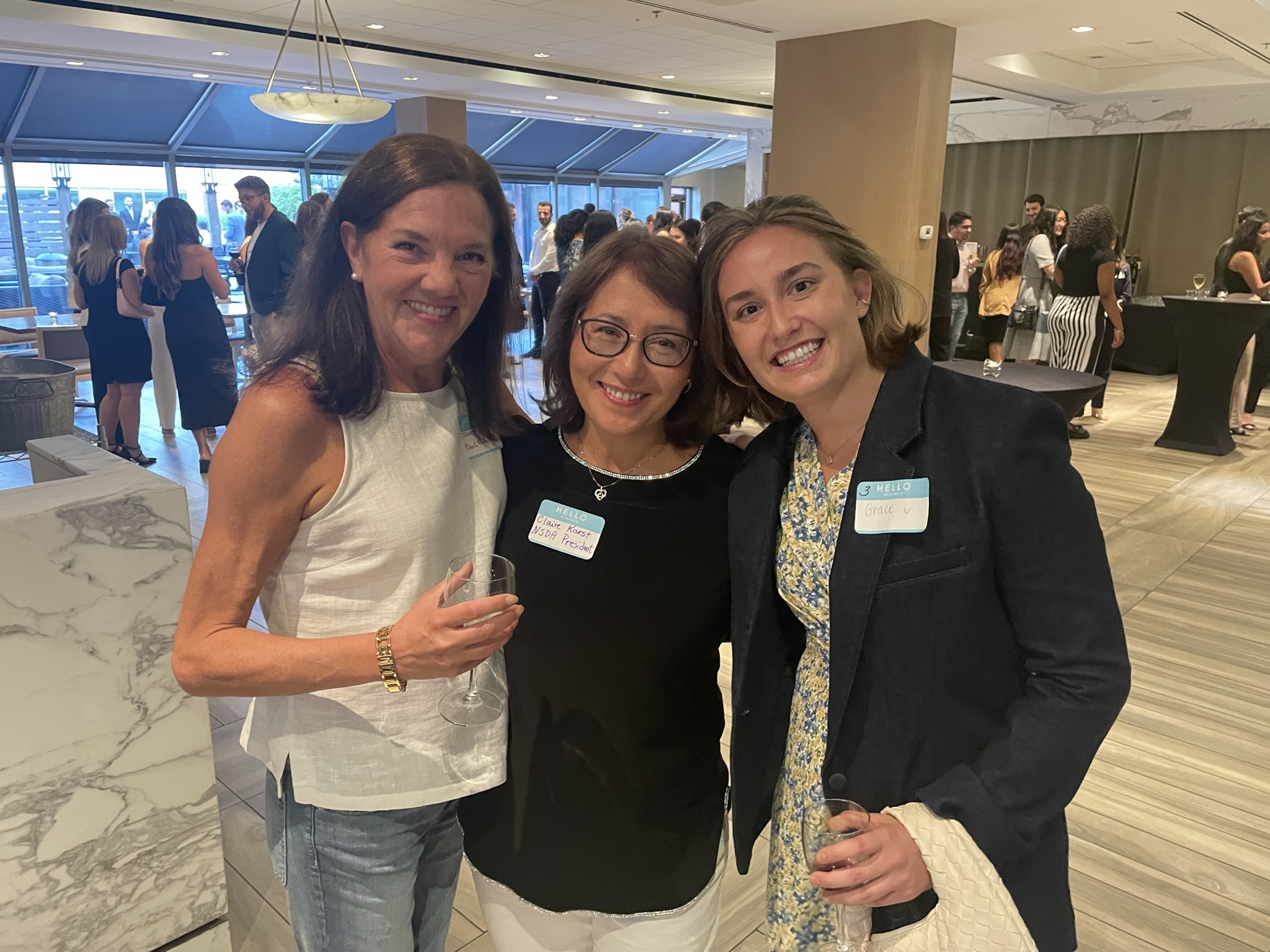
    Dr. Claire Karst, President of the NSDA, kicked the evening off with a short speech.

    “Tonight is about welcoming you to the profession, introducing you to the role of the provincial dental associations, and offering support, whether you are starting your journey in dental school or continuing your travels to the finish line,” Dr. Karst said.

    The event, which was organized by the NSDA Mentorship/Shared Learning Committee — Drs. Joanne Thomas, Marianne Dobbin, Jennifer MacLellan, Carrie Terry, and Sukhip Singh — hosted many special guests, including representatives from CDSPI, the Provincial Dental Board of Nova Scotia, and the Faculty of Dentistry at Dalhousie University. Executive members of the New Brunswick Dental Society, the Dental Association of Prince Edward Island, and the Newfoundland and Labrador Dental Association also joined in on the fun and chatted with students about what life could look like post-graduation.

    Reinforcing this sense of community is a significant aspect of organized dentistry, Dr. Karst shared in her address.

    “As a dentist myself who entered dental school in 1985, the journey will challenge you, teach you, and shape you into more than just clinicians, but life-long learners, educators, advocates, and community leaders,” she said.

    As with every Welcome to the Profession event, the night featured an activity. This year’s game (which demanded knowledge of the provinces, as well as some strategy and educated guesses) asked students to work together in small teams and engage in a little friendly competition.

    “Please, look around this room,” Dr. Karst said. “This is where your success starts, building community with your student colleagues and realizing collaboration is key. Dentistry is a team effort, whether you are working with specialists, dental hygienists, dental assistants, or lab technicians to achieve the best outcomes for your patients.”

    “Remember: At the heart of what we do are the people we serve. When we have a patient-centred approach, we build trust, empathy, and relationships that can last a lifetime.”

  • A whole new ball game in Dalhousie University’s Faculty of Dentistry

    A whole new ball game in Dalhousie University’s Faculty of Dentistry

    Photo by Bruce Bottomley

    At the beginning of 2023, Bryan Fader took the bold step of accepting a newly created position of student success strategist in Dalhousie University’s Faculty of Dentistry.

    Though Fader, with his background in sports performance coaching, might not appear an obvious fit for the role, the truth is that an oral health professional student and a high-performance athlete have more in common than one might think. Now a year in, Fader feels some significant breakthroughs have been achieved.

    A meeting of minds

    It started with a chance encounter in a Halifax supermarket. Fader ran into his friend Dr. Sachin Seth, the associate dean of student affairs in the Faculty of Dentistry, and they exchanged news. Fader said that he was finishing off some qualifications for a master’s degree in counselling and psychotherapy. This gave Seth an idea, which then turned into a job offer: Fader would teach some classes and also offer individual counselling sessions.

    For Seth, it made sense. “Student success rarely occurs in a vacuum — it is closely linked with mental and physical well-being,” he explains. “We asked Bryan to help students deal with any personal issues that could affect their academic journey and provide strategies to help them be more resilient and better able to cope when life gets a bit rough.”

    Fader quickly saw the similarities between his new students and the athletes he was used to coaching. “They’re all high achievers,” he says. “They’re highly driven, they’re intrinsically motivated, they’re used to challenges, and they all feel a pressure to perform.”

    Surprisingly, he also discovered that each student felt they were the only one with these feelings, and this was because they hadn’t had opportunities to talk openly together as a group. Fader changed this by bringing them together in larger class groups — a safe space where what they said was confidential, and where conversations about worries and fears could take place. What the students learned, he says, was that they were all experiencing similar doubts and generally “feeling they’re not doing as well as they’re doing.”

    Strategies for building strength

    A technique Fader recommends for people struggling with anxiety is “horizon vision.” A feeling of stress, he explains, tends to speed things up.

    “The more we drop our heads down, the faster the world gets because we’re seeing it more closely.”

    While the technique originates in treatment of anxiety in general, Fader has also used it to help athletes. “It’s useful for any kind of performance,” he explains.

    Fader also encourages students to understand how stress is felt in their bodies. “People often make the mistake of fixing the challenges they’re experiencing in their head with other thoughts in their head, rather than fixing their bodies,” he says. “That’s why [the way] we hold ourselves and our breathing matters so much. It helps us to slow down before we get into flight mode.”

    An expression Fader says he uses a lot is, “how you do something is how you do everything.” This is another technique he encourages students to adopt. “When does the patient experience start?” he asks his students. Fader maintains that preparing to see a patient involves preparation, rather than waiting until they are in the dental chair.

    “With difficult conversations, challenges, feeling overwhelmed, and seeing a patient, if you practice how you want to be, when the moment comes, you’re way more ready,” he says. “It’s much better than trying to pull yourself up in the minute before something happens.”

    One of the important pillars he shares with students is the concept of desirable difficulty. “When I pitched this concept to the class, one guy said, ‘Dude, we have enough difficulty. We don’t want any more.’”

    While Fader acknowledges this response is understandable, he affirms that when you push yourself, even in a small way, you build a muscle.

    “Think about going to the gym,” he says. “The weights shouldn’t be lighter. The students need to get stronger.”

    His role, he maintains, is to help the students realize they are stronger than they think, and to provide the tools and strategies to harness that strength.

    Becoming comfortable with discomfort

    Getting into dental school is not easy, so why do such high-achieving students suffer so much from imposter syndrome and anxiety? It turns out their high level of achievement is precisely the problem.

    “These students have been the best in their class up until they started dental school,” Fader says. “For them, getting an 80 rather than a 90 counts as failure.”

    Allied to that, Fader maintains that students experience an identity crisis as they transition from being undergrads to becoming oral healthcare students. They have to “let go of one rope in order to grab the next one,” he says, and that makes them feel uncomfortable.

    “I try to normalize that sense of discomfort so the students don’t feel that something is wrong,” he continues. “Their role is changing, and they will feel discomfort as they progress from rope to rope.”

    In the year he has spent in the Faculty of Dentistry, Fader has worked with students in both the classroom and one-on-one in his office. He believes students are realizing they are stronger than they thought and can rise above their feelings of stress and anxiety when they are under pressure.

    Looking ahead, Fader says that he wants students to know they don’t have to be in crisis mode to reach out to him.

    “Therapy tools are life tools,” he says. “The more we can work together to strengthen students’ abilities to handle stress — and even welcome it — the deeper their life satisfaction will be and the more prepared they will be for what the future brings.”

    Fader also runs monthly professional development sessions for staff and faculty. In the future, he hopes to attend conferences so he can help professional dentists better understand graduates, including their strengths and the generational differences. This will help practice owners know what to expect when they hire a new dentist and make them better able to integrate them into the practice.

    Bryan Fader, student success strategist at Dalhousie University’s Faculty of Dentistry. Photo by Bruce Bottomley
  • Easing pain and fear: The heartwarming experience of paediatric dentistry

    Easing pain and fear: The heartwarming experience of paediatric dentistry

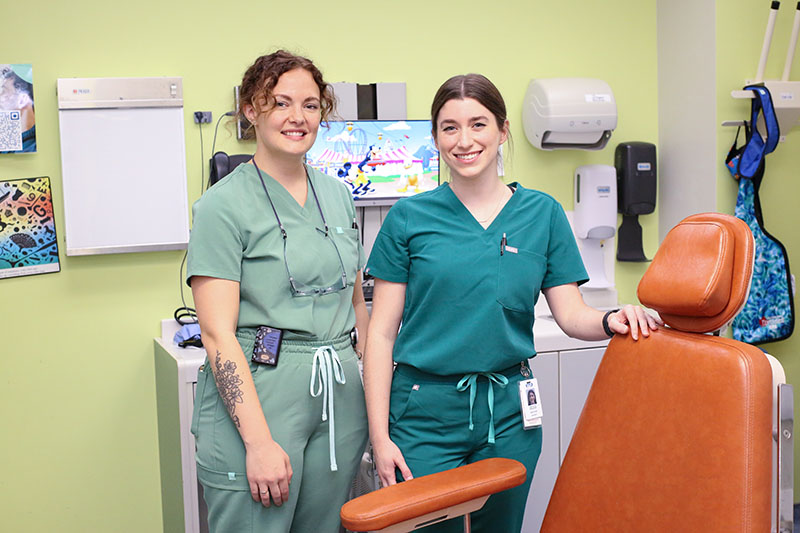
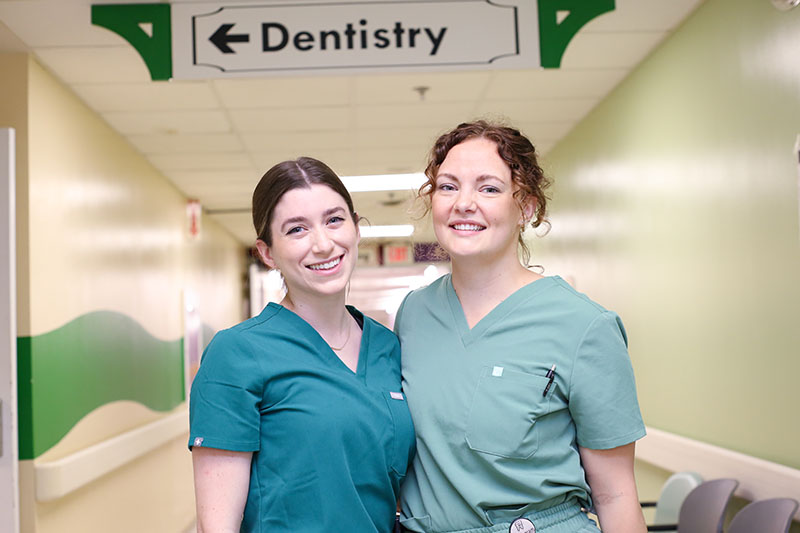
    Above: Renee Ingram and Ellie Wedlake. Photo by Bruce Bottomley

    By Jane Doucet

    Growing up in Halifax, Ellie Wedlake (DDS’23) had a lot of dental work done, including braces and an implant. Along the way, she talked to a few of her dentists about what their workday entailed, which sparked an interest in applying to Dalhousie’s Faculty of Dentistry.

    “I love that dentistry is a mix of science and art — that creativity of problem solving and deciding what to do with a tooth that needs to be repaired,” Ellie says. “Every tooth is different and like a small sculpture.”

    “When I decided on dentistry, I only applied to Dal,” she says. “It has a great reputation, and friends of friends recommended Dal. Plus, all of my family is in Halifax, and I want to stay here.”

    Now, Ellie is one of two dentists working on a year-long paediatric general practice residency (GPR), a Faculty of Dentistry program based at the IWK Health Centre that will wrap up in June 2024. Her background as a ballet, modern, and jazz dancer and dance teacher (while growing up, and at Acadia while studying biology and post-undergrad at Dance Fredericton in New Brunswick) serves her well when it comes to treating children. Her teaching experiences help her relate to children and describe concepts to them on their level.

    “Each one is so different and amazing,” she says. “When a little kid is in pain or scared, and at the end of treatment they say that wasn’t bad at all and they thank me, it’s heartwarming. My goal is to ensure they have a positive experience so they’ll continue to visit dentists as adults.”

    Treating children with complex medical histories and special needs is challenging, but incredibly rewarding. In the run of a day at the IWK, Ellie could see young patients with varying behavioural and/or medical diagnoses, such as autism spectrum disorder, cardiac disorders, or cancer.

    “I love working with kids, and I want to treat lots of them as a dentist,” she says. “I really enjoy the complex treatment planning that comes with working with primary teeth.”

    Making patients comfortable

    Renee Ingram is the other paediatric GPR dentist at the IWK. Unlike Ellie, however, she never had fillings, braces, or any other major dental work during her childhood in Quill Lake, Saskatchewan. In fact, she was lucky enough to need only regular cleanings.

    Renee’s father was a farmer, and she knew that wasn’t the career path for her. Her mother was a lab and X-ray technician, and there were other healthcare workers in her family too. In high school she started exploring medicine, physiotherapy, pharmacy, optometry, and dentistry.

    “I really wanted to be a pharmacist, but I applied and didn’t get in,” she says. “During my undergrad, I studied physiology and pharmacology, which I enjoyed. I stumbled upon dentistry and I fell in love with it almost immediately. I love chatting with my patients and making them more comfortable.”

    In dental school at the University of Saskatchewan, Renee enjoyed treating kids, and would sing songs and play games with them to ease their anxiety. She only saw paediatric patients only once a week, though, so it was a limited experience — and she wanted more.

    After one of her professors recommended Dal’s GPR program, she talked to some people who had gone through it.

    “They said I would learn and gain so much,” she says. “I liked Halifax, so I only applied to Dal. I put all my eggs in one basket!”

    Like Ellie, Renee is also a dancer. She started highland dancing when she was three years old and ran a dance school in Quill Lake from age 15 to 21. Today, she still dances for fun. Teaching dance to kids helped her learn to communicate with them on their level.

    “I’m also the oldest of five, and I have too many cousins to count,” she says, laughing. “I grew up babysitting, so it comes very naturally to me to take care of children.”

    Options for the future

    At the IWK, Ellie and Renee conduct new patient exams, treatment, and follow-up in the referral-based practice, supervised by the paediatric dentists who work at the hospital. The pair shares a desk in a small office, and, while they see different patients, they look over charts together and discuss cases.

    “We sit next to each other, and we became fast friends very quickly,” Ellie says. “When we have a tough day, we’re there for each other.”

    Renee can’t imagine doing the GPR solo.

    “I love that it’s the two of us,” she says. “Ellie is a great sounding board and someone to share everything with.”

    The pair also trade a 24-hour pager — one week on, one week off.

    “Kids can fall off a bike, a scooter, or the couch and break a tooth,” Renee says. “You never know when you might be paged for a dental trauma.”

    The youngest patient Renee and Ellie have seen was just two days old, and was born with two early teeth coming in that needed monitoring. Patients normally range from one to 15 years old.

    There are several treatment options offered at the IWK, depending on the specific needs of the patient, which range from no or mild sedation to general anesthesia in the operating room. Regardless of the level of sedation implemented, Ellie and Renee both enjoy managing patient behaviour by telling stories, playing games, or singing songs while performing dental treatment. After treatment, the pair likes to reward patients with stickers and popsicles.

    Once they finish the GPR program, Ellie and Renee are thinking about returning to a general family practice to treat both kids and adults, at least for a while. Whether they choose a career path in the future specializing in paediatrics remains to be seen, although it’s a strong possibility. Midway through the GPR, they only had good things to say about their experience in the program.

    “This has been the most positive job experience I’ve ever had,” Renee says.

    At the IWK, Ellie Wedlake and Renee Ingram conduct new patient exams, treatment, and follow-up in the referral-based practice, supervised by the paediatric dentists who work at the hospital. The pair shares a desk in a small office, and, while they see different patients, they look over charts together and discuss cases.
  • How I spent my summer vacation: Lessons in patient care from seasoned professionals

    How I spent my summer vacation: Lessons in patient care from seasoned professionals

    By Cheryl Bell, Communications Manager, DAL Faculty of Dentistry

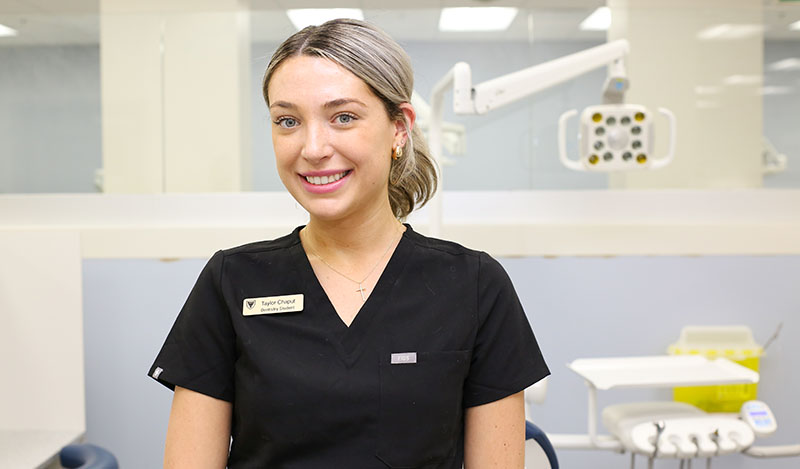
    When Taylor Chaput heard she could take a seven-week clinic observation elective in the summer between the second and third year of her Doctor of Dentistry (DDS) program, she seized the opportunity with gusto.

    Dentistry students at Dalhousie University typically spend the first two years of their program in the classroom and labs, learning the science and hand skills they will need before they meet their first patient. Everything changes in third year when students make the transition to clinical practice and begin treating patients in the Faculty of Dentistry clinic.

    For Chaput, the opportunity to spend part of the summer gaining clinic experience by watching and assisting senior dentistry students as they treated patients made good sense.

    “In dentistry school, we only have about two years where we do hands-on clinical work,” she says. “Our professors and instructors teach us as much as they can, but there will be things we have to learn on our own. I thought, ‘What greater opportunity to learn from other students and be exposed to patients I might not otherwise be exposed to.”

    Putting learning into action

    Chaput anticipated she’d be watching fourth-year students at work, soaking up information like a sponge. At most, she figured she might administer local anesthesia, which she had been taught to do.

    It was better than that, though. In fact, she was able to do three fillings herself. Chaput admits she was nervous, but knew she was “in good hands.”

    “You know, you have to start somewhere,” she says.

    One of the fillings involved drilling out decay and discovering — as her professors had told her — that a real tooth is nothing like the plastic teeth she had practised on.

    The other two restorations were on broken front teeth, which involved drilling, colour-matching, and shaping the material used to rebuild the tooth, as well as making sure the repaired tooth was comfortable for the patients — and that they were happy with the results.

    “Seeing the before and after was a standout moment for me,” Chaput says. “I’ll definitely remember it later in my career. It went well, and I was proud of my work.”

    In addition to the unexpected hands-on experience she gained, Chaput says she learned a lot about interacting with patients, particularly from Dr. Rick Raftus, one of the small group practice leaders. “He puts people at ease by being kind and just having normal conversations with them,” Chaput says.

    Before doing the elective, Chaput says interacting with patients was one of the scariest aspects of going into third year.

    “It means not just working on my typodont, which can’t talk to me, and not just taking notes on my laptop,” she explains. “We’re now putting what we learned into action, and that’s a big leap in our responsibilities.”

    Would she recommend the summer observation elective to other students? Chaput says it was a “no brainer” for her.

    “Dentistry is hard and you can’t just learn it from a book,” she says. “You have to learn it with your hands, through your peers, and from the people who have been doing it for years. This experience taught me that. It will definitely help me to become my best version of Dr. Taylor Chaput in the future.”

  • Meet Dr. Ferne Kraglund, Associate Dean of Students at Dalhousie University Faculty of Dentistry

    Meet Dr. Ferne Kraglund, Associate Dean of Students at Dalhousie University Faculty of Dentistry

    In junior high and high school, Dr. Ferne Kraglund (DDS ‘04) volunteered on the geriatric floors at Saint John Regional Hospital in New Brunswick. There, she enjoyed chatting with patients who had dementia.

    Kraglund’s mother was a nurse, and her father was a teacher. Some of her friends’ dads were physicians, and she eventually ruled out a career in medicine when she noticed they weren’t home much. Knowing she wanted to have a family someday, Kraglund considered optometry and dentistry because of their regular hours. Ultimately, she chose the latter, partly because she had a good rapport with her own dentist.

    While this might seem like an unusual way for a teenager to spend her spare time, it wasn’t odd for Kraglund. “I grew up around older individuals, and I liked talking to them,” she says. “I thought I’d become a geriatrician, specializing in dementia.”

    After completing a BSc with a double major in biology and psychology from the University of New Brunswick Saint John, Kraglund sent away for applications to the dental schools at Dalhousie and McGill.

    “I ripped up the one for McGill and just applied to Dal,” she says. “I had never been to either of them, but I knew I wanted to be close to home.”

    From practice to teaching

    After graduating in 2004, Kraglund returned to Saint John and practised there for two years. While she enjoyed treating patients, she discovered she didn’t care for the business side of private practice. So, she reached out to Dal to ask about teaching. She was encouraged to try it part time, which she did for a year.

    It was a gruelling schedule. Kraglund, who was 28 at the time, would work in Saint John Mondays through Wednesdays, then hop in the car late on Wednesday nights and drive to Halifax, where she slept on her sister’s couch. On Thursdays and Fridays, she taught in the Faculty of Dentistry from 8 a.m. to 5 p.m. During those 12 months, she realized she enjoyed teaching more than practice.

    When it was brought to her attention there were no public health dentists on faculty, Kraglund was asked if she’d like to return to school. There was only one Canadian university offering a dental public health master’s degree, which was the University of Toronto.

    “My husband and I had bought a house in Saint John the year before, so it wasn’t good timing in that way, but I knew the program was a specialty made for me,” she says.

    In 2007, Kraglund moved to Toronto, leaving her husband and dog missing her back home. As lonely as she was for them, too, she was determined to complete the two-year program.

    In July 2009, degree in hand, she moved to Halifax (with her husband and dog!) to teach full time.

    “I loved it right away because it was such a good fit,” she says.

    From then until 2019, she also worked one private practice day at the Faculty Practice Clinic. It was there where Kraglund experienced a full-circle moment from her days as a hospital volunteer. For more than a decade, two of her regular patients were an older married couple. Over time, she noticed a cognitive deterioration in the husband.

    “His wife talked to me about what was happening to him, and it was like therapy for her,” she says. “It felt like my volunteer work and my psychology studies had prepared me to have those kinds of conversations with patients.”

    Here during the good, the bad, and the ugly

    Kraglund’s teaching has encompassed all four years of the DDS curriculum and clinical instruction in the School of Dental Hygiene. In 2014, she was appointed assistant dean, students, and in 2019 she became associate dean, students.

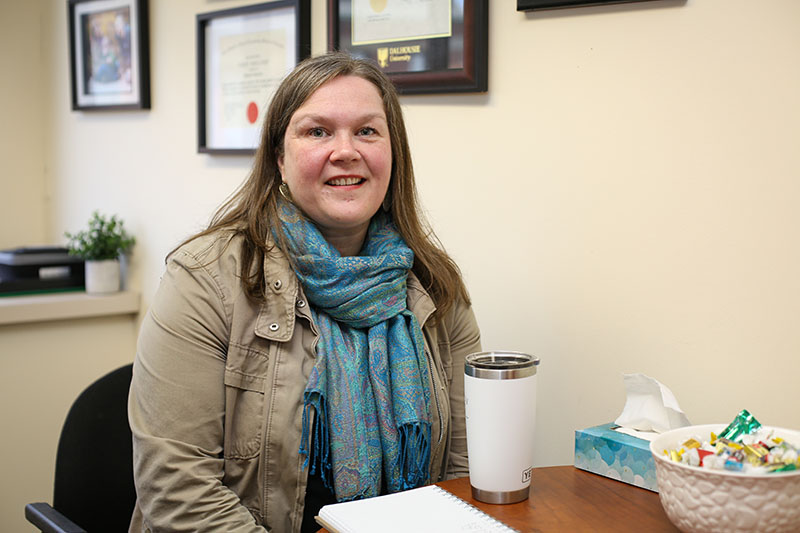
    “It’s a 24/7 job because I’m here for our students during the good, the bad, and the ugly,” she says. “I tell them I’m like their mom here — I have candy and Kleenex on my desk.”

    Students are advocating for themselves now more than ever, Kraglund notes, especially when it comes to their mental health and wellness, which she supports.

    “We want them to enjoy their time in this community, and to be involved partners,” she says. “You have to accommodate when it’s reasonable, but also not be afraid to say no with good reason.”

    The students’ welfare is always at the forefront for all faculty.

    “The students bring us into the building, and they’re inquisitive and fun to work with,” Kraglund says. “We spend a lot of time with them, and it’s sad to say goodbye when they graduate, but I’m also super excited to welcome our new students each fall.”

    In 2021, Kraglund received the Rosemary Gill Award, which demonstrates a high level of commitment to students. Today, she’s reflective as she prepares to step away from her associate dean role in 2024.

    “I’d like to think I made headway in allowing the students to have a lot more say than I did when I was in their shoes, and having the staff and professors think about them in a different way,” she says. “If we’re all happy, it helps us show up and do our best. It’s an honour and a pleasure to work with them from recruitment right through to when they become alumni.”

    Five Questions with Dr. Kraglund
    1. What do you do in your own time for fun?
    I love spending time with my husband and son. We love music, playing games, watching movies, and adventuring in local parks. Personally, I like to do puzzles, build Lego, cross-stitch, and hike.
     
    2. What’s your main message when it comes to promoting oral health?
    Fortunately, most people in Canada have good oral health and are well cared for by our dental community. There are, however, many individuals who still need our care and attention. I want to encourage and challenge my colleagues and students to seek out people who need our help in getting the care they need and deserve. We have great capacity in our professions to make a huge impact on someone’s life. The cases that are personally the most memorable and rewarding are the ones that give me the warm fuzzies.
     
    3. What would you do for work if you had to choose an alternative career?
    I would be a geriatrician specializing in dementia. They were the individuals I enjoyed the most when I volunteered as an adolescent.
     
    4. Do you have a hero or role model you look up to?
    I have too many to mention! There have been so many wonderful people who have had an impact on me, both personally and professionally. I try to take the qualities I admire the most about people I meet and apply them to my own life.
     
    5. What would you take to a desert island?
    Can I take a contestant from Alone?! That’s probably cheating. I wouldn’t want to subject my family to being on a desert island, so I’d want to have a dog for company…and a multi-tool and tarp!
  • Dalhousie Grad profile: Olu Brown

    Dalhousie Grad profile: Olu Brown

    A whole new world

    Olu Brown’s (DDS’23) first encounter with the Faculty of Dentistry at Dalhousie University was as a nervous patient needing several fillings.

    The story could have turned out very different differently, but Brown says that she and her dentistry student Wade Power (DDS’07) worked through the treatments together. “He improved my dental IQ and decreased my dental fear. And I just fell in love with this place,” she says with her big smile. That was in 2006.

    The start of a beautiful – and very long – relationship

    At the time, Brown was a psychology student at Dalhousie University, trying to decide between becoming a nurse or a psychologist. But her connection with Dal goes back much farther.

    As a student at Highland Park Junior High, Brown was selected to attend a week-long math camp for African Nova Scotian kids, which gave her the opportunity to live on campus and attend classes.

    “It opened my eyes to university and university life,” says Brown. “Nobody in my family had gone to university and I had no idea there was this world out there.”

    Brown returned to campus in 2001 to take the Transition Year Program for African Nova Scotian and Indigenous students. “The idea is that it helps you bridge the gap between high school and university,” says Brown. “It was a deep dive into our history – who we are and why, and why education is so important. It was really great for me.”

    Nearly four years later, Brown was reaching the end of her BSc in psychology when her trip to the Dalhousie Dental Clinic opened her eyes to the world of oral health. She began to take the prerequisites for the diploma in dental hygiene program and her application was successful.

    The process may sound straightforward, but Brown was also caring for her young daughter, born was Brown was 18, and working in blood collection in the Dickson Building at the QEII Health Sciences Centre. “I’d work 6:00 to 8:00 a.m. and then run across to class in the Dentistry Building at 8:00.”

    Brown says she loved dental hygiene and the feeling of belonging to a profession. But after graduating in 2009 and a year of practice, she came back to take the recently introduced bachelor of dental hygiene (BDH) degree program. “I wanted the degree – the full package,” she explains.

    The BDH program exposed Brown to outreach clinics in schools and, most memorably, at Mount Hope Hospital where she cared for patients with mental diseases. Brown realized she wanted to help people who live in long-term care facilities.

    The process of packing and unpacking instruments and supplies each week and travelling to the hospital gave Brown a solid foundation for her mobile dental hygiene business, which she launched in 2011, shortly after the dental hygiene profession became self-regulating.

    Successful right out of the gates, she worked with United Way and travelled between clinics at schools and different special needs and youth groups. Brown operated her mobile business for nine years, until COVID-19 brought it to an end.

    Exciting beyond what she imagined

    By then, however, Brown was back at the Faculty of Dentistry. The initial spark Brown had felt when she first visited the Dalhousie Dental Clinic in 2006 had not gone away. “I loved dental hygiene, but part of me wasn’t satisfied. I wanted to do more for my patients.” Her mentor and role model, Dr. Barb Hamilton-Hinch, also encouraged her.

    “I am ambitious,” she admits. “I enjoy achieving the impossible and being uncomfortable doing so. Becoming the first doctor in my family and starting a legacy for them is really important to me.”

    With her daughter more independent, the time felt right. Brown assembled the credits she needed for dentistry and continued to operate her mobile clinic until she was accepted on her second application.

    In 2019, Brown was back at Dal again as a first-year dentistry student. She was already familiar with hand skills and patient care, but the science involved in dentistry was a whole new world for her. “I was blown away by evidence-based medicine, the intricacy of the human body, and the link between the oral cavity and overall health.”

    Working in the outreach clinic at the North End Community Health Centre was another highlight. “Most of the patients were people from my home community,” she says, “including some of the friends I grew up with.”

    She also recalls the moment she delivered her first denture. “It’s so exciting to be able to give a patient new teeth and a smile,” she says. “After eight or nine appointments, you’ve built a relationship with them and you’re nervous and happy for this moment in their life.”

    Brown loved the spirit and supportiveness of the class, too. “When I was in dental hygiene, the world was a different place,” she explains. “I was one of two black kids in my class. I felt really isolated.”

    Fast forward nearly 20 years and her class is made up of students from a wide range of ethnicities and backgrounds. “I can’t imagine a better group of people. I never felt I was a part of something as much as I do now,” she says.

    Now 43, Brown thinks her student years have come to an end. She’ll begin working at the Bible Hill Dental Clinic this summer, and she and some of her classmates plan to create a website to help students from minority backgrounds find the educational information and resources they need.

    And, because she loves “this place” so much, Brown would love to return to Dal – again – to teach.

    “I am ambitious,” says Olu Brown. “I enjoy achieving the impossible and being uncomfortable doing so. Becoming the first doctor in my family and starting a legacy for them is really important to me.”
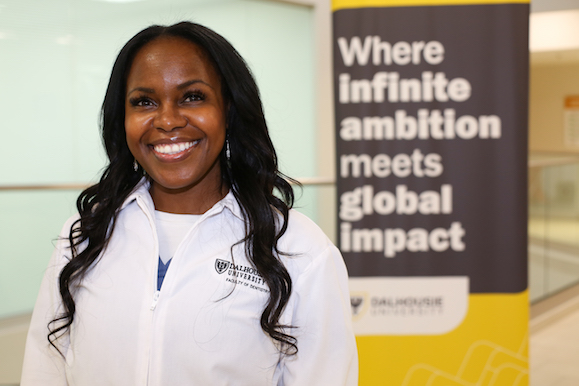
    Olu Brown. Photographer: Bruce Bottomley
  • Dalhousie Grad profile: Alero Boyo

    Dalhousie Grad profile: Alero Boyo

    Figuring out the future step by step

    For Alero Boyo, convocation this year meant tying a bow on 17 years of university education. Her most recent degree, a combined Doctor of Medicine/Master of Science in Oral Maxillofacial Surgery from Dalhousie University, accounts for the final six years. The university accepts just one student into this program each year, so Boyo is the lone graduate for 2023  – and only the second female graduate from the program.

    Back in 2006, when she was studying for her first degree at the University of Ottawa, Boyo didn’t dream of becoming an oral and maxillofacial surgeon, but she felt that a health sciences profession was in her future.

    “I don’t think anyone knows where they’re going to end up, unless your plans are really focused,” says Boyo. “And sometimes you have plans and then your plans change.”

    She explored both medicine and dentistry during her undergrad years as a medical science student, volunteering at a children’s hospital in Ottawa and a dental clinic for homeless and underprivileged people. But it was what she saw at the dental clinic – and the influence of a good mentor – that captured her interest.

    Boyo’s next step surprised even her. “I decided rather late that I wanted to do dentistry,” she explains. “So even though I’d written the DAT exam, I had missed the deadlines to apply to the Canadian dental schools that cycle.”

    So, “just to see”, she applied to dental schools in the UK and Ireland and was accepted at the School of Dental Science at Trinity College Dublin, a five-year program.

    “It was a great decision, and it gave me a different life experience,” says Boyo, who enjoyed easy and inexpensive European travel while she was in Dublin, and the opportunity to make friends from many different places. The second term of her fourth year at dental school was spent as an Erasmus scholar on exchange in Stockholm, taking over the patient lists of a Swedish dental student who spent the term in Dublin treating Boyo’s patients.

    A series of stepping stones

    Dr. David Psutka, Boyo’s mentor from Toronto and an oral and maxillofacial surgeon, helped her think about her next step and encouraged her to consider specializing. 

    Although her interest in oral and maxillofacial surgery was growing, Boyo decided to spend a “stepping stone” year doing a general practice residency (GPR) at Mount Sinai Hospital in Toronto.

    “In Canada, you don’t typically apply for oral and maxillofacial surgery right out of dental school,” Boyo explains. “A GPR gives you more hands-on exposure to complex cases, including oral surgery, so it helped me explore my options.”

    There are just five English-speaking oral and maxillofacial surgery programs in Canada, so it’s competitive to get in. The first time she applied, Boyo was turned down. Although it was disappointing, Boyo decided to spend a second stepping stone year at the University of Michigan School of Dentistry where she pursued an oral surgery internship.

    She explains that the role meant functioning as a first-year resident, helping out in the clinics, being on call, and assisting in the operating theatre. “It was great experience to get, whether you wanted to pursue oral surgery or add to your skills as a general dentist,” says Boyo. It also strengthened her applications to study oral and maxillofacial surgery the second time round.

    In it for the long haul

    Not surprisingly, Boyo says she had doubts and concerns before embarking on her six-year program at Dalhousie. “It’s hard work and a long commitment,” she admits.

    But she likes that oral and maxillofacial surgery is a “bridge” between medicine and dentistry. She also says that it’s really rewarding professionally, particularly in terms of the kinds of difference an oral and maxillofacial surgeon can make in some patients’ lives.

    The work ranges from caring for patients who have been in accidents or are receiving cancer treatment, to dealing with wisdom teeth or treating temporomandibular joint (TMJ) disorders. Boyo says she enjoys it all, even though a typical day begins at the hospital around 6:30 a.m. with rounds and doesn’t end until around 5:30 or 6 p.m. It’s not unusual to study for exams in the evenings, plus residents are typically on call one night a week and one weekend a month. It’s a real job combined with being a student.

    Boyo may joke about going to law school next, but really, she is happy with the path she has taken to get where she is. Each of her stepping stones gave her an opportunity to explore her options and to learn and prepare for the next step.

    And that included coming to Dalhousie. “It’s a strong program and well rounded,” says Boyo. Some other oral and maxillofacial surgery programs are only four years long, whereas Dal’s is six years and incorporates medical school as part of the program. “Did I enjoy all of it? Probably not, but it was all good learning,” Boyo admits.

    This graduation is the beginning of an exciting new chapter for Boyo. Her six years in Halifax have convinced her that this is now home. She will start work at a private practice this summer and also hopes to have a role supervising and mentoring undergraduate students in the Faculty of Dentistry.

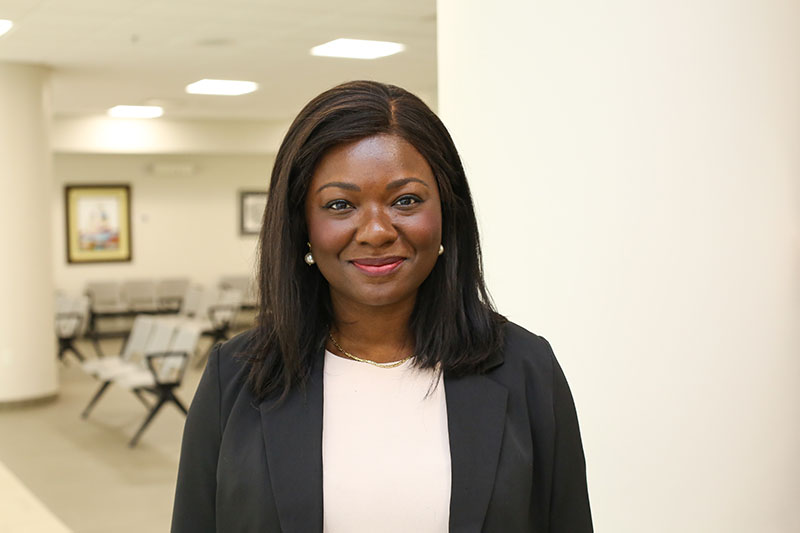
    Alero Boyo. Photographer: Bruce Bottomley