Tag: Self-care Corner

  • Self-care Corner: Understanding the Yamas

    Self-care Corner: Understanding the Yamas

    In the pursuit of personal well-being, we often seek various techniques and practices that promise to enhance our physical health, mental clarity, and emotional balance. While yoga is commonly associated with physical postures (asanas), its philosophy extends far beyond the mat. Central to this philosophy are the Yamas, which serve as ethical guidelines for living a meaningful and harmonious life.

    Understanding the Yamas

    The Yamas are the first limb of the eightfold path of yoga, as outlined by the sage Patanjali in the Yoga Sutras. They represent moral principles or restraints that guide our interactions with the external world and ourselves. By adhering to these principles, individuals cultivate a sense of integrity, compassion, and peace within themselves and in their relationships.

    Exploring each Yama

    • Ahimsa (Non-violence): Ahimsa encourages us to practice compassion and non-violence towards all living beings, including ourselves. It invites us to cultivate kindness in our thoughts, words, and actions, fostering an environment of harmony and understanding.
    • Satya (Truthfulness): Satya emphasizes the importance of honesty in all aspects of life. Being truthful not only builds trust with others but also nurtures authenticity within oneself, leading to greater clarity and inner peace.
    • Asteya (Non-stealing): Asteya teaches us to refrain from taking what does not belong to us, whether it be material possessions, time, or energy. By respecting the boundaries and possessions of others, we uphold fairness and integrity in our interactions.
    • Brahmacharya (Moderation): Often associated with celibacy, brahmacharya encompass moderation in all aspects of life. By practicing moderation, individuals conserve energy and maintain balance, fostering physical, mental, and emotional well-being.
    • Aparigraha (Non-possessiveness): Aparigraha encourages us to let go of attachments to material possessions and desires. By reducing our attachment to external things, we free ourselves from unnecessary burdens and cultivate contentment with what we have.

    Applying the Yamas to personal well-being

    Integrating the Yamas into our daily lives can significantly enhance personal well-being in many ways:

    • Mindfulness: Practicing Ahimsa and Satya fosters mindfulness and self-awareness, enabling individuals to understand their thoughts, emotions, and behaviours more deeply.
    • Healthy relationships: Asteya promotes respect and trust in relationships, fostering healthy boundaries and mutual respect. This contributes to emotional well-being and a sense of security in interpersonal connections.
    • Balance and moderation: Embracing brahmacharya encourages individuals to prioritize their physical, emotional, and mental health, promoting a balanced and sustainable lifestyle.
    • Inner peace: Aparigraha helps individuals detach from material desires, leading to greater inner peace and contentment with oneself and life circumstances.

    Inner harmony

    Incorporating the Yamas into our lives offers a holistic approach to personal well-being, addressing not only physical health but also emotional balance, mental clarity, and spiritual growth. By cultivating these ethical principles, individuals can navigate life’s challenges with grace, foster harmonious relationships, and nurture a deeper connection with themselves and the world around them. Ultimately, the Yamas serve as a timeless guide for achieving inner harmony and leading a fulfilling life rooted in compassion, truth, and integrity.

    Stay tuned for the next edition of Self-care Corner, where the second limb, the Niyamas, will be discussed.
  • Self-care Corner: Breathing techniques

    Self-care Corner: Breathing techniques

    We are all aware of the vital importance of our breath, but practicing certain breathing techniques can do more than keep us alive: They can relax our bodies, calm our minds, and improve focus and concentration.

    One such technique, Ujjayi Pranayama (or “Ocean Breath”), can stimulate the vagus nerve, promoting all of the above benefits. Ocean Breath is commonly performed during yoga practice, but can be done anytime and anywhere.

    How to do it:

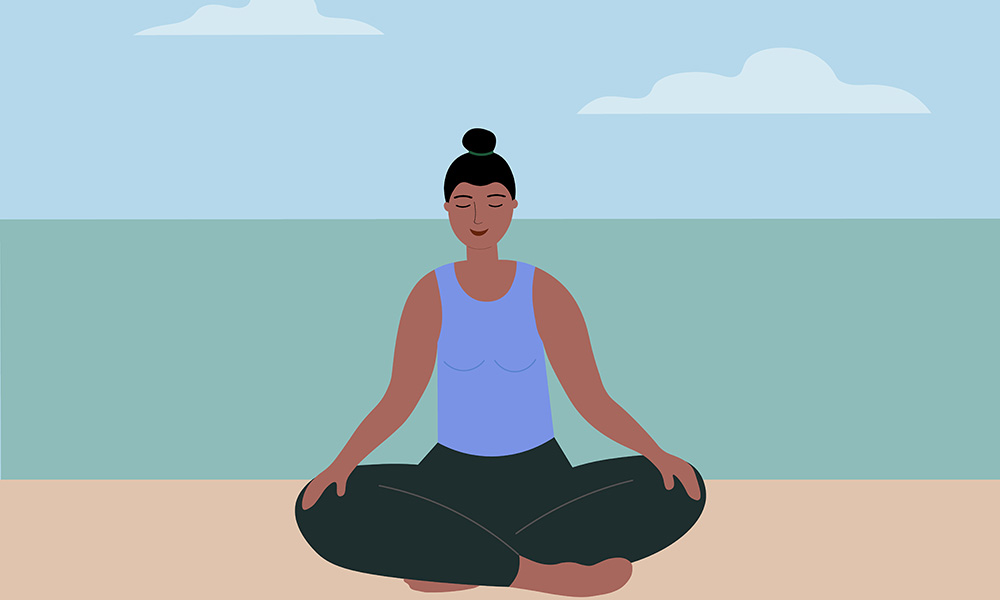
    Begin in a comfortable seated position. Allow your breathing to become gentle and relaxed as you breathe in and out through your nostrils.

    Start to slightly contract the back of your throat, creating a sound akin to breaking ocean waves (fans of Star Wars may notice an uncanny similarity to Darth Vader’s ominous respiration) as you breathe in and out. Lengthen the inhalation and exhalation, but be sure to keep the breath continuous and smooth, avoiding the creation of any tension in the body.

    A helpful tip for beginners is to hold a mirror up to your mouth and exhale to fog it up. Inhale the same way. Once you grasp the concept with an open mouth, close and continue breathing.

  • Self-care Corner: Beat the heat

    Self-care Corner: Beat the heat

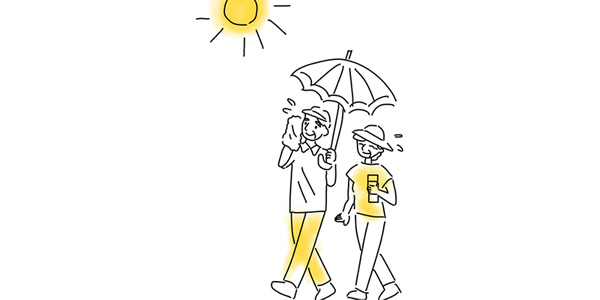
    As I write this article, many parts of the globe are under extreme heat warnings. In addition to wreaking havoc on our environment, extreme heat has the potential to induce many unwanted and potentially dangerous health effects. The following tips can help keep you cool and comfortable at work in the dental office:

    Use AC if you have it

    We like to put the needs of our patients first and may shy from using the air conditioning to its maximum benefits in order to keep them more comfortable. Instead, offer patients a blanket or covering if they find the temperature too cool. It is important to remember patients are only in the “hot” seat for a small portion of the day — you are likely working at least eight hours and need to keep the operatory cool.

    Eliminate extra sources of heat

    Computers, televisions, and other appliances left running can generate a great deal of heat. Though it may be a source of distraction for patients, keeping any in-op TV screens off can help reduce the heat. Offer patients music or allow them to use their own headphones for any needed distraction. 

    Maintain adequate levels of hydration

    Drinking plenty of ice-cold water throughout the day will help keep you cool and prevent dehydration. Try adding some fruit, lemon, cucumbers, or even some mint to water for a bit of flavour and added incentive.

    Avoid alcoholic beverages and caffeine

    Replace your morning coffee with a decaf herbal tea, or try popping a few tea bags in a jug of water and leaving in the fridge over-night to create your own morning iced tea.

    Do not eat large, protein-rich meals while working

    “Meat sweats” are a real thing! The body will warm itself due to the increase in metabolic heat produced during digestion. Fill up on salads, cold soups and pastas, and veggie wraps instead.

    Wear light, moisture wicking clothing

    Scrubs or designated protective clothing should be made of light, breathable fabrics that allows for heat and sweat to evaporate.

    Try a cooling breathing technique

    You do not have to be a yogi to practice Sitali breathing. Simply sit comfortably and form your lips into an “O.” Curl the tongue and project it out of the mouth to a comfortable distance. Inhale gently through the “straw” formed by your curled tongue as you slowly lift your chin toward the ceiling, lifting only as far as the neck is comfortable. At the end of the inhalation, with your chin comfortably raised, retract the tongue and close the mouth. Exhale slowly through the nostrils as you gently lower your chin back to a neutral position. Repeat for eight to 12 breaths. Can’t roll your tongue? Try Sitkari breathing instead. Open the mouth slightly with your tongue just behind the teeth. Inhale slowly through the space between the upper and lower teeth, letting the air wash over your tongue as you raise your chin toward the ceiling. At the end of the inhalation, close the mouth and exhale through the nostrils as you slowly lower your chin back to neutral. Repeat for eight to 12 breaths.

    1. Self-care Corner: The wellness journey

      Self-care Corner: The wellness journey

      Many begin their wellness journey by dipping their toes in the ever-expanding lake of available self-help resources in the form of books, podcasts, magazines, and courses. However, considering the wellness market is a booming multi-billion-dollar industry, it can be challenging to find reputable information with actionable guidance and advice. Luckily, I’ve done some legwork on this front and have two recommendations for those beginning or continuing on their wellness journey.

      First up is a free online course titled, “The Science of Well-Being.” This course was developed and is delivered by professor Dr. Laurie Santos from Yale University, and can be found at coursera.org. The Science of Well-Being is delivered on-demand over a 10-week period, and is designed to increase individual happiness while building more productive habits. Course material comes in the form of videos, articles, and quizzes, and easily lends itself to group participation amongst family members or office staff. There is even a teen-specific version of this course available. If you take the course and want to hear more of what Dr. Santos has to say, check out her podcast “The Happiness Lab.”

      Second is a book, titled, The Gift: 12 Lessons to Save Your Life, by Dr. Edith Eger. I was first introduced to Dr. Eger through her inspirational best-selling book The Choice, which tells her personal account of surviving concentration camps, as well as her journey of healing afterwards. In The Gift, Dr. Eger details both personal stories and patient interactions she has had within her own practice to provide readers with a practical how-to guide on changing thoughts and behaviours we may have that no longer serve us. Each chapter or lesson ends with a series of questions and actionable assignments to give readers the keys to disabling the destructive patterns and behaviours that can keep us imprisoned. This, in turn, gives us the tools we need to find freedom and enjoy life.

    2. Self-care Corner: Developing healthy coping skills

      Self-care Corner: Developing healthy coping skills

      Dr. Kyla Romard
      NSDA Clinical Affairs Manager; Chair, NSDA Wellness Committee

      In the last edition of Self-Care Corner, we discussed how to physically cope with the effects of climate change, but as we continue to see more frequent disastrous weather occurrences, including wildfires, floods, and severe storms, how do we cope with the higher levels of stress and anxiety that occur in light of these events?

      Climate anxiety, or eco-anxiety, is the distress and worries we feel related to the impacts of climate change. The feelings associated with climate anxiety include uncertainty, lack of control, and concerns over the safety of ourselves and others. Emotions including, grief, anger, guilt, shame, hopelessness, and fatigue are also commonly felt when experiencing climate anxiety.

      Though climate change and its effects consist of complex issues that can feel overwhelming on an individual level, the following strategies may help us develop healthy coping skills.

      1. Focus on what you can control

      Small actions can make a big difference, including:

      • Participating in climate change initiatives
      • Building more sustainable habits around energy use, composting, recycling, and consumerism
      • Selecting food options that have less environmental impact
      • Changing the way you do your daily commute

      2. Avoid overload

      Be selective and choose issues that are important to you while prioritizing activities that are meaningful on a personal level.

      3. Practice compassion

      Chastising yourself and others for not recycling every single item can cause mental turmoil, misunderstandings, and inaction. Leading from a place of kindness and compassion, for ourselves and others, can help further any well-meaning agenda.

      4. Take a break

      The news cycle on climate change and climate events is never-ending and can take a serious toll on our mental health. It is important to tune in to your emotions and practice self-care when you start to feel overwhelmed.

      5.  Remember you are not alone

      There are many like-minded groups to join that can help foster a sense of community, action, and hope for the future.

      6. Talk to someone

      Climate anxiety is real, and not something you have to experience on your own. Reaching out to a family member, friend, or counsellor can help.

      NSDA members and their families have access to both the Professional Support Program by calling 902-468-8215 or 1-855-275-8215 or by emailing professionalsupport@doctorsns.com, and Members’ Assistance Program by calling 1-844-578-4040 or visiting nsda.lifeworks.com.

    3. Self-care Corner: What is “Bee Breathing”?

      Self-care Corner: What is “Bee Breathing”?

      The act of breathing is so basic that most of us rarely ever think about it in our day to day life. We know that each inhale provides our body with the oxygen needed to survive and each exhale rids us of carbon dioxide. In addition to keeping us alive, breathing can also affect our state of mind, making us excited, calm, tense or relaxed.

      Using specific breathing techniques can allow us to regulate our emotions, especially in times of stress. “Bee Breathing,” named for the humming sound that is produced akin to our friend the bumble bee, is one of the best exercises to help rid the mind of agitation, frustration, and anxiety.

      Other benefits include:

      • Relief if you’re feeling hot or have a slight headache
      • Improves concentration
      • Reduces throat ailments
      • Helps mitigate migraines

      In addition to the mental and physical benefits, a major advantage of this, and any other breathing technique, is that it can be practiced anywhere.

      How to practice:

      • Sit in a comfortable, tall seat, making sure your spine is straight and your heart is lifted
      • Place your thumbs over the cartilage between the cheek and ear, gently closing the canal
      • Cover your eyes with remaining fingers
      • Have the mouth closed, jaws relaxed, and teeth slightly apart
      • Press the tongue lightly to the roof of your mouth
      • Inhale fully, then exhale while making a humming sound like a bee
      • Repeat the same pattern for two to five minutes
    4. Self-care Corner: Practicing Restorative Yoga

      Self-care Corner: Practicing Restorative Yoga

      For those of us who are light sleepers or have insomnia induced by anxiety, stress, and worry, creating a nighttime ritual can help calm the nervous system and signal that it is time to get some much-needed rest. Practicing restorative yoga poses before bed is one such ritual that may improve the quality and duration of sleep.

      Try the following poses, which can all be done from the comfort of your bed, making the transition to dreamland that much simpler:

      • Waterfall Pose: Lie on your back with your legs in the air at a 90-degree angle with your torso. This pose can also be done with the legs resting against the wall if your bed allows. Feet can be relaxed or activated by flexing the toes towards the face. Hold the pose for five full cycles of breath.
      • Happy Baby Pose: Staying flat on your back, lift the legs, bend the knees generously, and lightly grab the bottoms of the feet or wrap the fingers around the big toes. Some gentle rocking back and forth may feel nice on the spine. Hold for five complete breaths.
      • Wind Relieving Pose: Keeping flat on you back extend one leg out completely. Bend the knee of the opposite legs and gently wrap your hands or arms around the knee and hug it in to the chest. Switch sides after five breaths. (If the name wasn’t a giveaway, you may experience the added benefit of releasing some intestinal pressure while in this pose.)
      • Sleeping Butterfly Pose: From a seated position, place the bottoms of the feet together and let the knees drop to either side as far as the hips allow. Slowly begin to curve the spine, dropping the head forward and down towards the feet. It may feel nice to grab a pillow in this pose, hugging it close to the chest and allowing the head to rest directly on the pillow. Stay here for five deep breaths.
      • Supported Child’s Pose: Come to a table top position on the bed, with the knees under the hips and hands under the shoulders. Bringing the feet together, send the hips down and back while the forehead comes down to meet the bed. Arms can be relaxed at the sides for a more restorative effect, or stretched out in front for an active stretch. For added comfort, place a pillow under the torso to feel extra support and softness in the pose. Hold this final pose for five cycles of breath and then tuck into bed for a peaceful nights sleep.