The Nova Scotia Dental Association (NSDA) is taking steps to address the urgent need for more oral health providers in Nova Scotia – particularly dental hygienists and assistants.
There are currently more than 100 job postings on the NSDA website for dental hygienists, assistants and assorted dental office support staff in Nova Scotia, with the understanding many more positions are likely open and unfilled.
“Nova Scotia doesn’t in fact have a shortage of dentists,” said NSDA President Dr. Caleb Porter. “Instead, it’s more of a distribution issue with dentists, than a real overall shortage. What we do have a real shortage of – across the province in both urban and rural areas – are dental hygienists and dental assistants.”
These workforce challenges, coupled with increased demand associated with the federal Canadian Dental Care Plan, are contributing to longer wait times for patients seeking routine care. Even in areas where dentist supply is relatively stable, limited availability of hygienists and assistants is constraining overall practice capacity.
To help fill these openings, the NSDA is hosting FutureDent: Dental Careers and Job Expo Saturday, March 28 to support dentists seeking essential employees and students preparing to enter the oral health workforce.
The event will be held from 10:00 a.m. – 2:00 p.m. at the Lord Nelson Hotel & Suites, Halifax and will bring together high school students, current dental careers program students (dentistry, dental hygiene, dental assisting), post-secondary graduates, and employers to explore rewarding careers in the dental sector. Employers, educators, and regulators will share insights, information, and connect with the next generation of dental professionals.
“Currently there are 35 offices actively seeking to hire at least one dental assistant and 61 offices looking to hire a dental hygienist. Many others have quietly retired their job postings after months of effort and little response,” said Dr. Porter. “FutureDent will bring all the players under one roof. Hopefully this event will help us start filling these oral health care job openings so Nova Scotians can receive the essential dental care they deserve in a timely and effective manner.”
Media Contact: David Salter Director of Communications and Government Relations Nova Scotia Dental Association 902-240-9007 communications.nsda@bellaliant.com
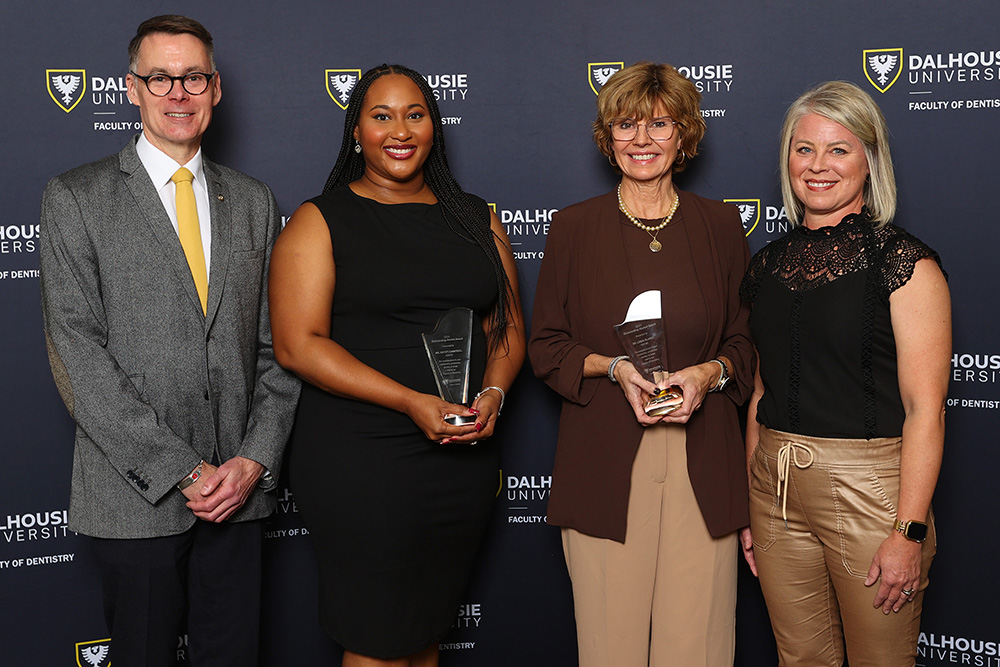
Above (L-R): Dean Dr. Ben Davis; OAA winners Krysti Campbell and Dr. Linda Blakey; and Denise Zwicker, Chair of the Dentistry Alumni Committee. Photos by Nick Pearce
Reconnecting with old classmates and faculty members is what DentDays is all about! This is exactly what happened in the Dalhousie Dentistry Building on October 25 and 26 as classmates met up, shared stories and memories, and celebrated.
This year’s event contained many of the hallmark activities from last year’s inaugural DentDays: special lunches for our Golden Grads (the 50th anniversary classes) with the Dean or Director of the School of Dental Hygiene, a CE Day, Outstanding Alumni Award presentations, and a Maritime kitchen party.
Something old, something new
Of course, there were new events, too. This year, for the first time, the 25th anniversary classes — the Silver Grads — also enjoyed special lunches with the Dean or Director of the School of Dental Hygiene, and the Friday night Live@5 event, hosted by the Faculty of Dentistry Student Society, attracted a crowd of more than 140 people eager to relive their student days. Also popular was the Reunion Hub, where alumni could look through archival photos and books.
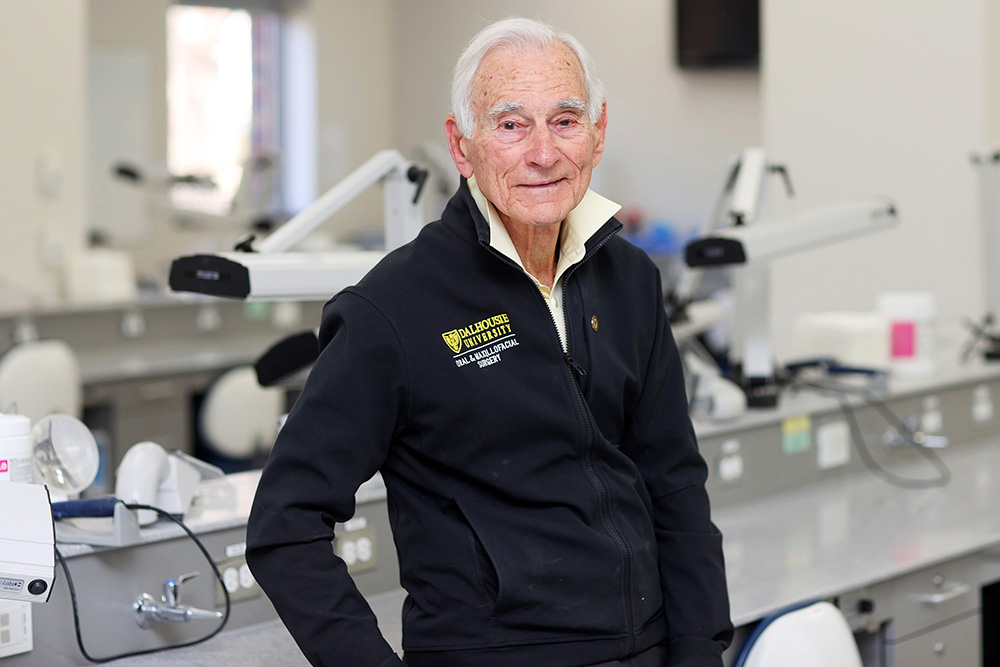
A celebration event for Dr. Frank Lovely (DDS‘59), this year’s recipient of the Dalhousie Golden Eagle Lifetime Achievement Award, presented on October 24, also attracted alumni back to campus this year.
Impressive OAA recipients
At the Outstanding Alumni Award ceremony, classmates and supporters were on hand to celebrate with Dr. Linda Blakey (DDS’89) and Krysti Campbell (DDH’13), this year’s recipients. This recognition was important to them both.
“It means a lot to me,” says Dr. Blakey, who was also celebrating the 35th anniversary of her class.
“Thirty-five years ago, I thought I would work as dentist only,” she says, “but then I joined a NLDA Committee with colleagues in St. John’s and found it was a good way to give back.”
This would be the first of many committees and leadership roles Dr. Blakey would take on during her career. Volunteering as a dentist in Honduras and helping to set up and manage a dental clinic at The Gathering Place, a community health centre in St. John’s, soon followed. These activities, Dr. Blakey says, have been “an important piece” of her dental career.
Krysti Campbell lives and works in The Bahamas and enjoys an extraordinary career that blends clinical practice with teaching and an extensive range of volunteering activities.
“This award means more to me than words can say,” she says. “I am deeply humbled.”
Campbell says her time at Dalhousie played a “pivotal role” in her undergraduate and professional journey, and she gives a lot of credit to the calibre of the training she received.
“I gained a sense of purpose and responsibility,” she says of her time at the school, adding that, working on a small island, it was deeply significant to her that her “work was meaningful for this award.”
A Kitchen Party in The Grawood after the OAA ceremony brought the official events of the evening — and the DentDays weekend — to a close.
Looking ahead to 2025
Please mark your calendars for DentDays 2025, which will take place on October 17 to 18! The Dental School encourages all milestone classes (every five years) to celebrate and has other changes to the agenda planned.
Dr. Frank Lovely (DDS’59), the 2024 recipient of the Dalhousie Golden Eagle Award for Lifetime Achievement.
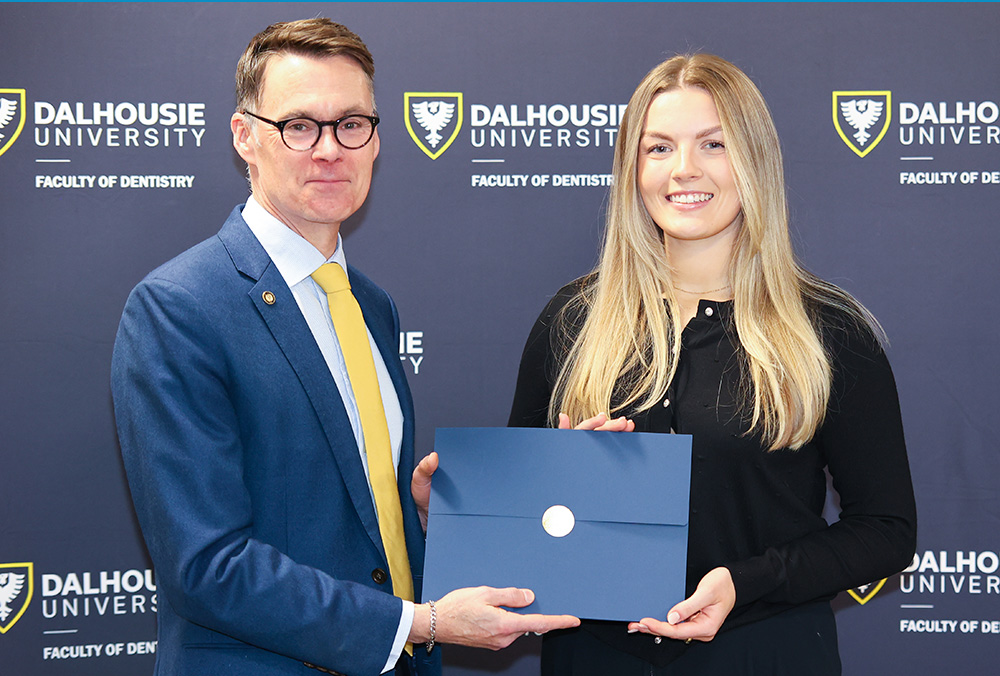
Above: Dean Dr. Ben Davis presents the NSDA Prize for the greatest proficiency in anatomy to Annika Nobbe (DDS2). Photos by Bruce Bottomley
On November 19, more than 60 student awards were presented at Dalhousie’s 2024 Academic Awards Celebration, with faculty, staff, and several donors or their representatives in attendance.
The awards are presented each year to students in both dental hygiene and dentistry for academic achievement, proficiency in specific subjects, professionalism, compassionate patient care, leadership, volunteering, and community involvement.
The annual ceremony is special for the Faculty of Dentistry, says Dean Dr. Ben Davis, because it’s an “opportunity to celebrate exceptional student achievement and thank donors for their support.”
Several new awards were given out this year, says Dr. Fran Tompkins, Associate Dean of Students.
“This means we can recognize and support more students,” she explains. “Equally important, more donors are interested in working with us to support our students.”
Among those in attendance were Marc and Nick Thoms, who travelled from Newfoundland to present the Dr. Maureen Lawton and Class of ’82 Memorial Scholarship, and Isabel and Lynn Fergusson, who presented the Dr. Bruce N. Fergusson Memorial Award.
From within the Dalhousie Faculty, Dr. Cynthia Andrews presented the Dr. Noel H. Andrews Memorial Scholarship, Dr. Rick Raftus presented the Dr. Eric Hatfield Memorial Award, and Dr. Leigha Rock presented the Highest Academic Achievement in Dental Hygiene Award and the Lisa Van Alphen Memorial Award.
Grateful students
Two of this year’s recipients shared what the awards mean to them. Grace Heukshorst (DDS3) says, “Receiving these awards is a humbling experience because it reminds me of the hard work, support, and dedication that surround us all in this field.” She is also moved by the encouragement provided by professors, colleagues, and mentors “who believe in us even when we struggle to believe in ourselves”.
David Okunola (DDH2) is grateful to the donors, professors, and loved ones who have “always supported and guided us on our journey to becoming professionals in the dental field.”
Both students spoke of the bond between classmates and the support they give each other.
“I know the experiences and memories we’ve created will stay with us forever,” Okunola says. “We didn’t just achieve this milestone — we did it together.”
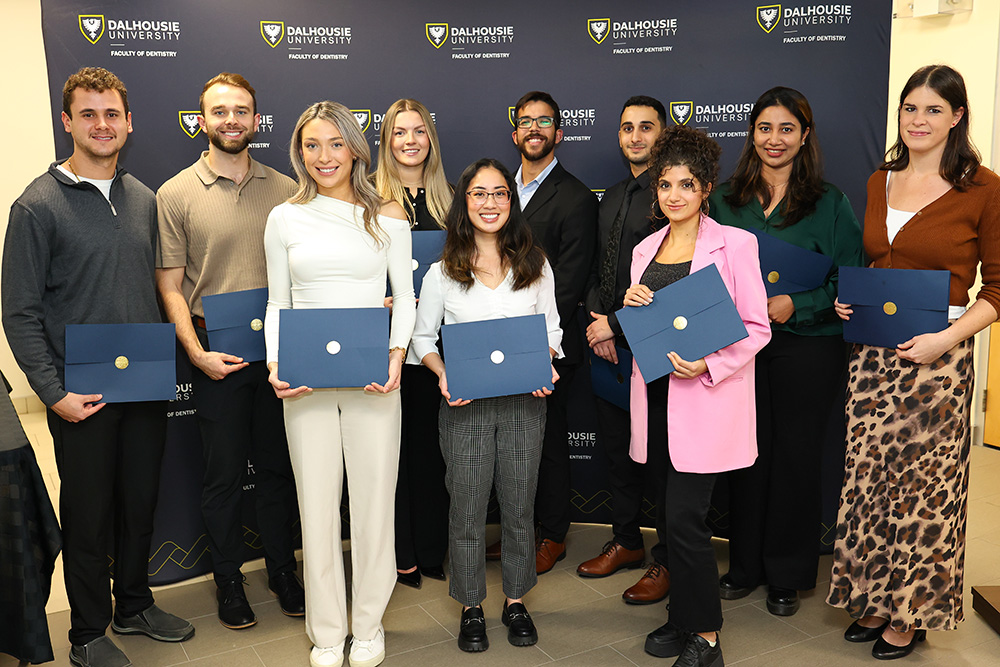
Left to right: Rylan d’Entremont (DDS3), Hayden Black (DDS3), Taylor Chaput (DDS4), Annika Nobbe (DDS2), Jade Ley (DDS3), Joshua Hayden (DDS2), Nir El (DDS2), Christy-Bel Moussa (DDH2), Vidhi Shetty (DDS4), and Kendra Cleary (DDS3).
By Samantha Ashenhurst NSDA Communications Manager
Nova Scotia Dentist recently chatted with Dr. Paula MacPherson! A 2008 graduate of the Dalhousie Dental School, Dr. MacPherson opened Southgate Dentistry in Bedford South as a start-up in 2012. In August 2022, she expanded the practice, adding her cousin, Dr. Jacquelyn Scott, to the team. Dr. MacPherson lives in Halifax with her husband, Daryl, and their four kids, Aaron, Eddie, Sam, and Louisa.
1. Why did you pursue dentistry?
My grandfather (Dr. Dinny Morrison) was a dentist and my father (Dr. Archie Morrison) is an oral surgeon, so dentistry was always sort of ‘around.’ Even though I was very aware of it as a career option, it wasn’t something that was discussed much at home.
As I neared the end of my BSc at StFX, I started thinking about my next steps. I knew I wanted to work in healthcare and help people. I loved the idea of dentistry being so hands-on and that it would allow me to work with people to get them out of pain and help ease their fears. I’m entrepreneurial, so the idea of owning a business was very appealing to me, too.
2. What is a skill you’ve always wanted to learn?
I would LOVE to learn how to golf. I’ve been saying this for years and have taken a few lessons. Learning golf requires a lot of time and patience (two things I am lacking!). My husband and kids are golf-lovers so I hope I can join them in the near future!
3. What’s your top destination in Nova Scotia?
If I had to pick a dream spot, it would be in the middle of Grand Lake on a boat. My parents have a cottage on Grand Lake and it’s a great spot to get away in the summer. On a sunny day, sitting on a boat in the large open lake is one of the only ways I truly ever feel relaxed.
4. Who was your favourite or most inspiring teacher at dental school?
This is a tough one! I had a lot of fantastic teachers in dental school. Merv Creighton and John Cox are two that stick out. I also had the opportunity to be taught by my father, which was pretty memorable. My favourite teacher overall was Rick Raftus. I remember Rick teaching us in prosth lab and also in clinic. He was down to earth, kind, and clearly loved helping us learn.
5. What is one piece of advice that’s stuck with you over time?
The best piece of advice I ever received came from outside of the dental world, but it applies to everyone. A good friend of mine from StFX is from Boston and her father built a successful business from the ground up. When visiting their family home, I asked him about how he grew the business. He said, “I worked my ass off and treated everyone well along the way.” It’s a lesson I always keep in mind and frequently tell my kids.
The release of the 2025 NIHB regional dental fee updates will be synchronized across provinces/territories, and, as such, is planned to take place on April 1, 2025. The updated fees will appear in the NIHB Regional Dental Benefit Grids, organized by general practitioners (GP), specialists (SP), oral surgeons (OS), denturists (DN), and dental hygienists (HY). The grids contain maximum NIHB fees for eligible procedure codes.
The current NIHB Regional Dental Benefit Grids, as well as the latest updates, errata, and amendments, are available on the Express Scripts Canada NIHB Provider and Client Website at nihb-ssna.express-scripts.ca/en > Provider > Dental. The Dental Benefit Grids can be found at nihb-ssna.express-scripts.ca/en > Provider > Dental > Dental Benefit Grids. Upon entering the Dental Benefit Grids, choose the current year and the desired province/territory to view the grid corresponding to the applicable provider specialty (e.g. GP/SP, HY, DN and OS).
NIHB and the Canadian Dental Care Plan
An NIHB-eligible client also covered by the Canadian Dental Care Plan (CDCP) should submit claims to the NIHB Program first.
Mise à jour des honoraires dentaires du Programme des SSNA en 2025
En 2025, la mise à jour des honoraires dentaires sera synchronisée dans toutes les provinces et tous les territoires et aura lieu le 1er avril 2025. Les honoraires mis à jour figureront dans les grilles régionales des soins dentaires du Programme des SSNA qui sont préparées à l’intention des dentistes généralistes et des spécialistes (DG/SP), des spécialistes en chirurgie buccale et maxillofaciale (Chirur.), des denturologistes (DN), et des hygiénistes dentaires (HY). Les grilles présentent les honoraires maximaux pour les codes d’acte dentaires admissibles dans le cadre du Programme des SSNA.
La version en vigueur des grilles régionales des soins dentaires du Programme des SSNA, les plus récentes mises à jour des grilles ainsi que les lettres d’errata sont accessibles sur le site Web d’Express Scripts Canada destiné aux fournisseurs et aux clients du Programme des SSNA en cliquant sur l’hyperlien ou en suivant le chemin d’accès nihb-ssna.express-scripts.ca/fr > fournisseur > soins dentaires. Les grilles régionales des soins dentaires sont accessibles en cliquant sur l’hyperlien ou en suivant le chemin d’accès nihb-ssna.express-scripts.ca/fr > fournisseur > soins dentaires > grilles des soins dentaires. À la page Grilles des soins dentaires, les fournisseurs doivent sélectionner l’année et la province ou le territoire voulus pour consulter la grille correspondante à une spécialité en particulier (p. ex. dentistes généralistes et spécialistes, hygiénistes dentaires, denturologistes, et spécialistes en chirurgie buccale et maxillofaciale).
Le Programme des SSNA et le Régime canadien de soins dentaires
Lorsque des clients admissibles au Programme des SSNA sont aussi couverts en vertu de Régime canadien de soins dentaires (RCSD), ils doivent d’abord présenter une demande de règlement au Programme des SSNA.
By Andrea Hare, RDH, M.Ed. and Autumn Penney, Bethany Thompson, Desiree Bennett, Hailey Buhler, & Shayna Coish 2024 graduates of Dalhousie’s Diploma of Dental Hygiene
Autism Spectrum Disorder (ASD) is a lifelong neurodevelopmental condition affecting various aspects of an individual’s life, including behaviour, sensory processing, communication, cognition, and social interaction.1 Its prevalence is increasing, with 1 in 68 people diagnosed in Canada.2
Research suggests children with ASD face a heightened risk of caries and periodontal disease, yet many are hesitant to attend preventive care appointments.3,4 This reluctance can lead to worsening oral health conditions and the need for more complex dental procedures requiring anesthesia or sedation.3
The pediatric dentistry unit in Halifax, part of the IWK Health Centre, provides specialized care for individuals under 16, including those with ASD.5 Currently, the average wait time for surgical procedures stands at 801 days,5 possibly contributing to patients experiencing ongoing oral pain, sleep disturbances, and disruptions to schooling and extracurricular activities.
Ideally, children with ASD would access preventative care within their own communities, reducing the burden on our healthcare system and alleviating long wait times. However, children diagnosed with ASD often find it challenging to cope with new experiences.6 The dental environment, with its variety of sounds, smells, and visual stimuli, can intensify feelings of anxiety and fear for them.6
In addition to heightened fear and anxiety, research highlights other barriers that may contribute to an overall reluctance to access preventive oral healthcare:
Challenges understanding verbal and non-verbal cues1
Comfort with personal space1
Difficulty adapting to change1
Trouble with verbal communication1
Hypersensitivity leading to anxiety and discomfort1
Negative behaviour responses to stress1
Considering the rising prevalence of ASD diagnoses, it’s important for oral health professionals to equip themselves with the necessary skills and strategies to provide preventive oral care to this demographic in their communities. Navigating the intricacies of ASD requires a thoughtful approach, but research suggests that simple, cost-effective measures can yield remarkable results. The following strategies have been shown to be effective:
1. Dental desensitization
Children with ASD may react strongly to new environments and stimuli, like noises and smells.7,8 Offering a tour of the dental office can help familiarize them with the setting, staff, and equipment used during their appointment. This approach is most effective when the tour occurs shortly before the appointment.7,8
2. Social stories
Social stories provide clear, step-by-step information, clarifying ambiguous situations or activities.9 Dental offices can customize social stories to their clinic and team members, starting from outside the building and detailing a typical appointment sequence for the child.9,10
3. Tell, show, do
‘Tell, show, do’ introduces procedures in a stepwise manner. The child first understands the procedure through explanation, then it is demonstrated in a way that involves the appropriate senses before the procedure is performed on the child.11 For example, before applying fluoride varnish, explain what the fluoride varnish is used for, show the child the fluoride varnish, use the brush on their finger, then apply fluoride to their teeth.11
4. Noise-cancelling headphones
About 70% of children with ASD experience heightened sensitivity to auditory stimuli, potentially leading to adverse behavioural reactions. Noise-cancelling headphones offer a cost-effective solution which is highly effective in reducing low-frequency noises while still allowing human voices to remain audible.12
5. Alternative toothbrushes
Children with ASD may exhibit uncooperative behaviour due to touch sensitivity, particularly in relation to oral sensations.13 Work with parents/guardians/caregivers to discover the best toothbrush option. Various alternatives like three-sided, electric, singing, or silicone toothbrushes are readily accessible.14,15
6. Visual aids
Visual aids are invaluable tools for improving oral hygiene skills and cooperation in children with ASD.6 They help familiarize children with dental environments, reduce anxiety, and facilitate learning. Further, pictures or videos are effective for non-verbal or non-fluent patients, increasing the likelihood of cooperation during oral health care.6
7. AV interventions
Audiovisual distractions are shown to be successful in reducing children’s pulse rate and can be an effective distraction to reduce fear, anxiety, and uncooperative behaviour.4 One study revealed that a tablet device fixed to the dental chair was superior in pain control during an IAN block when compared to AV glasses, a virtual reality box, or no intervention. While audio aids are more commonly accessible, audiovisual aids overall exhibit greater effectiveness.4
8. Video or peer modelling
Children show a preference for visual information, such as television or videos.4 Consider showing a video of another child’s preventive dental treatment, covering all aspects of a typical appointment.4 In one study, children with ASD watched a desensitizing video before their appointment, which resulted in decreased anxiety and improved cooperation.3
9. Light sensitivities
The impact of lighting on children with ASD is profound and can influence both their mood and behaviour. Neutral lights promote a calming atmosphere. LED lightbulbs are preferred over fluorescent.16 Additionally, having the ability to adjust or dim the lighting can significantly enhance the child’s emotional state and behaviour during their visit.16
The many barriers faced by children with ASD emphasize the importance of individualized, patient-centred care, as there is no ‘one-size-fits-all’ solution. Utilizing these simple accommodation solutions can aid in increasing clinician confidence and patient comfort during oral healthcare visits. Additionally, it can contribute to easing the burden on surgical wait times while fostering inclusivity and understanding within our communities.
A clinician’s toolbox for providing exceptional care to children with ASD
Electronic screen media, like tablets, can serve as an engaging distraction, promoting a positive focus.3
Visual aids and video peer-modelling offer visual cues, helping comprehension and eliminating uncertainty.3
Dental desensitization appointments provide a structured and gradual introduction to the dental environment, helping to ease anxiety in children with ASD.6
Social stories help with executive functioning and sequencing.9
‘Tell-show-do’ allows clinicians to demonstrate procedures step-by-step, enhancing predictability for the child with ASD.10
Using earmuffs or noise-cancelling headphones helps minimize sensory overload, creating a quieter and more controlled atmosphere.11
Alternative toothbrush options cater to individual sensory preferences.12
Neutral and controllable lighting contributes to a calming environment, accommodating those with sensitivities to bright and/or flickering lights.16
3. Isong IA, Rao SR, Holifield C, Iannuzzi D, Hanson E, Ware J, et al. Addressing Dental Fear in Children with Autism Spectrum Disorders. Clinical Pediatrics. 2014 Jan 3;53(3):230–7.
6. Balian A, Cirio S, Salerno C, Wolf TG, Campus G, Cagetti MG. Is visual pedagogy effective in improving cooperation towards oral hygiene and dental care in children with autism spectrum disorder? A systematic review and meta-analysis. International journal of environmental research and public health. 2021 Jan;18(2):789.
7. Cai J, Habib D, Bedos C, Santos BF. Parents’ perceptions regarding the effectiveness of dental desensitization for children with autism spectrum disorder. Pediatric Dentistry. 2022 May 15;44(3):192-7.
8. Martínez Pérez E, Adanero Velasco A, Gómez Clemente V, Miegimolle Herrero M, Planells Del Pozo P. Importance of Desensitization for Autistic Children in Dental Practice. Children. 2023 Apr 28;10(5):796.
10. Marion IW, Nelson TM, Sheller B, McKinney CM, Scott JM. Dental stories for children with autism. Special Care in Dentistry. 2016 Mar 2;36(4):181–6.
11. Roberts JF, Curzon ME, Koch G, Martens LC. Behaviour management techniques in paediatric dentistry. European Archives of Paediatric Dentistry. 2010 Aug; 11:166-74.
12. Ikuta N, Iwanaga R, Tokunaga A, Nakane H, Tanaka K, Tanaka G. Effectiveness of Earmuffs and Noise-cancelling Headphones for Coping with Hyper-reactivity to Auditory Stimuli in Children with Autism Spectrum Disorder: A Preliminary Study. Hong Kong journal of occupational therapy. 2016;28(1):24–32.
13. Khrautieo T, Srimaneekarn N, Rirattanapong P, Smutkeeree A. Association of sensory sensitivities and toothbrushing cooperation in autism spectrum disorder. International journal of paediatric dentistry. 2020 Jul;30(4):505-13.
14. Teste M, Broutin A, Marty M, Valéra MC, Soares Cunha F, Noirrit-Esclassan E. Toothbrushing in children with autism spectrum disorders: qualitative analysis of parental difficulties and solutions in France. European Archives of Paediatric Dentistry. 2021 Dec;22(6):1049-56.
15. Sukanto S, Lazuardi PR, Ermawati T, Probosari N, Setyorini D, Budirahardjo R, Prihatiningrum B, Shita AD. The Effectiveness of Using an Electric Toothbrush as a Plaque Control Tool in School-Autistic Children. International Journal of Medical Science and Clinical Research Studies. 2023 Oct 28;3(10):2485-8.
16. Nair AS, Priya RS, Rajagopal P, Pradeepa C, Senthil R, Dhanalakshmi S, et al. A case study on the effect of light and colors in the built environment on Autistic Children’s behavior. Frontiers in Psychiatry. 2022;13. doi:10.3389/fpsyt.2022.1042641
Following up on the last edition of Self-care Corner that discussed the Yamas, we have the ancient wisdom of the Niyamas, derived from the philosophy of yoga, which offer a framework for cultivating a balanced and fulfilling life through introspection and self-discipline. These principles not only cultivate physical health but also emphasize mental clarity and emotional resilience, encouraging a holistic approach to well-being.
Understanding the Niyamas
The Niyamas are the second limb of Ashtanga Yoga, following the Yamas, which outline ethical principles for social conduct. While the Yamas focus on our interactions with others, the Niyamas direct our attention inward, guiding us on how to maintain a harmonious relationship with ourselves.
There are five Niyamas, each offering insights into different aspects of personal development:
Saucha (Purity): Saucha encourages cleanliness and purity, not just in a physical sense but also in thoughts and emotions. By cultivating cleanliness in our environment and habits, we create space for clarity and mental peace.
Santosha (Contentment): Santosha teaches the importance of finding contentment in the present moment, regardless of external circumstances. It emphasizes gratitude for what we have rather than longing for what we lack, promoting inner peace and resilience.
Tapas (Self-discipline): Tapas is about cultivating self-discipline and perseverance in order to achieve personal goals. By practicing Tapas, we develop the strength to overcome obstacles and cultivate positive habits that contribute to our overall well-being.
Svadhyaya (Self-study): Svadhyaya involves self-reflection and introspection. It encourages us to study sacred texts, but, more importantly, to understand ourselves better through observation and awareness. This self-knowledge helps us grow and evolve in alignment with our true nature.
Ishvara Pranidhana (Surrender to the divine): Ishvara Pranidhana invites us to surrender our ego and desires to a higher power or the divine intelligence of the universe. It teaches humility, acceptance, and trust in the unfolding of life, reducing stress and promoting a sense of interconnectedness.
Applying the Niyamas to personal well-being
Saucha reminds us to maintain cleanliness in our surroundings and hygiene practices, which supports physical health and prevents illnesses.
Tapas encourages regular exercise and healthy eating habits, fostering physical strength and vitality.
Santosha teaches us to appreciate the present moment and find contentment within ourselves, reducing stress and anxiety.
Svadhyaya promotes self-awareness and mindfulness, helping us identify and change negative thought patterns that impact our emotional well-being.
Ishvara Pranidhana encourages us to develop a sense of purpose and connection to something greater than ourselves, which provides comfort and guidance during challenging times.
Integrating the Niyamas into daily life
Incorporating the Niyamas into our daily routines doesn’t necessarily require drastic changes. Simple practices such as maintaining an organized living space, practicing gratitude, setting achievable goals, journalling for self-reflection, and cultivating a sense of humility and trust can all contribute significantly to our overall well-being.
Inner harmony
The Niyamas offer a timeless guide to personal well-being, emphasizing the importance of self-awareness, self-discipline, and spiritual connection. By integrating these principles into our lives, we can nurture a sense of inner harmony, resilience, and contentment. Whether through physical practices, mindful habits, or spiritual contemplation, the Niyamas provide a pathway to achieving holistic well-being in our modern, fast-paced world. Embracing these principles allows us to not only thrive individually, but also contribute positively to our communities and the world at large.
BEDFORD, NS – November 25, 2024: Nova Scotia political parties are saying they’ll do more to protect the province’s access to and quality of oral health care.
The Nova Scotia Dental Association (NSDA) contacted the province’s political parties earlier this month looking for their support and positioning on the following oral health policy priorities:
Dental Office HR Shortages & Training Support – capacity issues that impact public access to care.
De-insurance Risk – protecting private third-party dental benefit plans that keep Nova Scotians from relying solely on government dental programs
Long-term funding for provincial dental programs
Support for fluoridated water as a safe and effective means of preventing dental decay
With the introduction of the Canada Dental Care Plan (CDCP), dental offices are seeing an increase in patients looking for care. The NSDA is pleased that the CDCP has increased access to oral health care for Nova Scotians, however, the increase in demand has exacerbated existing labour shortage challenges.
“Addressing these challenges while maintaining access to care through post-secondary funding, protecting third-party and provincially funded dental plans, are key concerns for the NSDA,” says the NSDA Executive Director Steve Jennex.
Nova Scotian dentists are also concerned with the increasing amount of misinformation impacting policy decisions on water fluoridation, which is a scientifically proven safe and cost-effective way to prevent early childhood tooth decay.
The NSDA received replies from the Progressive Conservative Party of Nova Scotia, the Nova Scotia New Democratic Party and the Liberal Party of Nova Scotia.
While the political parties are committed to tackling these key issues, including prioritizing healthcare training at post-secondary institutions and trusting scientific evidence to inform water fluoridation measures, each party has unique perspectives and approaches.
For more information and to read the responses from the political parties, click here.
About the Nova Scotia Dental Association
The Nova Scotia Dental Association is a member-based organization serving the needs of more than 600 dentist members across the province. As a not-for-profit organization, the NSDA has been the voice for dentistry in Nova Scotia since 1891. Our mission is dentists helping dentists.
Media Contact: Samantha Ashenhurst Communications Manager Nova Scotia Dental Association 902-420-0088 ext. 2 Communications.nsda@bellaliant.com
In the often-noisy environment of a dental clinic, it’s easy to overlook the potential impact of sound on hearing health. However, understanding noise levels in dentistry is crucial for protecting both dental professionals and patients from the risks of hearing damage. With tools and equipment that can reach decibel levels high enough to cause hearing loss, awareness and preventative measures are essential.
In this article, we’ll explore noise levels commonly encountered in dental settings, the potential dangers they pose, and practical strategies to protect your hearing while maintaining a productive and safe clinical environment.
Understanding noise levels in dentistry
Noise levels can become hazardous very quickly. As a benchmark, regular conversation is around 60 dB (decibels). Any noise above 85 dB can cause hearing loss over a period of eight hours, while noises above 120 dB can cause immediate hearing loss.
A turbine in used condition, cutting on a tooth: 91.9 dB;
A micro motor handpiece, cutting on acrylic: 92.2 dB; and
A suction pump, running free on low volume: 87.2 dB.
While dentists aren’t exposed to the top noise level from these tools for their entire workdays, damage can accumulate over time.
Daily protective practices
Some of these noises are easy to mitigate at the source. Proper tool maintenance, for example, can lower maximum decibel rating. A turbine in new condition cutting on a tooth produces a maximum of 78.8 dB.
Earplugs or canal caps (which are often connected by a string) can be good options for dentists who need to talk to patients while also considering their hearing. Standard earplugs can reduce noise levels by 20-25 dB (when looking at the packaging, the NRR [noise reduction rating] number is the number of decibels the product can lower noise by). Therefore, if wearing earplugs while using a micro motor handpiece, cutting on acrylic, the sound level would be reduced from 92.2 dB to around 72.2. For stylish options, there are many online stores that sell colourful, reusable earplugs.
When using loud equipment, be sure to spend time in a quiet area immediately after to lower your average level of noise exposure and give your ears a rest.
Monitoring your hearing health
Detecting hearing loss early is critical to maintaining your hearing and getting proper treatment. You can get free online hearing tests to let you know if you need to pursue an in-person appointment. Even if an online test doesn’t detect hearing loss, regular exposure to loud noises warrants regular testing to help detected changes — such as the presence of tinnitus, which is a ringing noise in your ears.
Educating the dental team
Emphasizing the importance of hearing protection within your clinic can help to preserve everyone’s hearing. Even people who aren’t using loud equipment but are frequently present in the room when it’s being used (e.g. dental hygienists) should consider wearing hearing protection while the equipment is active.
It’s common to think that because you aren’t exposed to loud noises for an entire workday, your hearing won’t suffer. However, understanding the importance of hearing health and getting regular hearing checks can help to improve your overall health outcomes.
Listen to your ears, protect your future health
Understanding and addressing noise levels in dentistry is essential for preserving long-term hearing health. While the nature of dental work often involves exposure to potentially harmful noise, there are practical steps that can be taken to reduce risks.
Regular maintenance of tools, the use of hearing protection, and strategic breaks in quieter environments can significantly reduce noise exposure. Additionally, regular hearing tests for dental professionals, including those not directly using loud equipment, can ensure early detection of hearing loss and prompt intervention.
If you are concerned about your hearing health, consider taking an online hearing test, or consulting with a hearing care professional for an assessment. By prioritizing hearing health, dental teams can protect their well-being and continue to provide high-quality care to their patients.
Katie Koebel, M.Cl.Sc., is the Senior Manager of Audiology at HearingLife, Canada’s largest group of hearing centres, with more than 350 locations across the country. HearingLife clinics use the most advanced hearing aid technology, clinical support, and diagnostic equipment. Katie is a hearing care professional registered with CASLPO and has been providing her clients with the best possible hearing health care with HearingLife for over 17 years.
By Cheryl Bell Communications Manager Dal Faculty of Dentistry
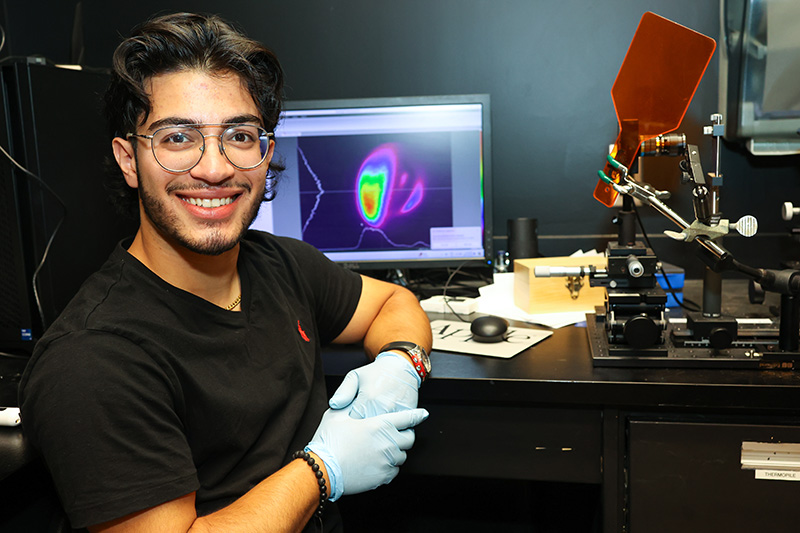
Given Soleil Ghaffari’s (BSc’24) first day of dentistry school was in September, it might sound a bit surprising that he spent the summer working in a research lab that specializes in the use of dental curing lights — but that’s exactly what he did. Ghaffari feels the experience has set him up well for his current studies. He may even have his name on a publication as a result of his work.
During his undergrad years, Ghaffari studied medical sciences. His father is a doctor and his uncle is a dentist, and Ghaffari enjoyed the “sciencey” subjects at university, particularly physics. He also has an artistic side, and enjoys painting, wood carving, and music (especially piano). He considered both medicine and dentistry as career options. By the third year of his BSc, he knew his sights were set on dentistry because it brought science and art together.
Researching a researcher
With a plan for his future, Ghaffari decided he wanted to spend the summer after his third year doing dentistry-related research. He started by researching all the labs on the Faculty of Dentistry website.
“That’s how I found Dr. Richard Price,” he says. “His research into the different restorative materials and curing lights appealed to me the most, so I emailed him with my CV.”
Ghaffari spent that summer working with Dr. Price on analysing the characteristics of different blue curing lights – the lights used to cure composite fillings. He also conducted his own research project on the fluorescence of different materials, and a paper is currently being prepared for publication.
For his fourth-year honours project, Ghaffari opted to study the properties and benefits of new red and infrared curing lights that are now appearing on the market.
“The main point of our research was to conduct tests to verify the benefit — or lack of benefit — of the red and infrared lights in the light-curing unit, particularly their safety,” he says.
Learning about lights and materials
This past summer, Ghaffari not only heard that he was accepted into Dalhousie’s dentistry program, but also that he was able to take his honours project research farther by scrutinizing the evidence for the use of the red and infrared lights. His aim is to make sure it’s as “airtight” as possible, and that they had drawn all the conclusions they could.
Although the bulk of his time over the past two summers has been spent in the lab, Ghaffari says Dr. Price showed him around the dentistry building and introduced him to other researchers and faculty members. He also became familiar with all the machines and other equipment in the building that could be used for the research he and Dr. Price are working on.
“My interest in dental materials has grown through the research I’ve done,” Ghaffari says, “and I know having this knowledge of materials and techniques that I’ve gained over the past two summers is going to be super beneficial as I go through dental school and one day work in a practice.”
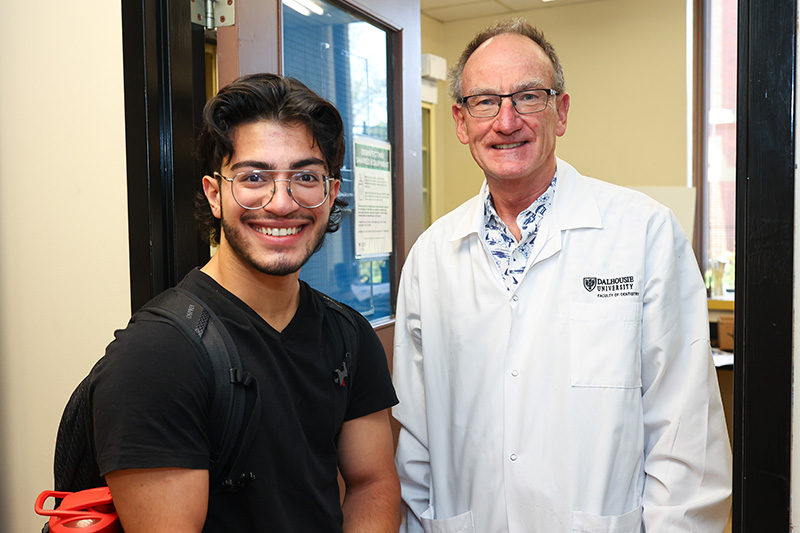
Dr. Price is also positive about the work and the potential it holds for Ghaffari.
“This experience has given Soheil a deeper understanding of the dental profession and dental research,” he says. “He is enthusiastic about presenting his research at international dental conferences and may even travel to Brazil next summer to conduct further research.”