Author: David Salter

  • Dalhousie grad profile: From refugee to patient advocate

    Dalhousie grad profile: From refugee to patient advocate

    Photo by Bruce Bottomley

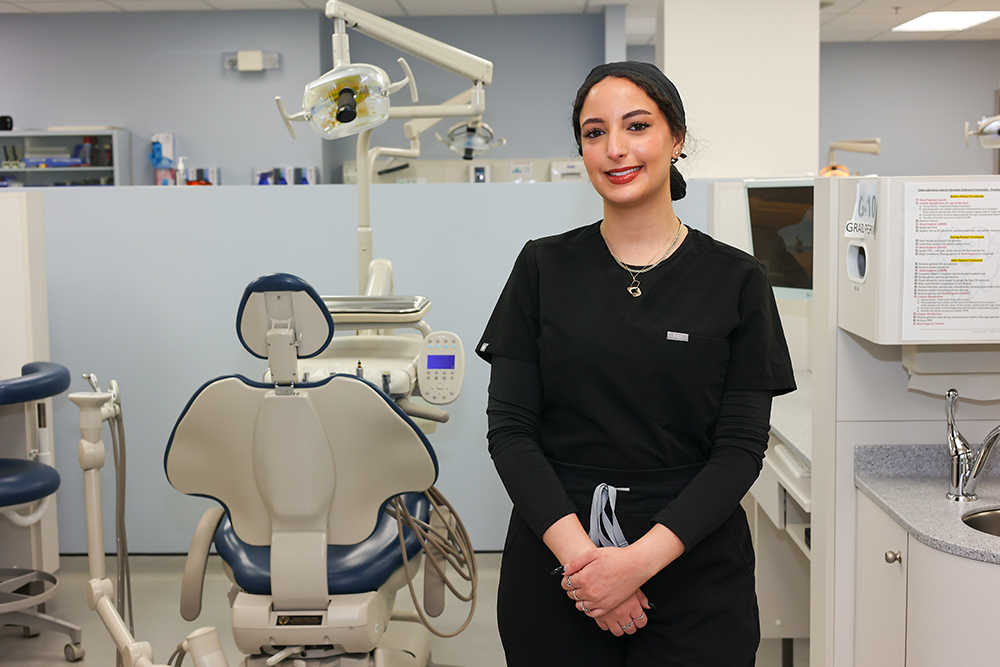
    Mariam El-Aghil (BSc’18, DDS’24) says there wasn’t a single defining moment that convinced her to become a dentist, but that growing up during the civil war in Yemen played a big part. Her experiences in her home country not only inspired her to become a health care professional, but also opened her eyes to the struggles of underserved populations. As a practising dentist, she aims to help these populations with their oral health.

    A new life in Canada

    El-Aghil left Yemen in 2013. She was 16, had completed high school, and arrived in Halifax to join her two older brothers and go to university. Her parents and sister remained in Yemen.

    It was a new country, a new culture, and a new education system, but it offered a safer future than the country she had left behind, where bombs and bullets disrupted both her school and home life. She says she would often study wearing a headlamp when there was no electricity.

    El-Aghil landed in Canada as an immigrant, but by the time her sister arrived in 2016, the situation was worse in Yemen and there was no going back. They both successfully applied for refugee status and became Canadian citizens. Their parents arrived in Canada in 2021 after moving between Jordan, Egypt, and Turkey.

    The making of a dentist

    El-Aghil’s first step to becoming a dentist was completing Dalhousie’s honours program in microbiology and immunology. She worked as a teaching assistant and tutor and discovered a love of teaching. “I definitely hope it will be part of my future,” she says.

    Before El-Aghil arrived in Canada, she already had ambitions to help relieve the hardships of underserved populations. “In high school, I co-founded a non-profit organization in Yemen to distribute basic life necessities to around 250 people in the first year, and 500 people in the second year, after the war started,” she says. During her undergrad years at Dalhousie, she volunteered as a coordinator for the annual Terry Fox Run.

    In dental school, El-Aghil’s focus shifted to the Government Assisted Populations (GAP) outreach clinic, where she worked as a language interpreter and eventually became volunteer coordinator. This clinic provides oral health care to new immigrants and refugees at no charge to the patient. She was also vice-president of her class and a member of the EDIA committee.

    “Canada opened up its arms to me when I came here,” says El-Aghil, explaining her drive to give back to the community. “I wanted to pursue health care so that I could help underserved populations and enable them to have better oral health care.”

    A special opportunity

    During her fourth year of dental school, El-Aghil’s interest in outreach took an interesting turn. The Faculty of Dentistry invited applications from students who were interested in attending the Student Diversity and Leadership Program at the American Dental Education Association (ADEA) conference in New Orleans in March 2024. The theme was emergency preparedness and underrepresented populations. El-Aghil was the successful applicant.

    For two full days, she and other students from the U.S. and Canada discussed different types of emergencies and how to prepare for them. They also worked on group projects. What El-Aghil found particularly interesting were the types of emergency preparedness training students from other places received at their dental schools, such as how to deal with mass shootings.

    A major take-away for El-Aghil was the concept of providing mobile dentistry in the event of an emergency — using a bus equipped with dental equipment, for example. “I thought this idea could be useful as part of outreach as well as during emergencies,” she says.

    What next?

    To boost her capacity to provide more complex treatment and outreach, El-Aghil successfully applied to do a general practice residency (GPR) in the Faculty of Dentistry. The plan to do the GPR grew out of the dental public health elective El-Aghil has been taking this year.

    In doing this course, she saw more complicated cases, including patients with more comorbidities and mental health issues. “I felt I needed additional training in handling patient emergencies to be equipped to manage the needs of the populations I want to care for,” she explains.

    El-Aghil plans to continue to act as the volunteer coordinator in the GAP clinic while she does her GPR. After that, it’s a blank map, but she hopes to stay in Atlantic Canada and possibly find position in rural Newfoundland.

    Looking back on her decisions and educational path so far, El-Aghil says she considered studying medicine instead of dentistry. Ultimately, though, she chose dentistry because oral health care is not a priority in Yemen. Visits to the dentist usually only take place when there is a problem, such as a toothache.

    “I wanted to do something that wasn’t common back in my home country in the hope that I can help people who are coming to Canada,” she says. “I want to help them develop better oral health care and provide more advocacy for them. That was why I chose dentistry in the end. It was an easy decision.”

    Mariam El-Aghil’s sister, Mawada El-Aghil, graduated from the Faculty of Medicine on May 28, 2024.

    Mariam El-Aghil.
    Photo by Bruce Bottomley
  • What’s new with the NIHB Program?

    Supplied by Indigenous Services Canada

    Claims submission period increased from 30 to 365 calendar days

    As of June 7, 2024, the claims submission period for dental providers has increased from 30 to 365 calendar days from the date of service. This period applies to claims submitted by dental providers in real-time through Electronic Data Interchange (EDI) or the Express Scripts Canada NIHB Provider and Client Website.

    Please note that if a claim is submitted to Express Scripts Canada more than 365 calendar days from the date of service, the claim will be rejected.

    If you have any questions regarding this communication, please contact the NIHB Call Centre at Express Scripts Canada toll free at 1-888-511-4666, between Monday and Friday from 6:30 a.m. to 8:30 p.m., Eastern Time. Closed on weekends and statutory holidays.


    Quoi de neuf avec le Programme des SSNA?

    Fournis par Services aux Autochtones Canada

    Prolongation de la période de soumission des demandes de paiement de 30 jours à 365 jours civils

    Depuis le 7 juin 2024, la période de soumission des demandes de paiement pour soins dentaires est passée de 30 jours à 365 jours civils à partir de la date de service.   Cette période s’applique aux demandes de paiement soumises par les fournisseurs de soins dentaires en temps réel au moyen de l’échange électronique de données (EED) ou du site Web d’Express Scripts Canada destiné aux fournisseurs et aux clients du Programme des SSNA.

    Veuillez prendre note que si une demande de paiement est soumise à Express Scripts Canada après la période de 365 jours civils à partir de la date de service, la demande sera rejetée.

    Si vous avez des questions au sujet de la présente communication, n’hésitez pas à communiquer avec le Centre d’appels d’Express Scripts Canada pour le Programme des SSNA sans frais au: 1 888 511-4666, du lundi au vendredi de 6 h 30 à 20 h 30, heure de l’Est, fermé les fins de semaine et jours fériés.

  • What’s new with the NIHB Program?

    What’s new with the NIHB Program?

    Article supplied by Indigenous Services Canada

    Website and online services

    To better serve NIHB providers, Express Scripts Canada manages the Express Scripts Canada NIHB Provider and Client Website (nihb-ssna.express-scripts.ca/en) where providers have the option of creating a web account to access services. A single web account can be used for all offices registered with the NIHB Program.

    Using this account, providers can access self-service functions in order to:

    • Submit claims for processing
    • Submit predetermination requests
    • Access claim statements
    • Verify client eligibility and next available date
    • Submit enrolment documents
    • Update contact information
    • Check the status of predetermination requests
    • Update an existing predetermination request that has been put on hold for missing information
    • View claims history
    • Request update to direct deposit information
    • Once approved, view their NIHB provider number

    Providers can access NIHB Program alerts and forms at nihb-ssna.express-scripts.ca/en. For further information, contact the NIHB Call Centre at Express Scripts Canada at 1-888-511-4666.

    Consulting the Dental Benefits Guide

    To reflect current NIHB Program policies, guidelines and criteria pertaining to its dental benefit, the Dental Benefits Guide is being updated on a quarterly basis, concurrent with the NIHB dental newsletters. Providers are encouraged to update their printed or electronic copies by visiting canada.ca/nihb.

    Who do I contact with questions about the NIHB Program?

    For inquiries to address issues such as, but not limited to:

    • General NIHB dental benefit information
    • Client and dental service eligibility
    • Frequency limitations
    • Claim processing outcome
    • Billing process, including payment
    For inquiries to address issues such as, but not limited to:

    • NIHB Program and policy information
    • Specific information on NIHB dental policies
    • Status or outcome of specific PD request


    NIHB Call Centre at Express Scripts Canada:
    1-888-511-4666
     
    Dental claims
    Express Scripts Canada
    3080 Yonge Street, Suite 3002
    Toronto ON M4N 3N1
     
    Other Correspondence
    Express Scripts Canada
    5770 Hurontario St., 10th Floor
    Mississauga ON L5R 3G5


    NIHB Dental Predetermination Centre:
     
    Dental Services
    Toll Free Phone: 1-855-618-6291
    Toll Free Fax: 1-855-618-6290
     
    NIHB Program
    200 Eglantine Driveway
    Address Locator 1902D
    Ottawa ON K1A 0K9
     
    Orthodontic Services
    Toll Free Phone: 1-866-227-0943
    Toll Free Fax: 1-866-227-0957
     
    NIHB Program
    200 Eglantine Driveway
    Address Locator 1902C
    Ottawa ON K1A 0K9

    Quoi de neuf avec le Programme des SSNA?

    Fournis par Services aux Autochtones Canada

    Site Web et description des services en ligne

    Afin de mieux servir les fournisseurs, Express Scripts Canada a conçu le site Web destiné aux fournisseurs et aux clients du Programme des SSNA (nihb-ssna.express-scripts.ca/fr) dans lequel les fournisseurs peuvent créer un compte pour accéder aux services. Un seul compte Web peut être utilisé pour tous les bureaux inscrits au Programme des SSNA.

    Les fournisseurs peuvent utiliser ce compte Web pour effectuer les opérations suivantes:

    • Soumettre des demandes de paiement aux fin de traitement
    • Soumettre des demandes de prédétermination
    • Consulter leurs relevés
    • Vérifier l’admissibilité d’un client et la date à partir de laquelle un service peut faire l’objet d’une couverture
    • Soumettre des documents relatifs à l’inscription
    • Mettre à jour leurs coordonnées
    • Consulter l’état des demandes de prédétermination
    • Mettre à jour une demande de prédétermination existante qui a été mise en suspens en raison d’informations manquantes
    • Consulter l’historique des demandes de paiement
    • Demander une mise à jour des renseignements sur le dépôt direct
    • Accéder à leur numéro de fournisseur du Programme des SSNA, une fois leur demande d’inscription approuvée

    Par ailleurs, les fournisseurs peuvent consulter les alertes et avoir accès aux formulaires à l’adresse nihb-ssna.express-scripts.ca/fr. Pour en savoir davantage, ils peuvent communiquer avec le Centre d’appels d’Express Scripts Canada pour le Programme des SSNA au 1-888-511-4666.

    Consultation du Guide concernant les prestations dentaires

    Afin de tenir compte des politiques, directives et critères actuels du Programme des SSNA, le Guide concernant les prestations dentaires est mis à jour chaque trimestre, conjointement avec la publication des bulletins du Programme des SSNA à l’intention des fournisseurs de soins dentaires. Les fournisseurs sont invités à mettre à jour leur version électronique du document ou à imprimer le document à nouveau à partir du site Web du Programme des SSNA à l’adresse canada.ca/ssna.

    Qui peut répondre à mes questions concernant le Programme des SSNA?

    Pour obtenir des renseignements à des questions telles que, mais sans s’y limiter:

    • Information générale sur les soins dentaires couverts par les SSNA
    • Admissibilité des clients et des services dentaires
    • Limites de fréquence
    • Résultat du traitement des demandes de règlement de soins dentaires
    • Processus de facturation, y compris le paiement
    Pour obtenir des renseignements à des questions telles que, mais sans s’y limiter:

    • Information sur le Programme des SSNA et sur ses politiques
    • Information sur les politiques dentaires du Programme des SSNA
    • État d’une demande de PD, y compris son résultat


    Centre d’appels du Programme des SSNA d’Express Scripts Canada:
    1-888-511-4666
     
    Demandes de paiement
    Express Scripts Canada
    3080, rue Yonge, bureau 3002
    Toronto ON M4N 3N1
     
    Autre correspondance
    Express Scripts Canada
    5770, rue Hurontario, 10e étage
    Mississauga ON L5R 3G5


    Centre de prédétermination dentaire du Programme des SSNA:
     
    Services dentaires
    Téléphone sans frais: 1-855-618-6291
    Télécopieur sans frais: 1-855-618-6290
     
    Programme des SSNA
    200, promenade Églantine
    Indice de l’adresse 1902D
    Ottawa ON K1A 0K9
     
    Services orthodontiques
    Téléphone sans frais: 1-866-227-0943
    Télécopieur sans frais: 1-866-227-0957
     
    Programme des SSNA
    200, promenade Églantine
    Indice de l’adresse 1902C
    Ottawa ON K1A 0K9
  • Self-care Corner: Breathing techniques

    Self-care Corner: Breathing techniques

    We are all aware of the vital importance of our breath, but practicing certain breathing techniques can do more than keep us alive: They can relax our bodies, calm our minds, and improve focus and concentration.

    One such technique, Ujjayi Pranayama (or “Ocean Breath”), can stimulate the vagus nerve, promoting all of the above benefits. Ocean Breath is commonly performed during yoga practice, but can be done anytime and anywhere.

    How to do it:

    Begin in a comfortable seated position. Allow your breathing to become gentle and relaxed as you breathe in and out through your nostrils.

    Start to slightly contract the back of your throat, creating a sound akin to breaking ocean waves (fans of Star Wars may notice an uncanny similarity to Darth Vader’s ominous respiration) as you breathe in and out. Lengthen the inhalation and exhalation, but be sure to keep the breath continuous and smooth, avoiding the creation of any tension in the body.

    A helpful tip for beginners is to hold a mirror up to your mouth and exhale to fog it up. Inhale the same way. Once you grasp the concept with an open mouth, close and continue breathing.

  • ‘Pay up or else!’: The rise of ransomware

    ‘Pay up or else!’: The rise of ransomware

    Ransomware is malicious software that is designed to block access to computer files, folders, or a whole system. It typically encrypts the victim’s data, rendering it inaccessible, and then displays a message demanding payment, often in cryptocurrency, in exchange for a decryption key that will release the data.

    Ransomware can infiltrate systems through phishing emails, software vulnerabilities, or downloads from malicious websites. All it takes is one wrong click and ransomware can be deployed to wreak havoc on individuals, businesses, and organizations of all sizes, causing significant disruption to operations, compromising sensitive data, and inflicting financial losses.

    Sixty per cent of small to medium enterprises that experience a cyber attack and do not have cyber insurance will fail within six months.1

    cybersecurityventures.com

    ‘We don’t negotiate with terrorists’

    While widely attributed to U.S. President Richard Nixon, the principle of “We do not negotiate with terrorists” has been ingrained in political rhetoric for decades. After falling prey to a ransomware attack, most organizations are faced with the decision of whether or not to pay the ransom demand. Ultimately, the decision to pay is with the insurer (if you have cyber insurance), but most insurers will take into consideration the wishes of the policyholder.

    Paying the ransom doesn’t necessarily mean an organization will regain access to its encrypted data. This is often because the decryption utilities provided by those responsible for the attack simply don’t work. Remember: These are criminals, and there’s nothing that says they must satisfy their end of the agreement after receiving payment. This goes not only for handing over a functional ransomware decryption key, but for deleting any stolen data, too.

    The rising popularity of cryptocurrencies has further enabled cybercriminals and helped them evade law enforcement. Ransom payments in cryptocurrency are difficult to trace and can be easily converted into cash.

    In a recently published report titled, “Ransomware: The True Cost to Business,” nearly half of respondents (46 per cent) who fulfilled their attackers’ demands regained access to their data following payment only to find that some if not all their data was corrupted. Just 51 per cent said they successfully recovered all their data after paying, with three per cent admitting they didn’t get any of their data back after payment.2

    Despite these statistics, negotiations with ransomware terrorists do occur. During a recent CDSPI webinar, Douglas Fast, Vice-President and Client Executive at BFL Canada, recounted a scenario involving a client dealing with a ransomware attack. Hackers demanded $400,000 for the release of data, which included sensitive client files.

    “The Beazley breach response team wasted no time,” he said. “Within hours, a team of experts, including forensics specialists, legal advisors, privacy experts, and negotiators, was mobilized to manage the situation. Through strategic negotiations, they managed to significantly reduce the ransom to $185,000. Ultimately, the insurer covered the ransom amount, recovered the data, and effectively resolved the crisis.”3

    Ransom demands vary widely depending on the attacker’s sophistication and their perception of how much their target can afford to pay — varying from thousands to tens of millions of dollars. However, Nicholas Hickey of Beazley Insurance cautions, “As a dentist and businessperson, you’re not expected to, nor should you, know the intricacies of negotiating with criminals. That’s why we have professional negotiators on staff as part of the Breach Response Team.”4

    Ransomware demands on the rise

    Ransomware attacks have surged by 25 per cent, and that number keeps rising, according to a recent report. By some estimates, however, the ransom payment only accounts for a small portion — often as little as 15 per cent — of the overall costs associated with the attack. The cost of downtime (an average of 22 days to fully resume operations)5 and recovery of lost data after a ransomware attack often exceeds the actual ransom.

    Beyond the immediate damage caused by a breach, the reputational damage can be catastrophic in terms of how customers perceive a brand’s commitment to data security. This loss of trust can lead to long-term reputational damage, loss of customers/patients, and potential legal and regulatory repercussions, all of which can far outweigh the initial cost of the ransom.

    Strategies to prevent ransomware attacks

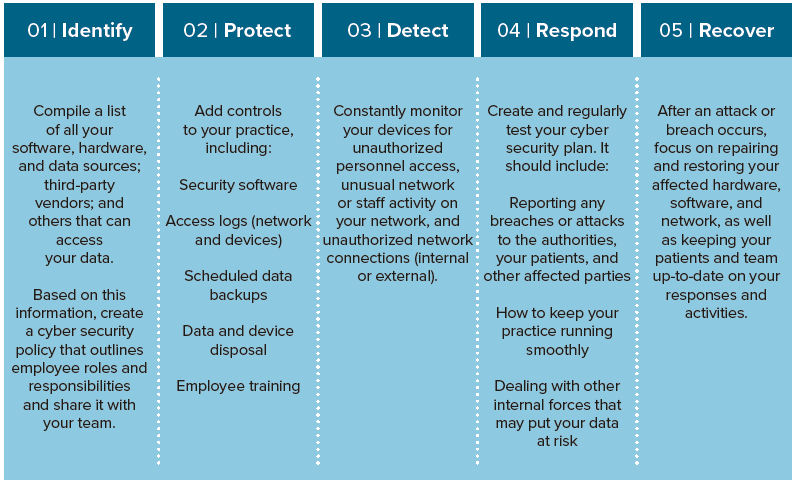
    Ransomware is an evolving threat, and small businesses should take proactive measures to protect against financial loss.

    “The fundamental operations of your practice are almost completely digital,” says Phil Fodchuk, National Leader, Cyber Security at MNP Digital. “Without a well-functioning computer system, you’d likely completely shut down.” 

    With this constantly evolving threat, Fodchuk urges clients to think about their practice’s cyber security needs the same way they think about recommending regular check-ups.

    “It’s part of an overall approach to prevention that ensures measures can be taken as early as possible if needed to prevent negative outcomes,”6 he says.

    The five-step process to protect your business:7

    Take time to put a plan in place so you’re not left scrambling.

    Is cyber insurance worth it?

    Cyber insurance is a critical tool necessary to protect yourself and your practice from cybercrime, but it can’t be your entire strategy. Your best approach is to build strong defenses against attacks, regardless of whether or not you’re insured. A ransomware attack can happen any time, to any organization. Immediately upon discovering your systems have been compromised, contact your cyber insurance provider. A breach response team will be deployed to provide support and counsel to aid in the resumption of business operations.

    References

    1 60 percent of small companies close within six months of being hacked (cybersecurityventures.com)
    2 Freed, Anthony M. Three reasons why you should never pay ransomware attackers. Cyberreason.com
    3 CDSPI webinar. March 2024.
    4 Ibid
    5 The cost of ransomware: Why every business pays, one way or another. March 2023.
    6 Fodchuk, Phil. How to effectively protect your practice from cyber security threats. MNP Digital. December 2023.
    7 Cyber security basics for dentists. Presentation by MNP Digital. February 2024.

  • The implant maintenance appointment

    The implant maintenance appointment

    Dental implant surfaces are primarily rough and porous. When this surface is under / attached to bone, it is not a problem; however, if this surface becomes exposed to the oral environment, either due to peri-implant bone loss or some other reason, it presents a BIG problem, as rough surfaces are very difficult to clean and disinfect. The biggest battle in treating peri-implantitis is being able to keep implant surfaces clean.

    Once an implant surface becomes exposed, professional maintenance should increase in frequency to ensure consistent professional disinfection and also to detect any changes that occur around the implant. Early intervention is required to prolong the life of these implants.

    Roughened implant surfaces can easily become contaminated with bacterial plaque, calculus, cement, frayed floss, and trace elements of plastic, graphite, carbon, or stainless steel (from dental instruments). Contaminants trigger inflammation that affects the tissues locally around the implant and systemically of the patient.

    Powder air flow polishing systems are excellent at removing biofilm from implant surfaces. All instruments used to clean dental implants should be compatible with the type and material of the implants, abutments, and restorations. Titanium implant scalers are recommended to clean titanium implant surfaces, as like metals do not leave behind residues.

    A typical implant maintenance appointment would go as follows:

    • Place retractor to retract the cheeks and lips.
    • Use of a subgingival air polisher with glycine powder (25 microns) with the subgingival-specific tip to remove subgingival biofilm. The tip is placed subgingivally until resistance is felt, then moved back slightly. Activate the tip for five seconds per site (six sites per tooth).
    • Assess the peri implant tissues clinically (visual, probing: redness / swelling / bleeding / keratinized tissue amount, and quality). The tissue should be milked to determine if there is any exudate.
    • Remove calculus and/or cement with appropriate instruments (short horizontal strokes, one thread at a time).
    • Lavage before and after implant debridement using an ultrasonic or piezoelectric titanium compatible tip with short horizontal controlled light flow.
    • Assess mobility (using two mirror handles) and occlusion.
    • Take X-rays.
    • Review oral hygiene instructions with patient.
    • Book next maintenance appointment.

    The goal of the implant maintenance appointment is to leave a clean implant surface, free of cement, calculus, biofilm, and residue, and to ensure the disease around the implant is controlled. 

    Implant X-ray protocol

    Take an X-ray:

    • At each stage of treatment: Care must be taken to ensure the images show implant threads that are separate (not overlapped) and have clearly defined, sharp edges (not hazy)
    • At any sign of infection or mobility
    • At least once per year
    • ALWAYS compare newest radiograph to baseline radiograph

    For 1 to 4 implants: Vertical bitewings or periapicals of each implant

    For 5+ implants: A PAN, CBCT, or individual PAs of each implant

    Dr. Stacey Matheson is a board-certified periodontist in Halifax and has enjoyed serving Atlantic Canada for more than 20 years.

  • Communicating with patients: Addressing the risks of oral piercings

    Communicating with patients: Addressing the risks of oral piercings

    Rooted in ancient history, with cultural and religious significance, body piercings have become increasingly popular in Canada as a form of self-expression, individuality, spirituality, and adornment.

    Of particular relevance to dental professionals are the intraoral and perioral locations for piercings, including the tongue, lip, cheeks, labial and lingual frenula, and uvula. As dental professionals, it is our responsibility to educate and inform our patients about the various oral health risks and complications these piercings can result in if they are not properly cared for. Communicating these risks to patients requires tact, empathy, and a clear understanding of the potential consequences.

    Before addressing the risks and complications, it is important to acknowledge the perspective of the patient. Many individuals choose to get piercings as a form of self-expression or cultural significance. Understanding and respecting their reasons can help establish trust and open communication.

    Approach the conversation with empathy and non-judgement. Phrases like, “I understand you’re interested in getting an oral piercing as a form of self-expression. I want to make sure you’re aware of the potential risks so you can make an informed decision,” will show the patient you respect their autonomy while also voicing your concerns.

    Educating patients about the specific risks of oral piercings should include the following touchpoints:

    • Risk of hemorrhage: During the piercing process, blood vessels may be torn causing blood loss (at times serious), prolonged bleeding, hematomas, and disturbed wound healing.
    • Nerve damage and numbness: Piercings can damage a number of different nerves in the oral cavity, leading to permanent or temporary numbness or loss of sensation in the tongue or lips.
    • Increased risk of infection: Piercings create entry points for bacteria, leading to the potential for both localized or systemic infections. Systemic infections can potentially result in rare but extremely serious complications, including endocarditis, cerebral brain abscesses, and Ludwig’s angina.
    • Damage to teeth and gums: The initial mucosal trauma of piercings can cause pain and swelling of the involved tissues, resulting in functional problems with chewing and/or swallowing. Longer-term complications can result in gingival recession and/or periodontal attachment loss, as well as hard tissue trauma, including abrasion and tooth fracture.
    • Interference with oral function: Even after pain and swelling has subsided, piercings may still affect speech, chewing, and swallowing, causing daily discomfort.
    • Aspiration: Though rare, it is possible to accidentally aspirate a small piece of oral jewellery should it come apart or break. Oral piercings, most commonly tongue piercings, can also cause complications in patients who need to be intubated in emergency scenarios.

    Despite the risks involved, many patients will opt to get an oral piercing or will present in your office after the fact. In these cases, it is important to remain open-minded and continue to help guide your patients. Recommend jewellery that is hypoallergenic, such as stainless steel, 14-karat gold, niobium, or titanium. Soft rubber ends and acrylic screw caps can offer more hard/soft tissue protection and should also be suggested, especially for tongue piercings. Emphasize the importance of proper care and maintenance of the piercing, including regular check-ups, as well as seeking prompt treatment for any signs of infection of potential complications.

    By communicating openly and honestly, we can build supportive relationships with our patients while providing the knowledge they need for making informed oral health decisions.

  • Bringing oral care lessons into the classroom

    Bringing oral care lessons into the classroom

    When Dr. Carrie Terry’s niece stopped into the clinic for her regular dental check-up, the six-year-old was keen to learn more about Aunt Carrie’s job.

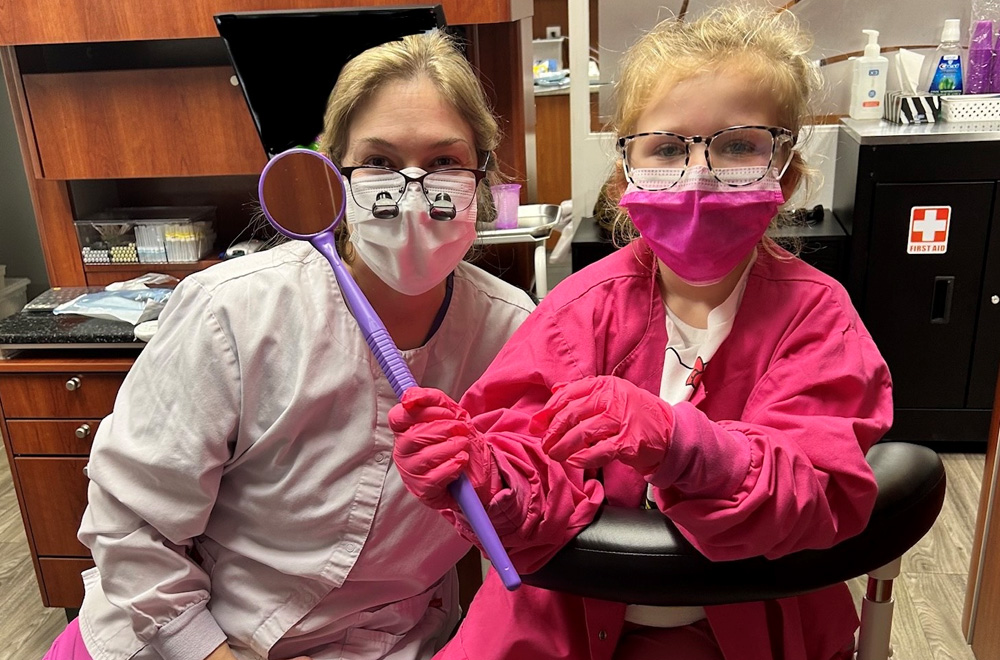
    “We have ‘Family Dentist Days’ where my whole family comes to the office and I do their cleanings and check-ups,” Dr. Terry tells Nova Scotia Dentist. “Minnie wanted to be my assistant while I did her mom’s cleaning, so I dressed her up in all the PPE and she absolutely loved it.”

    Seeing her niece have so much fun sitting chairside gave Dr. Terry an idea: Why not connect with elementary schools near her Wolfville practice to see if there was an opportunity to have more kids ‘practice’ dentistry?

    “We really started engaging with our local schools the year COVID hit,” Dr. Terry says. “My office dog, Franklin, and I were doing virtual presentations. We would visit classrooms through a video call, talk about dentistry, and have the kids ask questions.”

    Adding some hands-on learning into the mix seemed like a natural progression.

    “I thought if kids had the opportunity to dress up like a dental professional that it would not only be fun, but educational, too,” she continues.

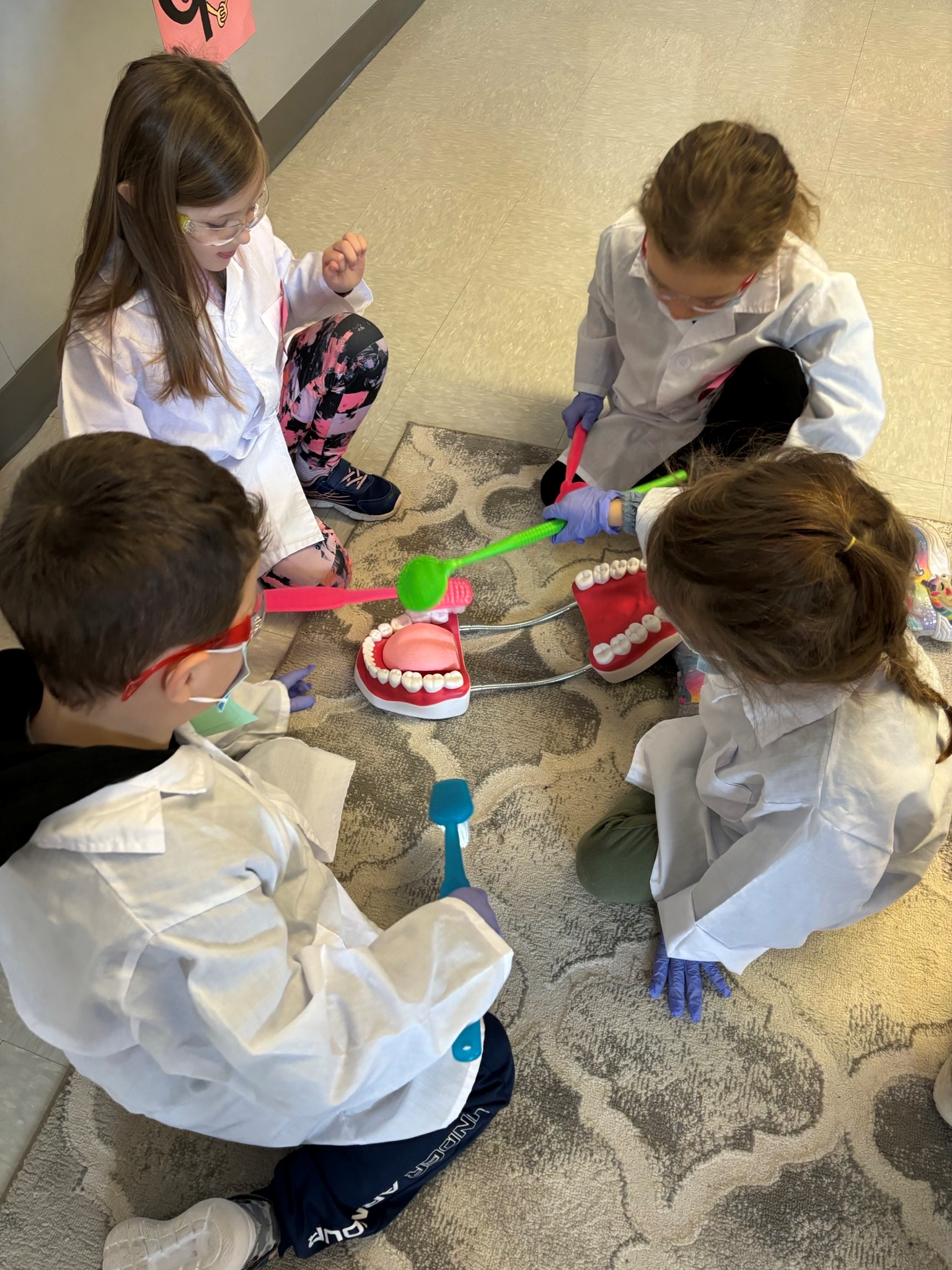
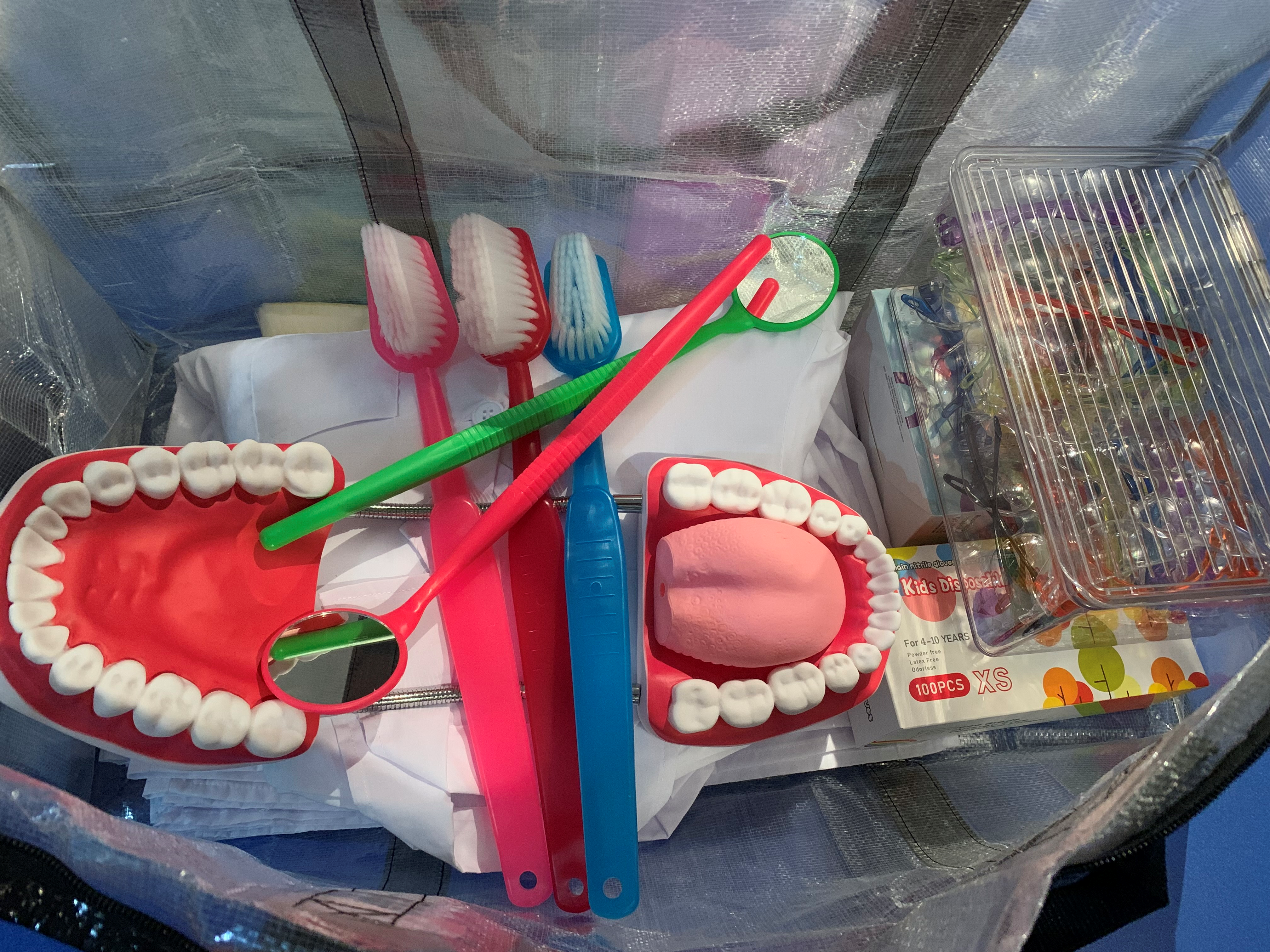
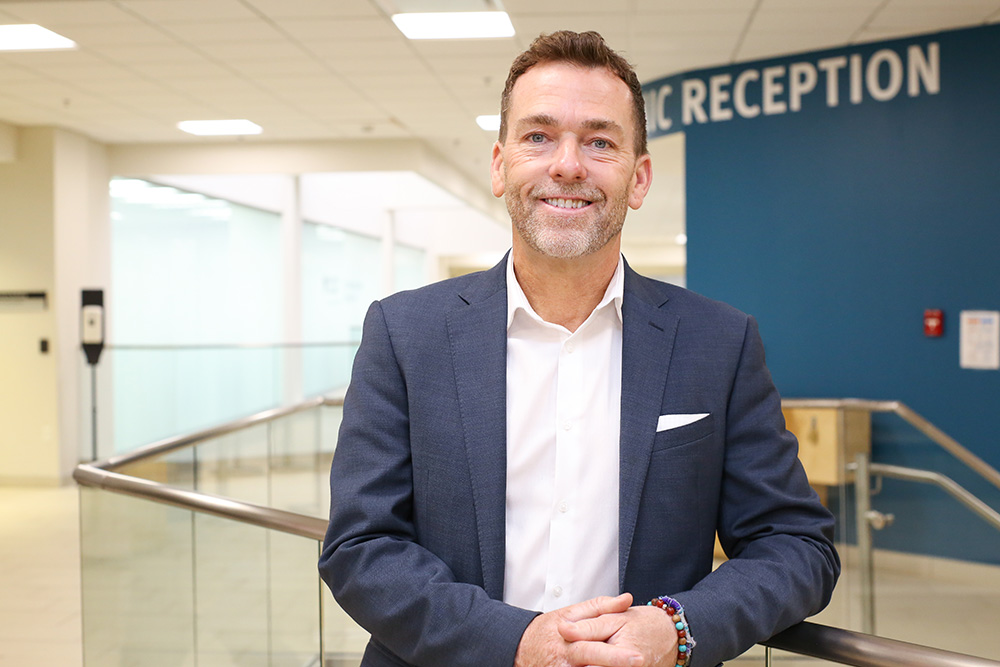
    With that, Dr. Terry’s ‘Learn about Dentistry’ classroom dental kit was born! The bundle has kid-sized PPE — lab coats, gloves, masks, and safety glasses — along with fun, oversized props, including a big mouth, mirrors, and toothbrushes.

    “As much as I would love to personally visit all the classrooms the kit travels to, I don’t have the time,” Dr. Terry says. “Instead, I made a video that explains the important jobs that a dental assistant, dental hygienist, and dentist do. There’s also a number of activity sheets and lesson plans that the teacher can pick and choose from, which are all about oral health.”

    Unsurprisingly, the kit’s a hit! Indeed, since its launch, the dental kit has visited elementary school classrooms in the communities of Gaspereau, Aylesford, and Canning. Recently, Dr. Terry even shipped it to Prince Edward Island.

    “So far this year, we’ve had 10 classes use the kit, with just over 200 kids participating,” she says.

    “My hope for the children who participate is that it makes going to the dentist easier, less scary, and more fun,” Dr. Terry adds. “I also hope it inspires a new generation to, perhaps, consider a career as a dental assistant, dental hygienist, or dentist. With the staff shortages we’re all experiencing, I think it’s great to have kids dress up and think, ‘this could be me someday!’”

    For Dr. Terry, getting patients at Dr. Carrie Terry Family Dentistry jazzed about brushing and flossing is definitely a highlight of the job.

    “I usually try to get kids excited about oral health through my alter-ego, Dr. T-Rex,” she says. “For Oral Health Month this year, we had some amazing dinosaur-themed goodie bags with dinosaur toothbrushes, dinosaur flossers, and other dinosaur things. It’s amazing to watch a child’s face light up receiving a toothbrush, but, when you make it special, they really do get excited about it.”

    “If I can make brushing and flossing more exciting and more enjoyable for people, that makes me happy!”

    To check out more of the fun stuff happening at Dr. Terry’s clinic, find her on Facebook @drcarrieterryfamilydentistry. Dental colleagues are also invited to reach out and borrow the kit!

  • A whole new ball game in Dalhousie University’s Faculty of Dentistry

    A whole new ball game in Dalhousie University’s Faculty of Dentistry

    Photo by Bruce Bottomley
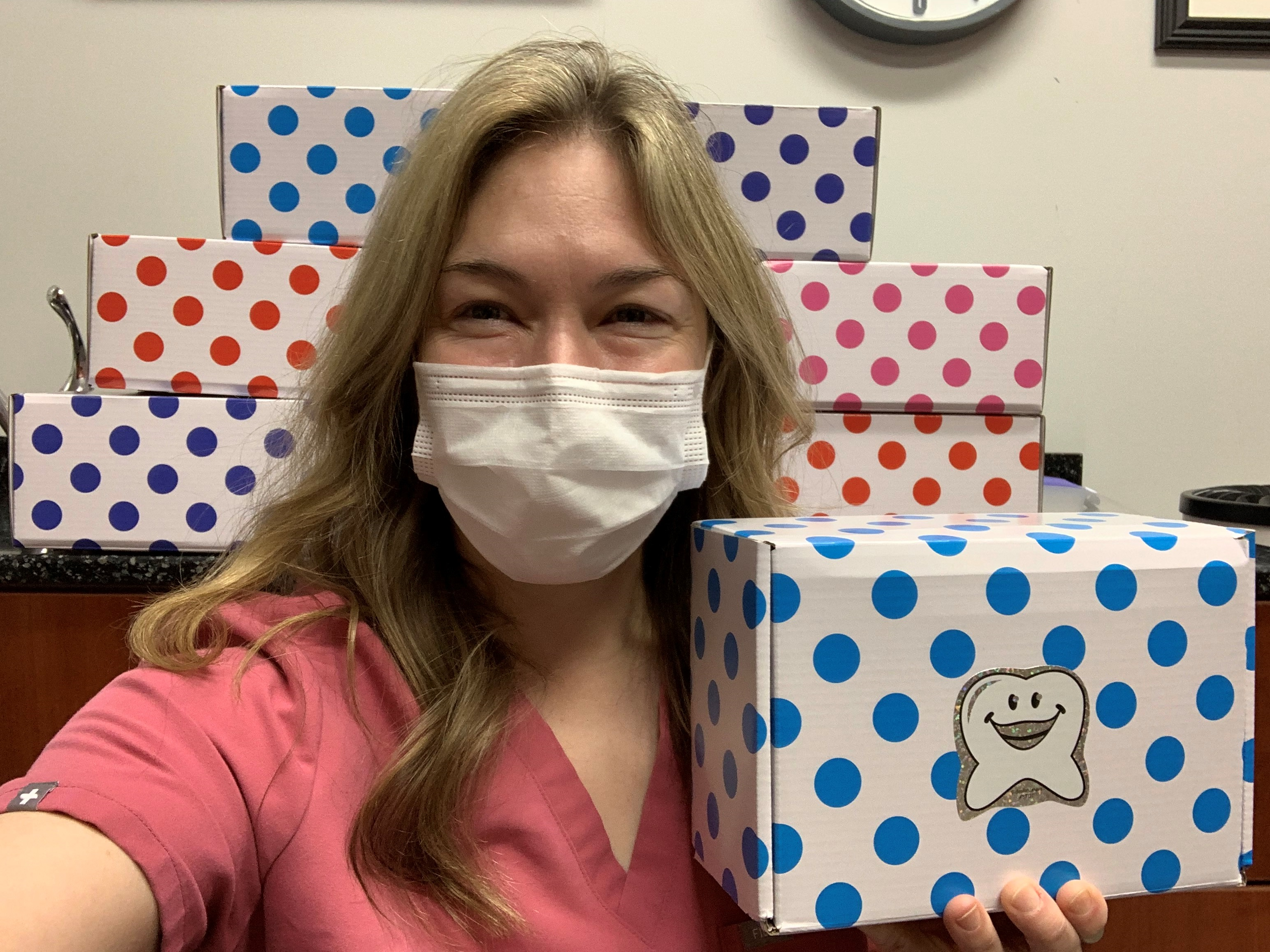
    At the beginning of 2023, Bryan Fader took the bold step of accepting a newly created position of student success strategist in Dalhousie University’s Faculty of Dentistry.

    Though Fader, with his background in sports performance coaching, might not appear an obvious fit for the role, the truth is that an oral health professional student and a high-performance athlete have more in common than one might think. Now a year in, Fader feels some significant breakthroughs have been achieved.

    A meeting of minds

    It started with a chance encounter in a Halifax supermarket. Fader ran into his friend Dr. Sachin Seth, the associate dean of student affairs in the Faculty of Dentistry, and they exchanged news. Fader said that he was finishing off some qualifications for a master’s degree in counselling and psychotherapy. This gave Seth an idea, which then turned into a job offer: Fader would teach some classes and also offer individual counselling sessions.

    For Seth, it made sense. “Student success rarely occurs in a vacuum — it is closely linked with mental and physical well-being,” he explains. “We asked Bryan to help students deal with any personal issues that could affect their academic journey and provide strategies to help them be more resilient and better able to cope when life gets a bit rough.”

    Fader quickly saw the similarities between his new students and the athletes he was used to coaching. “They’re all high achievers,” he says. “They’re highly driven, they’re intrinsically motivated, they’re used to challenges, and they all feel a pressure to perform.”

    Surprisingly, he also discovered that each student felt they were the only one with these feelings, and this was because they hadn’t had opportunities to talk openly together as a group. Fader changed this by bringing them together in larger class groups — a safe space where what they said was confidential, and where conversations about worries and fears could take place. What the students learned, he says, was that they were all experiencing similar doubts and generally “feeling they’re not doing as well as they’re doing.”

    Strategies for building strength

    A technique Fader recommends for people struggling with anxiety is “horizon vision.” A feeling of stress, he explains, tends to speed things up.

    “The more we drop our heads down, the faster the world gets because we’re seeing it more closely.”

    While the technique originates in treatment of anxiety in general, Fader has also used it to help athletes. “It’s useful for any kind of performance,” he explains.

    Fader also encourages students to understand how stress is felt in their bodies. “People often make the mistake of fixing the challenges they’re experiencing in their head with other thoughts in their head, rather than fixing their bodies,” he says. “That’s why [the way] we hold ourselves and our breathing matters so much. It helps us to slow down before we get into flight mode.”

    An expression Fader says he uses a lot is, “how you do something is how you do everything.” This is another technique he encourages students to adopt. “When does the patient experience start?” he asks his students. Fader maintains that preparing to see a patient involves preparation, rather than waiting until they are in the dental chair.

    “With difficult conversations, challenges, feeling overwhelmed, and seeing a patient, if you practice how you want to be, when the moment comes, you’re way more ready,” he says. “It’s much better than trying to pull yourself up in the minute before something happens.”

    One of the important pillars he shares with students is the concept of desirable difficulty. “When I pitched this concept to the class, one guy said, ‘Dude, we have enough difficulty. We don’t want any more.’”

    While Fader acknowledges this response is understandable, he affirms that when you push yourself, even in a small way, you build a muscle.

    “Think about going to the gym,” he says. “The weights shouldn’t be lighter. The students need to get stronger.”

    His role, he maintains, is to help the students realize they are stronger than they think, and to provide the tools and strategies to harness that strength.

    Becoming comfortable with discomfort

    Getting into dental school is not easy, so why do such high-achieving students suffer so much from imposter syndrome and anxiety? It turns out their high level of achievement is precisely the problem.

    “These students have been the best in their class up until they started dental school,” Fader says. “For them, getting an 80 rather than a 90 counts as failure.”

    Allied to that, Fader maintains that students experience an identity crisis as they transition from being undergrads to becoming oral healthcare students. They have to “let go of one rope in order to grab the next one,” he says, and that makes them feel uncomfortable.

    “I try to normalize that sense of discomfort so the students don’t feel that something is wrong,” he continues. “Their role is changing, and they will feel discomfort as they progress from rope to rope.”

    In the year he has spent in the Faculty of Dentistry, Fader has worked with students in both the classroom and one-on-one in his office. He believes students are realizing they are stronger than they thought and can rise above their feelings of stress and anxiety when they are under pressure.

    Looking ahead, Fader says that he wants students to know they don’t have to be in crisis mode to reach out to him.

    “Therapy tools are life tools,” he says. “The more we can work together to strengthen students’ abilities to handle stress — and even welcome it — the deeper their life satisfaction will be and the more prepared they will be for what the future brings.”

    Fader also runs monthly professional development sessions for staff and faculty. In the future, he hopes to attend conferences so he can help professional dentists better understand graduates, including their strengths and the generational differences. This will help practice owners know what to expect when they hire a new dentist and make them better able to integrate them into the practice.

    Bryan Fader, student success strategist at Dalhousie University’s Faculty of Dentistry. Photo by Bruce Bottomley
  • Self-care Corner: Beat the heat

    Self-care Corner: Beat the heat

    As I write this article, many parts of the globe are under extreme heat warnings. In addition to wreaking havoc on our environment, extreme heat has the potential to induce many unwanted and potentially dangerous health effects. The following tips can help keep you cool and comfortable at work in the dental office:

    Use AC if you have it

    We like to put the needs of our patients first and may shy from using the air conditioning to its maximum benefits in order to keep them more comfortable. Instead, offer patients a blanket or covering if they find the temperature too cool. It is important to remember patients are only in the “hot” seat for a small portion of the day — you are likely working at least eight hours and need to keep the operatory cool.

    Eliminate extra sources of heat

    Computers, televisions, and other appliances left running can generate a great deal of heat. Though it may be a source of distraction for patients, keeping any in-op TV screens off can help reduce the heat. Offer patients music or allow them to use their own headphones for any needed distraction. 

    Maintain adequate levels of hydration

    Drinking plenty of ice-cold water throughout the day will help keep you cool and prevent dehydration. Try adding some fruit, lemon, cucumbers, or even some mint to water for a bit of flavour and added incentive.

    Avoid alcoholic beverages and caffeine

    Replace your morning coffee with a decaf herbal tea, or try popping a few tea bags in a jug of water and leaving in the fridge over-night to create your own morning iced tea.

    Do not eat large, protein-rich meals while working

    “Meat sweats” are a real thing! The body will warm itself due to the increase in metabolic heat produced during digestion. Fill up on salads, cold soups and pastas, and veggie wraps instead.

    Wear light, moisture wicking clothing

    Scrubs or designated protective clothing should be made of light, breathable fabrics that allows for heat and sweat to evaporate.

    Try a cooling breathing technique

    You do not have to be a yogi to practice Sitali breathing. Simply sit comfortably and form your lips into an “O.” Curl the tongue and project it out of the mouth to a comfortable distance. Inhale gently through the “straw” formed by your curled tongue as you slowly lift your chin toward the ceiling, lifting only as far as the neck is comfortable. At the end of the inhalation, with your chin comfortably raised, retract the tongue and close the mouth. Exhale slowly through the nostrils as you gently lower your chin back to a neutral position. Repeat for eight to 12 breaths. Can’t roll your tongue? Try Sitkari breathing instead. Open the mouth slightly with your tongue just behind the teeth. Inhale slowly through the space between the upper and lower teeth, letting the air wash over your tongue as you raise your chin toward the ceiling. At the end of the inhalation, close the mouth and exhale through the nostrils as you slowly lower your chin back to neutral. Repeat for eight to 12 breaths.