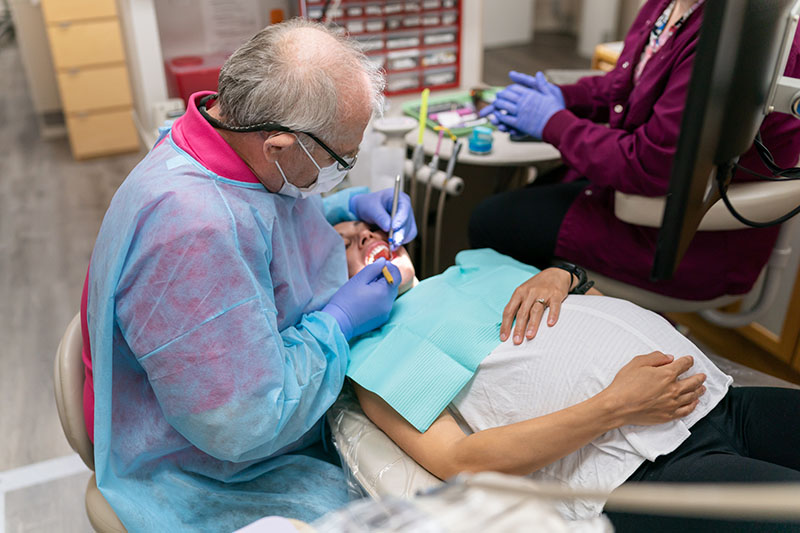
On Sunday, May 12, we celebrate Mother’s Day! To mark the occasion, the Nova Scotia Dental Association is sharing six helpful tips and facts for soon-to-be parents about the importance of oral health during pregnancy.
1. Inform your dentist (and don’t skip your next visit)
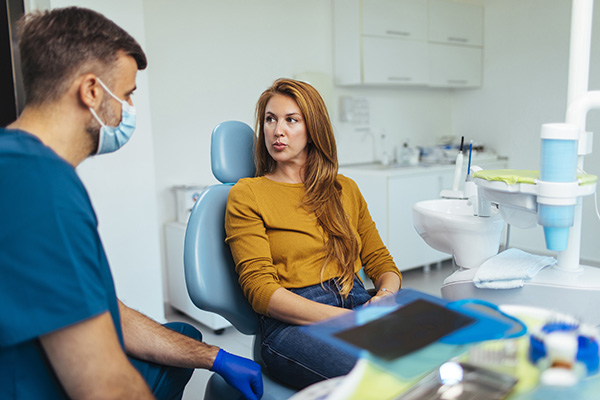
Pregnant patients should tell their oral health care providers that they are expecting. This is important for your medical history.
The Public Health Agency of Canada suggests pregnant patients be examined by their dentist during their first trimester. The dentist is your best source of advice on maintaining your best oral health and can manage some of the side effects your hormones may cause during pregnancy.
2. Recognize that hormones affect oral health
Hormone levels change considerably during pregnancy. The most common thing dentists notice in pregnant patients is that their gums can become inflamed and bleed more easily. Ensuring you keep a regular schedule can help reduce inflammation that can occur.
If you continue to have problems with your gums after giving birth, talk to your dentist.
3. It’s safe to get X-rays while pregnant
Getting a dental X-ray while you are pregnant is safe; however, dentists will often avoid them except in the case of a dental emergency. Emergency care during pregnancy is safe and essential. If you do require X-rays, you will be shielded from the low dose of radiation by a lead apron.
4. Morning sickness can cause tooth problems
Stomach acid produced by vomiting can damage teeth’s surface and promote decay. It is recommended that patients rinse with water after throwing up. Avoid brushing right away, as this can brush the acids into the teeth. If vomiting is severe, patients can ‘swish and spit’ a neutralizing rinse made from a quarter-teaspoon of baking soda and room-temperature water.
5. Your oral health matters to the baby’s health
Again, pregnancy hormones can bring a lot of changes, and this may affect oral health. Recent studies suggest that periodontal disease/poor oral hygiene has been implicated as a risk factor for adverse pregnancy outcomes, such as preterm (premature) births and low birth weight, as well as even miscarriage and stillbirth.
6. Take your baby to the dentist early in life
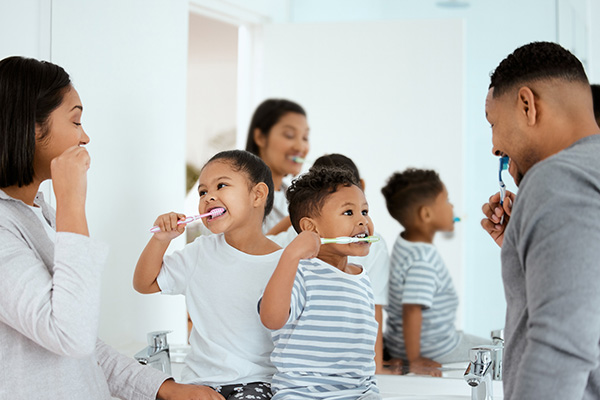
Good oral health habits start early. Introduce your baby to the dentist early to get them used to routine check-ups. Develop and follow a good routine for the baby with good nutrition, mouth cleaning (even before the teeth start to erupt), and regular visits to the dentist.
Happy Mother’s Day from the Nova Scotia Dental Association!
BEDFORD, NS – April 16, 2024: Some Nova Scotians will be able to access treatment under the new Canadian Dental Care Plan (CDCP) as early as May. However, the Nova Scotia Dental Association (NSDA) worries the program has been misrepresented to Canadians and will increase patient demand at a time when acute staffing shortages are already impacting timely access to care.
“The NSDA supports a plan that will provide all Canadians with improved access to dental care, but we have reservations with the CDCP in its current form,” says NSDA President Dr. Juli Waterbury. “We do not believe the CDCP is what Canadians expected and were promised. The program is being touted by politicians as ‘free dental care for all Canadians,’ but this is not accurate.”
As a government dental benefit, the CDCP covers part of the cost of care for eligible Nova Scotians. Patients may be required to make a co-payment of up to 60 per cent depending on their adjusted family net income, and may also have to pay the portion of costs that are not covered under the plan.
“Across the province we already have people walking into dental offices expecting free care for a number of services,” Dr. Waterbury says. “There is a great deal of misunderstanding surrounding the rollout and the details of this plan, and these issues are not unique to Nova Scotia.”
Also concerning is that many Nova Scotians may lose the ability to choose their own oral health provider. Dental office participation across Canada is expected to be low as the plan is implemented — due, in part, to existing staff shortages.
As the NSDA’s 2024 Oral Health Report highlights, Nova Scotia is dealing with a critical shortage of registered dental assistants and registered dental hygienists, making access to dental care difficult for many people in the province. Nearly 20 percent (one in five) of Nova Scotians are waiting longer for a dental hygiene appointment as compared to a year ago. The CDCP will bring an influx of new patients into an already stretched system, worsening the issue of longer wait times for crucial dental care.
“Many Nova Scotians might be forced to find a new dentist, should their regular dentist not enroll, while others might have to travel to a different city or region to get CDCP-covered care,” says NSDA Executive Director Steve Jennex. “This would be devastating for Nova Scotians — particularly those living in rural and remote communities and those who have limited mobility.”
To ensure Nova Scotians continue to have access to oral healthcare, the NSDA wants to work with government to increase the numbers of registered dental hygienists and registered dental assistants working across the province.
The Nova Scotia Dental Association (NSDA) is a member-based organization serving the needs of more than 500 dentist members across the province. As a not-for-profit organization, the NSDA has been the voice for dentistry in Nova Scotia since 1981. Our mission is dentists helping dentists.
Media Contact: Samantha Ashenhurst Communications Manager Nova Scotia Dental Association 902-420-008 ext. 2 communications.nsda@bellaliant.com
OTTAWA, April 8, 2024 (Canadian Dental Association) – As Canadians mark Oral Health Month, we are reminded that oral health maintenance and prevention is essential to overall health and well-being. This year provides a historic moment, with millions of eligible Canadians to receive enhanced oral care access.
The Canadian Dental Association (CDA) has long been advocating for increased funding to oral health care in Canada. The upcoming May launch of the federal government’s $13-billion Canada Dental Care Plan (CDCP) signifies a significant potential step forward. With over 1.5 million Canadians already enrolled, the Canadian public is anticipating enhanced oral health care access from the CDCP. However, misunderstandings around the program persist and challenges loom as the CDCP’s implementation approaches.
“While we commend the federal government’s efforts to invest and address oral health care accessibility, it’s essential to acknowledge the CDCP’s potential shortcomings,” says Dr. Heather Carr, President of the Canadian Dental Association (CDA). “Several of our key policy recommendations, including completely covering treatment costs and streamlining administrative procedures, have not been fully addressed.”
As advocates for Canadians’ oral health, CDA remains committed to working with the federal government so that the CDCP is a success.
“Our hope for the CDCP is that it reduces barriers and helps close the gaps in access to care, while ensuring that all people living in Canada receive the oral health care they need,” adds Dr. Carr.
Against the backdrop of April being Oral Health Month, the public is encouraged to prioritize oral health maintenance and prevention by following these five steps:
Visit your dentist regularly;
Eat a well-balanced diet: not only is a balanced diet good for your body, but it does wonders for your teeth and gums;
Check your mouth regularly for signs of gum disease and oral cancer;
Make water your drink of choice, limit alcohol, and avoid smoking, smokeless tobacco, and vaping; and
“Your oral health and overall health have a stronger link than you may think,” says Dr. Carr. “Maintaining a healthy mouth allows you to enjoy life to the fullest, and avoid risk factors, complications and costly and avoidable treatment that come with poor oral health.”
About the Canadian Dental Association The Canadian Dental Association (CDA) is the national voice for dentistry dedicated to the promotion of optimal oral health, an essential component of general health, and to the advancement and leadership of a unified profession. CDA, a non-regulatory authority, is a federally incorporated not-for-profit organization whose corporate members are Canada’s provincial and territorial dental associations (PTDAs). CDA represents over 21,000 practicing dentists from coast to coast to coast.
Media Contact: Jeff D’Andrea Media Relations Specialist Canadian Dental Association 613-523-7963 media@cda-adc.ca
Some people aren’t taught about personal finance at home or school and can struggle with investing their money, managing debt, or budgeting their monthly income. This is one reason some turn to social media to learn how to manage their money.
Know the landscape
As of April 2022, 4.7 billion (or 59%) of the world’s population were social media users.1 Apart from the usual suspects offering political commentary, humour, and celebrity gossip, the social media landscape also includes a subset of users known as ‘influencers.’ These users have the ability to influence potential buyers of a product or service by promoting the items through their social media channels. Usually, their sphere of influence increases by the number of followers they have. Influencers make money primarily from partnerships with the brands whose products they promote, but there is a growing movement towards full transparency after media reports of influencers being fined and receiving payments they did not disclose.2
Facebook, Twitter, TikTok, Instagram, YouTube, Snapchat, Reddit, and LinkedIn are all vehicles that contain popular personal finance, investing, and entrepreneurship content shared by influencers.
Often, financial influencers produce educational content that is presented in an entertaining way and gets them noticed on a worldwide platform. In fact, the new term ‘finfluencers’ — or financial influencers — is being used for those who focus just on financial matters. However, be cautious of the fact that these influencers may not be licensed financial professionals. Free advice, tips, and strategies are great ways to dip your toe into learning a bit more about finance. At a minimum, ‘finfluencers’ can help you know what questions to ask a financial advisor.
What to watch out for
When scrolling through social media, remember the rule of thumb “take it with a grain of salt” and proceed with a healthy dose of skepticism. Watch out for get-rich-quick scams and promises that are too good to be true. Cryptocurrencies have boomed (and plummeted) in recent times so they tend to generate a lot of online chatter — but is this an investment that fits with your risk tolerance? Simply put, risk tolerance is the level of risk an investor is willing to take. Risk can mean opportunity, but it is also about tolerating the potential for losses, the ability to withstand market swings, and the inability to predict what’s ahead. Online investors need to be aware of the added risk of criminals pretending to be reputable advisors and subsequently stealing personal/banking information.
The bottom line
Influencers cast a large net on social media as a means of gaining followers; however, they don’t know a client’s individual situation and aren’t necessarily able to recommend what fits for each follower.
Also, be wary of not knowing what credentials, if any, a financial influencer has. They are not subject to the same regulations and educational requirements as licensed financial professionals. Additionally, there is no legal requirement that social media users disclose any conflicts of interest or compensation they may receive for making recommendations.
That said, following these financial influencers can be a first step in learning more about managing your finances and your money. There’s almost certainly a personal finance niche on any platform that can pique your interest. Remember, though: Your circumstances, experiences, and situation are likely significantly different from the individual to whom the mass-produced financial advice is oriented towards.
When it comes to trusting someone with your money, your future, and your privacy, CDSPI has been a trusted partner to dentists and the dental community for more than 60 years. Our advisors are CERTIFIED FINANCIAL PLANNER® professionals with a strong understanding of many of the financial challenges of running a successful dental practice with the expertise that can help you achieve your financial goals.
References
1 Internet and social media users in the world 2022 | Statista
2 SEC.gov | Two Celebrities Charged with Unlawfully Touting Coin Offerings
Many begin their wellness journey by dipping their toes in the ever-expanding lake of available self-help resources in the form of books, podcasts, magazines, and courses. However, considering the wellness market is a booming multi-billion-dollar industry, it can be challenging to find reputable information with actionable guidance and advice. Luckily, I’ve done some legwork on this front and have two recommendations for those beginning or continuing on their wellness journey.
First up is a free online course titled, “The Science of Well-Being.” This course was developed and is delivered by professor Dr. Laurie Santos from Yale University, and can be found at coursera.org. The Science of Well-Being is delivered on-demand over a 10-week period, and is designed to increase individual happiness while building more productive habits. Course material comes in the form of videos, articles, and quizzes, and easily lends itself to group participation amongst family members or office staff. There is even a teen-specific version of this course available. If you take the course and want to hear more of what Dr. Santos has to say, check out her podcast “The Happiness Lab.”
Second is a book, titled, The Gift: 12 Lessons to Save Your Life, by Dr. Edith Eger. I was first introduced to Dr. Eger through her inspirational best-selling book The Choice, which tells her personal account of surviving concentration camps, as well as her journey of healing afterwards. In The Gift, Dr. Eger details both personal stories and patient interactions she has had within her own practice to provide readers with a practical how-to guide on changing thoughts and behaviours we may have that no longer serve us. Each chapter or lesson ends with a series of questions and actionable assignments to give readers the keys to disabling the destructive patterns and behaviours that can keep us imprisoned. This, in turn, gives us the tools we need to find freedom and enjoy life.
The NSDA’s Suggested Fee Guide for Dental Practitioners is one of the association’s most popular and referred-to resources. Published annually, this spiral-bound booklet lists the technical codes and suggested fees for more than 1,400 commonly performed dental services, providing Nova Scotia’s dentists with a comprehensive suggested framework of procedure costs. The resource is designed to promote fairness, transparency, confidence, and predictability for patients and dentists.
Producing this document (and its sister publication, the Suggested Fee Guide for Dental Specialists) requires significant time and careful attention. The association’s Fee Guide Committee, chaired by former NSDA President, Dr. Nada Haidar, works tirelessly to ensure the information included in each guide is current, thorough, and accurate.
“The committee members are all very devoted and have a lot to offer,” Dr. Haidar tells Nova Scotia Dentist. “Without the hard work of this committee and the NSDA staff, the much-needed Fee Guide would look very different.”
Compiling the information needed for this resource is definitely a group effort! Each year, financial specialists with Impact Economic Consultants survey NSDA members across the province. These surveys are conducted on behalf of the association to gather background information on dental practices in Nova Scotia, which helps determine annual revisions to the Suggested Fee Guide.
Dr. Haidar and fellow Fee Guide Committee members — Drs. Maria Haddad, Scott MacLean, Mark Sutherland, Marco Chiarot, and Stuart MacDonald — then review the collected data on dental practice costs, which determines the suggested increase percentage reflected in the updated guides.
“The resource is generated using the financial data provided from our member dentists who take part in surveys every year,” Dr. Haidar says. “We work with economists who understand the economic climate of our province and who use our dentists’ data. Often, new codes are added and old unused codes are removed.”
When determining adjustments and updates to the guide, the committee relies heavily on the data provided by member dentists. In this way, the guide truly is a cross-province effort, and the Fee Guide Committee could not be more appreciative of Nova Scotia’s dentists.
“Compared to other provinces, we have the best participation in the financial surveys,” Dr. Haidar says. “We are all very grateful that dentists in Nova Scotia take the time to provide their data.”
Unlocking doors with volunteering
A Dalhousie Dentistry alumnus, Dr. Haidar joined the Fee Guide Committee with a longstanding appreciation for her dental colleagues in Nova Scotia. She has been practising in Halifax for 27 years — and has been volunteering with the NSDA for almost that long, too!
“I started volunteering with the NSDA about 26 years ago,” she says. “I appeared on Breakfast Television during Oral Health Month and did the ‘fluoride and the egg’ experiment on television. I was very shy and would not have volunteered, but the dentist I practiced with at the time encouraged me to do it. That started my relationship with the NSDA and I’ve been involved ever since.”
Indeed, this exciting ‘trip outside of the comfort zone’ inspired Dr. Haidar to continue giving back to the dental community, which has proved to be rewarding in many different ways.
“I always say the NSDA connected me with my peers on such an important level,” she says. “I met other dentists, and, with that group and the NSDA staff, I created the best support network a dentist could ever ask for.”
While volunteering is a lot of hard work, in Dr. Haidar’s experience, it has also been a wonderful way to connect with colleagues and expand her personal and professional network.
“My opportunities with the NSDA led me to a presidency in 2019, which opened doors to the dental world outside of Nova Scotia,” she says. “I met many dentists from across Canada and worked with a wonderful Governing Council at the time.”
“If you had asked me 27 years ago, I never would have thought I would ever be an NSDA president,” Dr. Haidar adds. “Being shy, the association is invaluable in getting me out to meetings and social events. I could not have had the rich career I have without it.”
Dr. Nada Haidar, chair of the NSDA Fee Guide Committee.
We asked the Fee Guide Committee: Why do you volunteer?
Dr. Nada Haidar (Chair):
“Volunteering enriches my personal life because it has connected me with dentists who I call friends. I have such a supportive network in these dentists. I learn from them and can call on them to discuss anything. I never would have connected with these dentists without the NSDA.”
Dr. Maria Haddad:
“Volunteering has always been a part of my life. Ever since I was young, I have valued the ability to give back to the community. It has been a way for me to make a positive impact, and it has allowed me to grow and learn from those around me. Organized dentistry has been something I have been interested in since dental school, and I knew that after graduation it would be something I would want to continue with. Volunteering for the NSDA and within the Fee Guide Committee has allowed me to gain an important insight into the multi-faceted layers of dentistry. I have learned so much from my colleagues on the committee, and for that I am grateful.”
Dr. Stuart MacDonald:
“I’ve been privileged to be on a variety of dental committees over the past 15 years or so. It’s so nice to meet new friends, work together as a team, and play even a small part in the dental organization that is so important to each and every one of us.”
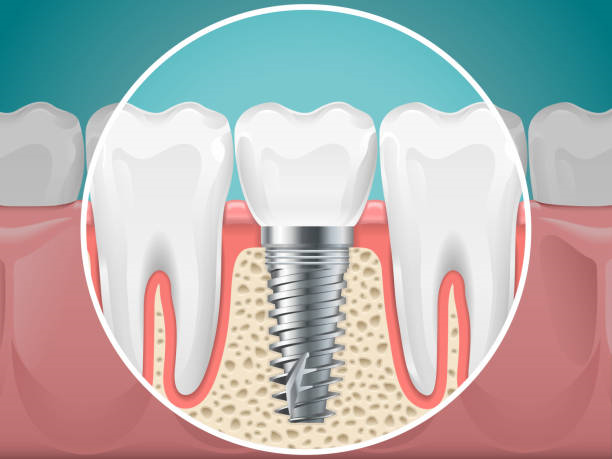
Dental implants are not the panacea we once thought they were. Indeed, considering the prevalence (at personal level) of peri-implant mucositis is approximately 40%, the occurrence of peri-implantitis is approximately 20%, and the cost of maintaining implants is five times higher than that for teeth, one should not take the prescription of implant therapy lightly.
Implant therapy begins before the implant is placed, and continues for as long as it is in a patient’s mouth. There is an increased awareness of the need to plan long-term supportive care programs during the treatment-planning phase, as well as the financial, biological, and legal consequences of not doing so.
In 2023, the European Federation of Periodontology ‘dropped’ a long-anticipated paper, outlining its findings for the prevention and treatment of peri-implant diseases. This periodontal piece looks at the pre-planning and planning aspect of implant therapy.
Primordial prevention (Prevention of risk factor development)
Educate the patient on the importance of supportive post-implant care (SPIC) and home care once an implant is placed
Impress the importance of glycemic control in diabetics
Encourage smoking cessation
Get the patient involved in a supportive periodontal maintenance program
Educate and coach the patient to attain good oral hygiene
Reduce bruxism and/or parafunctional habits
Use periodontal therapy to eliminate gingival inflammation (bleeding index <10% is ideal) and achieve periodontal stability
Surgical planning
Ensure adequate buccal and lingual bone around implant
Ensure adequate mesial and distal space between the implant(s) and adjacent tooth/teeth to allow for prosthetic components, professional hygiene tools, and home care aids
Ensure appropriate apical/coronal position to allow for prosthetic components and avoid excess deep sulcus
Prosthetic planning
Ensure access for professional hygiene tools and home care aids
Ensure access for professional maintenance tools (i.e. periodontal probe and deposit removal tools)
Ensure favourable emergence profile to facilitate plaque removal, both professionally and at home
In the next issue of Nova Scotia Dentist, I will discuss how to assess peri-implant health status at each clinical examination, what to do at each implant recall appointment, and how to treat peri-implant mucositis and peri-implantitis. Stay tuned!
Dr. Stacey Matheson is a board-certified periodontist in Halifax and has enjoyed serving Atlantic Canada for more than 20 years. For more information on gum grafting and for educational materials, contact her at 902-406-GUMS (4867) or via perio@halifaxperio.com.
References
Herrera et al. Prevention and treatment of peri-implant diseases – The EFP S3 level clinical practice guideline. J Clin Periodontol. 2023;50(Suppl. 26):4-76. doi:10.1111/jcpe.13823
Gionobile and Lang. Are dental implants a panacea or should we strive to save teeth? J Clin Res. 2016. Jan;95(1):5-6. doi:10.1177/0022034515618942
How did a Boston-born fella who didn’t consider studying dentistry until the tail-end of his undergraduate degree at Tufts University become the first endodontist in Canada to practice east of Montréal?
For Dr. Steve Brayton — who also established the division of endodontics at Dalhousie’s Faculty of Dentistry in 1972 — this achievement was thanks to a series of very smart decisions (and some good timing, too!).
“I had no intentions of ever going into dentistry — it was not part of my life plan,” he tells Nova Scotia Dentist. “My dad was a physician, but I knew studying medicine was out of the picture because my grades weren’t all that great as a Tufts undergraduate.”
Not knowing what else to do, while in the last year of his Bachelor of Science degree in 1962, Dr. Brayton took (and passed) the exams for the U.S. Naval Officer Candidate School. Much to the dismay of his parents, he planned to become a Navy pilot — a top gun!
“My folks were beside themselves,” he says. “They were so frightened I was gonna get killed because the Vietnam War was cranking up. It wasn’t a real bright scenario, but it sounded exciting.”
To placate his parents, Dr. Brayton applied to Tufts Dental School and took the dental aptitude test. Two weeks before he was set to be sworn into the Navy, he received his letter of acceptance.
“My mom read the letter, sat down, and cried,” he says. “In two weeks, my whole life would have changed.”
Indeed, dental school altered Dr. Brayton’s life trajectory in many ways. For one, he didn’t have to face the uncertainty of flying F-4 phantom jets off aircraft carriers. For another, he finally had the stability to pursue a romance with Avril, a girl from Nova Scotia he met while summering in Sandy Cove. The two had been friends since childhood.
“When I was in Boston going to Tufts, Avril was going to Acadia,” Dr. Brayton says. “It was a long-distance romance, but we got married in Digby the summer I finished dental school.”
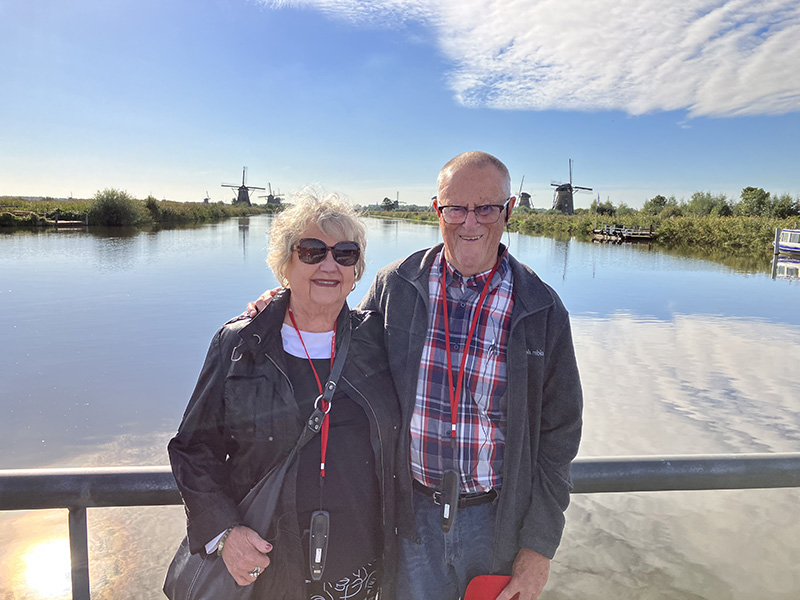
Dr. Brayton in the Netherlands with his wife, Avril. Photos courtesy Dr. Steve Brayton
Endodontics calling
After dental school, Dr. Brayton completed a one-year internship at Michael Reese Hospital in Chicago. While there, he mentored under Dr. Frank Weine, a well-known endodontist who had written a textbook on the subject.
“Everybody assumed I was going to go into oral surgery because I’d worked my summers through college and dental school as an OR scrub nurse,” Dr. Brayton says. “Philosophically, though, [oral surgery] didn’t go with my thinking about preserving the natural dentition.”
After finishing his internship, Dr. Brayton served two years with the U.S. Navy Dental Corps during the Vietnam War. He then worked as a general practitioner in an associated practice for three years in Boston while returning to Tufts to complete his endodontics certification.
The after-graduation plan, he says, was to move to Portland, Maine, to practice endodontics.
“There were no endodontists there,” Dr. Brayton says. “I planned to practice in Portland and come down to Tufts to teach one day a week. The ferry went from Portland to Yarmouth, so it would be easy enough to visit my wife’s family in Sandy Cove and the Digby Neck.”
However, while in the undergraduate clinic at Tufts, his mentor, Dr. Cyril Gaum (an endodontist in Boston, who was from originally from Sydney, N.S., and was a Dalhousie Dental School graduate), offered some life-changing advice.
“Cyril said, ‘Don’t go to Portland — go to Halifax,” Dr. Brayton recalls. “He said there was no endodontist in Canada east of Montréal, and he suggested I start a teaching program with the dental school.”
With those words, Dr. Brayton connected with the Dalhousie Dental School and flew to Halifax to interview with the faculty’s dean, Dr. J.D. McLean. He was offered an assistant professorship and invited to establish the division of endodontics at Dalhousie. On Aug. 4, 1972, Dr. Brayton emigrated to Canada at the Calais-Saint Stephen crossing with his wife and two young daughters, Jennifer and Laura.
“And the rest is history,” he says.
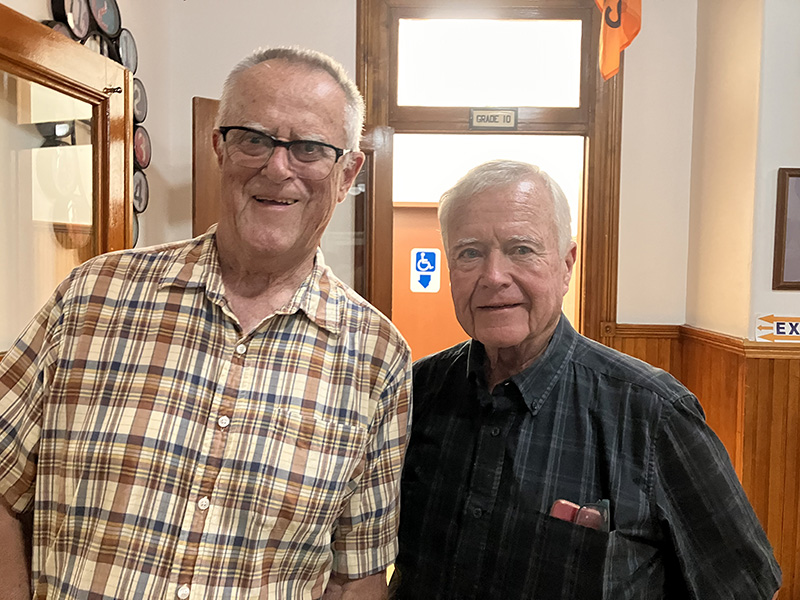
Dr. Brayton and his former partner in practice, periodontist Dr. Ed Hannigan.
Teaching and practice
In 1972, Dr. Brayton started teaching endodontics at Dalhousie. The same year, he opened his specialty practice in Halifax.
“My office was just down the street from the dental school, so I could give an 8 a.m. lecture and then run over my practice and see patients,” he says.
Working with the public was his favourite part of the job. Dr. Brayton loved transforming a fearful or anxious patient into a ‘dental convert’ by swiftly fixing their endodontic problem and preserving their natural dentition.
“When people would come in, face swollen in acute pain or with an acute pulpitis, I would listen to their tale of woe and know exactly what the problem was,” Dr. Brayton says. “I was able to freeze them up, get them comfortable, get the root canal treatment done, and then refer them back to their general dentists to get the tooth restored.”
In 45 years of practice, he estimates he did about 100,000 root canal treatments.
“Patients would walk out of the office shaking their head, saying, ‘I can’t believe I was awake all night worrying about this and it was such a non-event,’” Dr. Brayton says.
Teaching, while rewarding, was what he found most challenging.
“In my 30 years teaching, I trained at least a thousand students how to do endodontics,” he says. “I ran a tough program, but it was because I knew so many of these graduates would be going out into real rural areas and wouldn’t have the luxury of referring to any specialty, let alone endodontics. They had to know what they were doing.”
Supporting the profession
Dr. Brayton was also involved in organized dentistry, serving as Chair of the Society of Dental Specialists of Nova Scotia, President of the Canadian Academy of Endodontics, President of the NSDA, Chair of the Provincial Dental Board of Nova Scotia, and as member of CDA’s Committee on Accreditation for Canada (among dozens of other university and professional committee appointments).
“My philosophy was to make dentistry the best it can be for the public,” he says. “I did that in five ways: doing research; teaching dentists to-be; providing continuing education to help dentists upgrade their skills; getting involved in dental politics; and policing the profession through dental licensing and enforcement.”
During his career, Dr. Brayton delivered more than 50 lectures and seminars at conferences in Germany, the United States, Venezuela, Malta, and across Canada. His final involvement with the profession was, appropriately, as the J.D. McLean lecturer at Dalhousie Dental College on April 8, 2010.
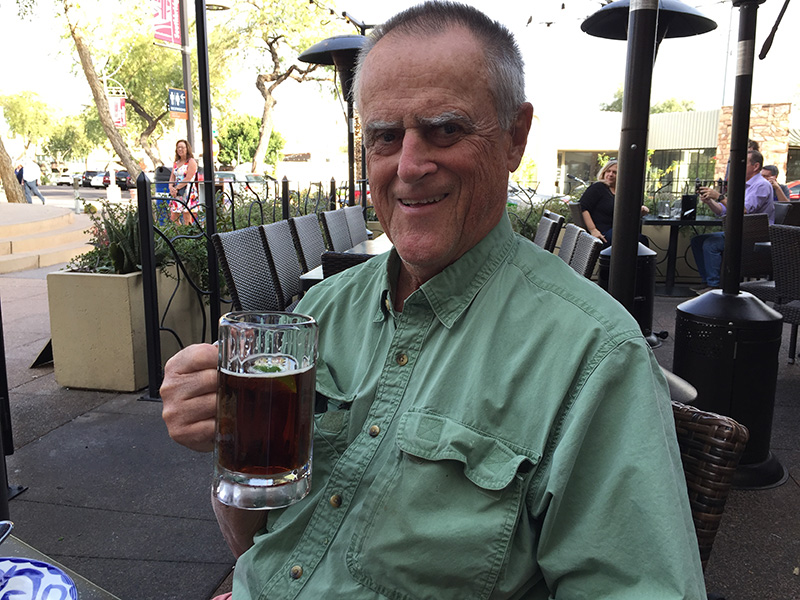
Retired in Scottsdale, Ariz.
Smooth sailing
Now retired 13 years, Dr. Brayton sums up this phase of life with one word: Fabulous.
“Retirement gives me more time with my wife, Avril, and time to do all the things I couldn’t do when I was practicing or teaching,” he says.
This list of activities includes travelling (throughout Canada and internationally), model boat building, cooking, listening to classical music and opera, and catching shows at Neptune Theatre and Symphony Nova Scotia.
“It makes me wonder how the hell I had the time to hold a full-time practice, teach full time, give courses around the world, take courses for continuing education, and do research, too!” he says.
Retirement has also given Dr. Brayton ample time to sail — which he considers his second great love (after his wife of 57 years, of course).
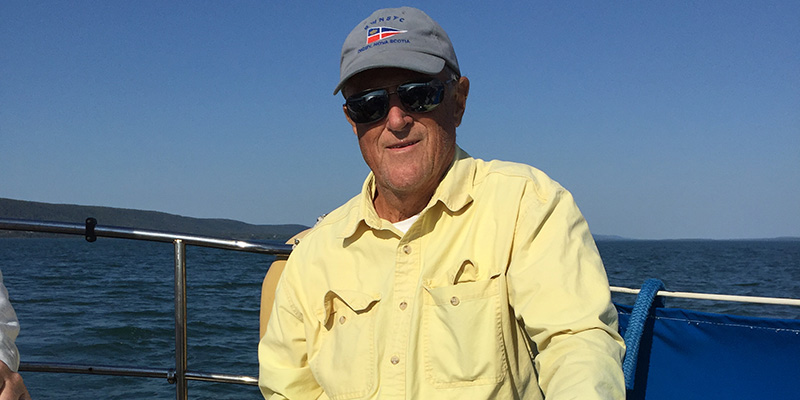
“I learned to sail at the U.S. Naval Academy when I was there in 1964 getting my officer training,” he says. “I got my first sailboat three years after I moved to Nova Scotia and I sailed until two years ago when I sold my last boat. I’ve sailed everywhere from Norfolk, Virginia, to Saint Pierre and Miquelon, and every place in between over the past 40 years.”
When asked to share some words of wisdom for dentists practicing today, Dr. Brayton reiterates his philosophy: Make dentistry the best it can be for the public.
“Stay abreast of the developments in the profession through study clubs, continuing education, and conventions,” he says. “Support the profession, your dental school, and charities.”
While Dr. Brayton may not have known from a young age that he would become an endodontist, he is certainly grateful for his incredible career.
“For me, there was nothing glamorous about wanting to be a dentist,” he says, “but, next to marrying my wife and moving to Canada, it turned out to be the best decision I ever made.”
“I’ve loved the profession. Everything about it.”
Thank you, Dr. Brayton, for taking the time to share your experiences and advice with the profession.
Are you a retired dentist embarking on your next great adventure? We would love to hear from you and share your story! Reach out to Samantha, NSDA’s Communications Manager, at communications.nsda@bellaliant.com.
Admitting fault can be a difficult endeavour — perhaps Elton John said it best when he sang, “Sorry Seems to Be the Hardest Word.”
For those of us in the dental profession, whose training and practice often entails striving for perfection, errors in patient treatment can cause personal challenges, along with concerns about our professional reputations and, in extreme cases, our liability. Does the act of apologizing for our mistakes and/or professional misgivings help or hinder our relationships with our patients? And what, if any, are the legal repercussions of admitting fault through an apology?
Mistakes are a part of the human experience. It’s important to acknowledge errors — even those we think are small, misconstrued, or, in some cases, wrong. In a Harvard Health Publishing article titled, “The art of a heartfelt apology,” Dr. Ronald Siegel states, “To preserve or re-establish connections with other people, you have to let go of concerns about right and wrong and try instead to understand the other person’s experience.”
Indeed, denying, diminishing, or completely disregarding a patient’s concerns can cause small issues to snowball into something out of your control. In fact, experience tells us that dissatisfied patients are likely to share their story with more people as compared to those who are happy with their treatment. In the age of social media, this can have a big impact on our professional reputation, even in cases where it is unwarranted.
When we are made aware of a patient’s dissatisfaction with the treatment we have provided or mistakes/errors we have been made (which can be real or perceived), our first action is to hear the patient out. It is important to truly listen to their complaint, without interruption and with empathy. Often, simply listening and offering a genuine apology helps the patient feel seen and heard and can resolve the matter at hand.
What entails a genuine apology? To paraphrase the article cited above, Dr. Aaron Lazare, an apology expert, says this includes four elements:
Acknowledge the offense. It is important to take responsibility for your actions. Avoid using vague or evasive language, or wording your apology in a way that minimizes the offense or is defensive and confrontational. Never use the wording, “I’m sorry, but…”
Explain what happened. Be mindful to explain how the error may have occurred without excusing it. Focus here on your own actions and not the feelings of the offended patient.
Express remorse. If you regret the error or feel ashamed or humiliated, let the patient know. The patient will feel more at ease knowing you are on their side.
Offer to make amends. Your willingness to fix the error will go a long way in establishing a more trusting and open relationship. Be sure to take the time to both ask and listen to the patient in what they think the solution to the problem may be. It could turn out to be an easier fix than you had anticipated.
While apologies are hard enough with those we love and care for, patient apologies may harbour the unwanted layer of admitting legal fault. If we apologize to our patients, are we setting ourselves up for complaints to be raised against us and risking our license? Are we exposing ourselves to legal reprisal from our patients?
The Apology Act, established in Nova Scotia in 2008, should provide professionals with more confidence when offering atonement. The Act states that an apology, “means an expression of sympathy or regret, a statement that one is sorry, or any other words or actions indicating contrition or commiseration, whether or not the words or actions admit or imply an admission of fault in connection with the matter to which the words or actions relate.”
Further, “an apology made by or on behalf of a person in connection with any matter:
does not constitute an express or implied admission of fault or liability by the person in connection with that matter;
does not constitute a confirmation of a cause of action or acknowledgment of a claim in relation to that matter for the purpose of the Limitations of Actions Act;
notwithstanding any wording to the contrary in any contract of insurance or any other enactment or law, does not void, impair, or otherwise affect any insurance coverage that is or, but for the apology, would be available to the person in connection with that matter; and
may not be taken into account in any determination of fault or liability in connection with that matter.”
In simpler terms, the Department of Health and Wellness states, “a healthcare worker’s apology to a patient or family member cannot be used as evidence in legal proceedings to establish fault or liability. Instead, an apology is a sign of compassion and empathy.”
Mistakes are an integral part of human nature and apologies should be, too. Being able to offer a sincere apology helps foster personal growth and can expand our emotional intelligence, leading to healthier and more productive relationships with not only others, but ourselves, as well.
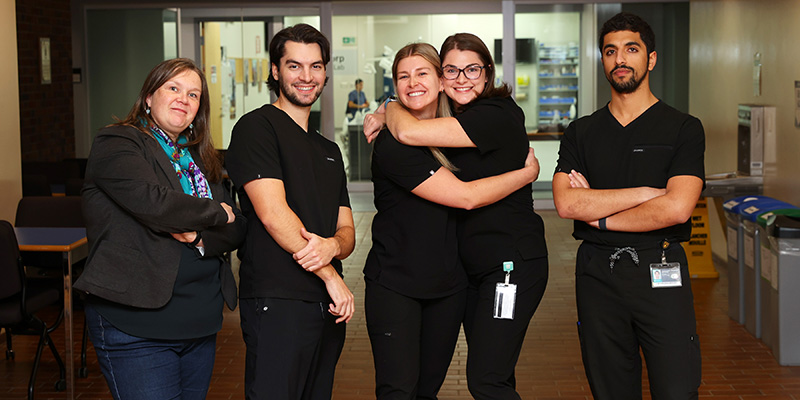
Above: From left, Dr. Ferne Kraglund, Jared Lush, Cecilia Keith, Jillian Bishop, and Mohammed (Mo) Alabdoulsalam. Photos by Nick Pearce
They may have come for the pizza, but they appreciated what they learned, too.
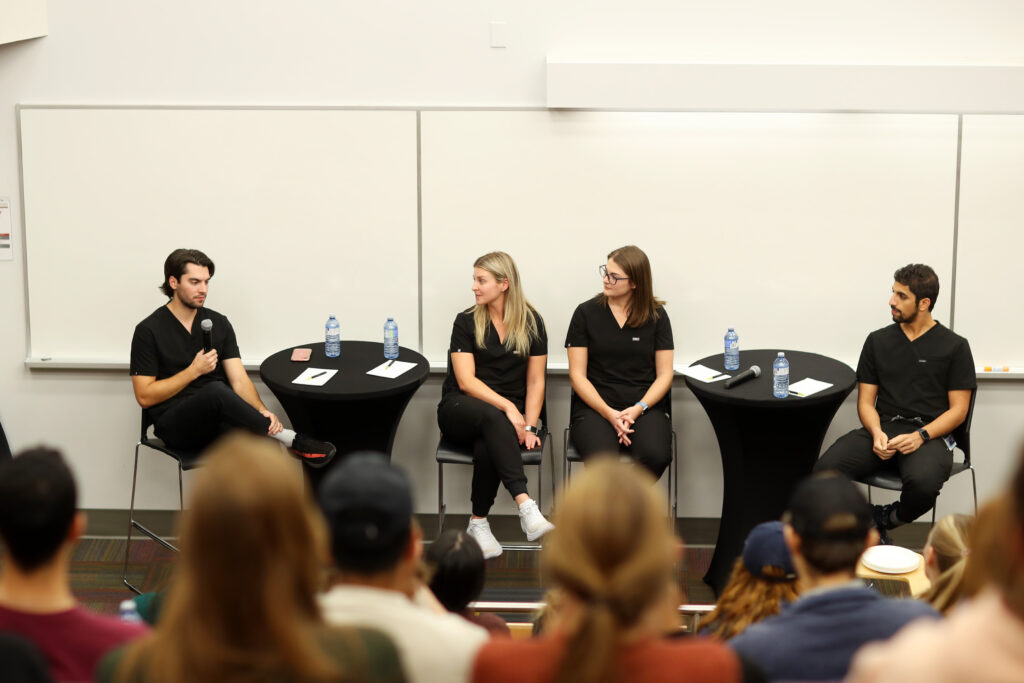
More than 40 DDS1 and DDS2 students gathered in Dalhousie Dentistry’s Room 3156 early in the evening of November 1 to hear a panel of four DDS4 students tackle their questions, ranging from “what did you wish you had known in first year?” to “when did you feel like dentistry was right for you?” to “what’s your sleep schedule like?” The event was part of the Oral Health Professional series, taking place this year in the Faculty of Dentistry.
The four panelists were Mohammed (Mo) Alabdoulsalam, Jillian Bishop, Cecilia Keith, and Jared Lush. Dr. Ferne Kraglund, associate dean of students, moderated the event.
‘What do you wish you knew in first year?’
The first question asked was, “What do you wish you had known in first year?”
Don’t try to be perfect was Mo’s advice. “Put the effort in and you’ll find it works out, but don’t get too caught up in the small stuff,” he says. “Keep your notes organized and think ahead about what you’ll need for your board exams.”
In a similar vein, Jared pointed out that dentistry students are used to being high achievers, and that dealing with criticism can be difficult.
“You might feel beaten down by the critical feedback you receive, but the important thing is to learn from it and be positive,” he says, adding that dental school is an accumulation of knowledge. “We’re studying for four years for the rest of our careers.”
Like Mo, Cecilia recommends keeping on top of notes. When you have 10 exams in two weeks, she says, you need your notes to be in good order.
Jillian suggests students come to clinic. “We always need people to help and it’s a great way to learn by watching,” she says.
Co-operation rather than competition
The senior students also talked about the importance of not being competitive and helping each other by sharing lecture notes and tips they picked up. “Karma in, karma out,” agrees Dr. Kraglund, and Jillian adds that the small group practice model was introduced to get everyone familiar with working with one another — not competing.
When it came to dealing with stress and pressure, Cecilia recommends DDS1 and DDS2 students enjoy their summers while they can. The other panelists suggest instructors and upper-year students are also there to help.
Jared says he tries to exercise after classes are finished for the day. “It makes me feel better and more energized when I sit down to work,” he says.
All four panelists recommend students prioritize getting enough sleep and outline their routines and habits.
Stressing the positives
Other topics covered were extracurricular activities, how to deal with failure, what to do during the summer breaks, and preparing to treat patients. Above all, though, the panelists stressed the positives: the success involved in being accepted to dental school, the opportunity to make life-long friends, the help and support of instructors and other students, and the satisfaction in giving back to classmates and the wider community.
Feedback from the DDS1 and DDS2 students after the event was encouraging. They felt the major topics of concern were addressed, and that the senior students were very open with them. They also enjoyed seeing the friendly interaction and connection between the four panelists.
One DDS1 student, Clay Smith, found the panel’s ability to empathize with first-year students’ current situation was “comforting and motivating.”
Without a doubt, he adds, “I would highly recommend this event!!”